
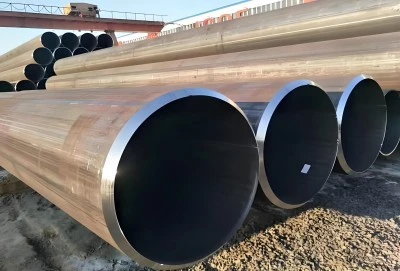
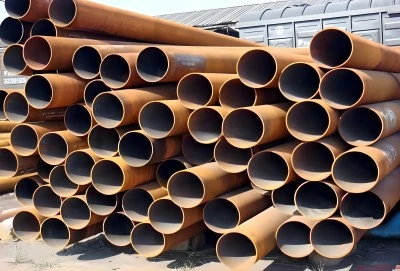
API pipe design is a set of rules made by the American Petroleum Institute that explain how line pipes should be made and tested and how well they should work in industrial water systems and oil and gas transportation. The most well-known standard is API 5L, which includes both seamless and welded steel pipes in different grades. API 5L X46 pipe, which is also known as L320 according to ISO 3183 because it has a minimum yield strength of 320 MPa (46,400 psi), is one example. This guideline makes sure that pipes meet strict quality standards for their size, chemical make-up, mechanical properties, and non-destructive tests. This gives engineers and purchasing managers the confidence to choose materials for important pipeline projects around the world.
|
|
|
Understanding API Pipe Specification
In the early 1900s, the American Petroleum Institute (API) made API specifications to make oil and gas tools and materials more uniform across the business. API 5L became the most important standard for line pipes because it made sure that tubes that carry fluids under pressure had regular quality. This standard sets required requirements for pipe sizes, chemical makeup, mechanical properties, and testing methods. This makes sure that pipes work successfully in a variety of working conditions.
The API 5L standards call for precise control over a number of important factors. Chemical makeup limits make sure that the right alloying elements are used, and limited carbon equivalents keep the ability to weld. Minimum yield strength, tensile strength, and elongation rates are all determined by mechanical qualities. Outer width, wall thickness, ovality, and straightness are all controlled by dimensional limits. Hydrostatic testing, non-destructive examination methods like ultrasonic and X-ray testing, and damaging tests like flattening and guided-bend tests for welded pipes are all part of the testing standards. This complete system helps procurement managers figure out what suppliers can do and make sure they're following the project's rules.
Specifications of API 5L X46 Pipe
The X46 grade is a controlled micro-alloyed carbon-manganese steel made for pipelines that need modest strength. Its technical specs strike a good mix between speed and ease of production, which makes it a good choice for contractors in charge of big oil and gas infrastructure projects.
Chemical Composition Requirements
To get the right mechanical qualities, API 5L X46 pipe has alloying elements that are carefully managed. The carbon content is usually between 0.26% and 0.28%, and the manganese content can reach about 1.35%, which makes the material strong and tough. Micro-alloying elements like niobium (Nb), vanadium (V), and titanium (Ti) in amounts not more than 0.15% help to smooth out the grains, creating a microstructure of acicular ferrite and bainite. This mixture is very resistant to dynamic breaking and keeps the ductile-brittle transition temperature low, which is important for projects that will be used in climates that change often.
The carbon equivalent (CE) value stays low on purpose compared to higher grades. This makes Heat Affected Zone (HAZ) cracks much less likely to happen during welding. Because of this feature, extensive preheating is not needed in most welding situations. This shortens the time it takes to install and lowers the cost of work for contractors.
Mechanical Properties and Performance Data
API 5L X46 pipe has a minimum torque of 435 MPa (63,100 psi) and a minimum yield strength of 320 MPa (46,400 psi). For PSL2 material, the yield-to-tensile ratio usually stays below 0.93. This makes sure that the material is flexible enough for folding in the field and installation stress. The elongation values meet or go beyond what is required by the standard, and PSL2 material has to go through Charpy V-Notch impact tests at 0°C or lower to make sure it is tough.
Because of these mechanical properties, the pipe can withstand high internal pressures and keep its shape even when temperatures change and it is under a lot of mechanical stress. When directional drilling, trenchless installation methods, and places where the ground moves or there is earthquake activity happen, the mix of strength and flexibility is very useful.
Dimensional Standards and Manufacturing Processes
The manufacturing method has a big effect on the quality of the API 5l X46 pipe and how well it works in different situations. Electrical Resistance Welding (ERW) and High Frequency Welding (HFW) can be used to make lines with an outer diameter of 1/2" to about 24". These methods are very good at keeping the dimensions consistent and are cost-effective for jobs with smaller diameters. Longitudinally Submerged Arc Welding (LSAW) and Double Submerged Arc Welding (DSAW) can weld diameters from 16" to 80" (2032mm), which makes them useful for large-diameter transmission pipeline projects.
You can choose from wall thicknesses SCH10 to SCH160, which are 6.35 mm to 59.54 mm. These thicknesses can accommodate pressure classes ranging from low-pressure transmission systems to medium-pressure distribution networks. Standard lengths range from 6m to 18m, and you can ask for a different length if you need to. Pipe ends can come with either straight ends (PE) or beveled ends (BE), with beveling curves that meet the needs of the welding process.
Each way of making something goes through strict quality control. All weld joints on ERW pipes are tested with ultrasonic waves, flattening tests make sure the weld is flexible, and hydraulic tests make sure the pipes can handle pressure. LSAW pipes are also carefully checked, with longitudinal welds being looked at with X-rays or ultrasound waves and their sizes checked with automatic measuring systems.
Technical Support and Industry Standards for API 5L X46 Pipe
For API 5L X46 pipe to be used correctly, you need to know the technical rules for construction, inspection, and upkeep.
Certification Requirements and Mandatory Documentation
API 5L X46 PSL2 material needs more detailed paperwork than PSL1 material. Charpy V-Notch impact test data must be included on mill test papers at certain temperatures, usually 0°C for normal use or -20°C for cold service. Chemical makeup analysis must show that the highest carbon equivalent values are met, which guarantees that the material can be welded. Certificates of hydrostatic testing show that each length of pipe held up under test pressure for the required amount of time without leaking.
X46 material, which is often called X46MS or X46NS in material standards, must meet the requirements of NACE MR0175/ISO 15156 for sour service uses containing hydrogen sulfide. This approval proves that the right chemistry, heat treatment, and hardness values were used to stop sulfide stress cracks.
Welding Techniques and Non-Destructive Testing Methods
Shielded Metal Arc Welding (SMAW), Gas Metal Arc Welding (GMAW), or Gas Tungsten Arc Welding (GTAW) are the most common ways to weld X46 pipe in the field. Welding procedure specs (WPS) and procedure qualification records (PQR) need to be made according to the right rules, like ASME B31.4 for gas pipelines and ASME B31.8 for liquid pipelines.
The width of the wall, the temperature of the area, and the welding process all affect how much preheating is needed. X46's good carbon equivalent often gets rid of the need for preheating for walls smaller than 19 mm in mild temperatures, but it's still a good idea to check the requirements using the calculation methods spelled out in the relevant codes. Post-weld heat treatment isn't usually needed for X46, but it is sometimes needed for very thick walls or in harsh working circumstances.
Non-destructive testing checks the quality of the weld. Radiographic testing (RT) keeps a lasting record of the quality of the internal weld by finding holes, partial fusion, and slag inclusions. Ultrasonic testing (UT) is a quick way to check something without worrying about nuclear safety. It works well in the field. Magnetic particle testing (MT) finds irregularities on the surface and close to the surface of ferromagnetic materials.
Inspection Criteria and Dimensional Tolerances
API 5L allows wall thickness tolerances of +12.5% to -0% for seamless pipes and similar ranges for welded pipes, based on the width and the way they were made. It should be clear in the procurement specs whether the ordered thickness is the minimum, nominal, or average value. This is because the difference affects the figures for the pressure number.
Out-of-roundness, or ovality, must not be more than 1% of the stated outer diameter. This makes sure that the parts fit correctly when they are welded in the field and stops stress builds up that could cause the parts to fail early. Straightness standards stop bowing or sloping, which makes installation easier and keeps things straight in directional drilling situations. These controls for dimensions are especially important for automatic welding systems and installing pipelines that have to follow strict geometric rules.
Conclusion
API pipe standards, especially API 5L X46 pipe, make it possible to build reliable pipelines in the oil and gas, water transportation, and industry sectors. When procurement managers and engineers know about the technical details, like the chemical makeup, mechanical qualities, dimensional standards, and manufacturing methods, they can safely choose the right materials. For medium-pressure uses, X46 grade is the best mix of strength, weldability, and cost-effectiveness. It performs better than lower grades and doesn't cost as much as higher-strength options. To do a good job of procurement, you need to choose certified makers, check all the paperwork, and make sure that operations are well coordinated. Following the rules for welding, inspecting, and testing makes sure that the pipeline stays intact and is safe to use for a long time.
FAQ
What distinguishes API 5L X46 PSL1 from PSL2?
The rules in PSL2 are tougher than those in PSL1. PSL2 requires Charpy V-Notch impact testing to confirm low-temperature toughness, sets maximum yield-to-tensile strength ratios to ensure proper ductility, doesn't allow repair welding on pipe bodies, and uses stricter chemical makeup limits to improve weldability. Because of these stricter standards, PSL2 is better for important uses like working in low temperatures and sour conditions with hydrogen sulfide.
Can X46 pipe replace API 5L Grade B in existing systems?
Because X46 has a higher yield strength (46,400 psi vs. 35,000 psi for Grade B), it can handle higher pressures, which means that replacement is technically possible from a strength point of view. But engineers need to check the design formulas and make sure they work with current welding methods, since X46 has a slightly different chemistry that might mean the welding settings need to be changed. Talking to experienced pipeline experts makes sure that material substitutions are safe and legal.
Is API 5L X46 suitable for sour service applications?
Material that is standard X46 doesn't naturally prevent bad service. For uses involving hydrogen sulfide, you need to order API 5L X46 pipe PSL2 that meets NACE MR0175/ISO 15156 standards. This type of oil is usually called X46MS or X46NS. This highly qualified material goes through extra tests and paperwork that proves it is resistant to sulfide stress cracking. This makes sure it can be used safely in sour settings.
What grade is the same as API 5L X46 in terms of ISO?
According to ISO 3183, X46 is the same as grade L320, which means that the minimum yield strength is 320 MPa. Most dual-certified mill test reports show both designations as L320/X46, which means they meet both American and foreign standards. This dual certification makes it easier to buy things for international projects that have to follow different area rules.
Partner With Longma Group for Reliable API 5L X46 Pipe Supply
Picking the right API 5L X46 pipe manufacturer has a direct effect on the success of the project through the quality of the materials, the dependability of shipping, and the expert support. Longma Group is a reliable provider that has been making high-quality products since 2003. Our 230,000-square-meter factory makes more than 1,000,000 tons of goods every year. We have full API 5L and ISO certifications and get our high-quality raw materials from well-known Chinese mills like Shagang, HBIS, and Baosteel.
We can make X46 pipe with wall thicknesses ranging from SCH10 to SCH160 and widths from 1/2" to 80". Our production methods include ERW and LSAW. Standard standards ship within seven days, but our technical team can also do special manufacturing, such as beveling, coating application (FBE, 2PP, 3LPE), and full paperwork packages, such as ITP, MPS, and MTC, that are made to fit the needs of the engineering contractor. We understand the logistics issues of global procurement because we work with clients in more than 90 countries. We also make sure that shipping goes smoothly to places in the Middle East, Australia, Southeast Asia, and the United States.
Email our expert team at info@longma-group.com to talk about your project needs, get technical specs, or get quotes from other companies. Longma Group is trusted by pipeline builders, procurement managers, and engineering firms around the world to offer API 5L X46 pipe supply. Visit longma-group.com to see our full range of products and learn why.