
In the competitive world of pipeline infrastructure, picking the right steel grade can mean the difference between a project's success and a costly failure. API 5l x65 pipe has become the standard for high-strength steel pipes and is used in many important industries, such as oil and gas transportation, offshore platform building, and industrial manufacturing. If you are a project procurement manager, structural engineer, or large-scale engineering firm working in global markets, this guide has all the technical, procurement, and quality information you need.
This guide is set up to walk you through the technical basics, real-world uses, buying strategies, and quality control procedures that make a good choice for x65 pipe. The tips in this article will help you make better decisions and choose better suppliers, whether you're in charge of a gas pipeline project that crosses multiple countries in the Middle East or looking for materials for offshore sites in Southeast Asia.
|
|
|
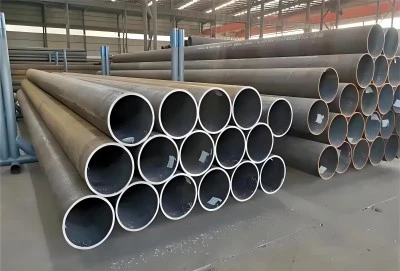
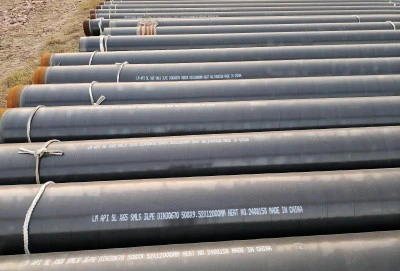
Understanding API Spec 5L Grade X65
The Foundation of API 5L Standards
API Specification 5L sets the standards for how seamless and welded steel line pipes used in the oil and natural gas businesses must be made. This standard, which was made by the American Petroleum Institute, sets two types of product specifications: PSL1 and PSL2. PSL1 sets the minimum quality standards, but PSL2 has stricter limits on chemical composition, requires impact testing, and sets the highest yield-to-tensile strength ratios. This makes it the best choice for important pipeline uses.
Within the API 5L family, api 5l x65 pipe is in the mid-to-high strength range, lying between Grades X60 and X70. The letter "X" means that this is a high-test grade, and the number "65" means that the minimum yield strength is tens of thousands of pounds per square inch. Under PSL2 rules, this means that the minimum yield strength is 450 MPa and the minimum tensile strength is 535 MPa.
Mechanical Properties That Define Performance
Because of its technical features, api 5l x65 pipe steel is good for building important infrastructure. Beyond the basic strength requirements, the material has carefully controlled bending characteristics—usually 20 to 25 percent, based on the size of the specimen—that make sure it can be bent easily during installation and use. This balance between strength and flexibility is especially useful when field-bending or dealing with ground movement in areas that are prone to earthquakes.
To make sure that metals can be welded without losing strength, Carbon Equivalent (CE) values are closely monitored. Micro-alloying elements like Niobium, Vanadium, and Titanium help to smooth out the grains and strengthen the metal through precipitation, which makes it stronger and tougher. Charpy V-Notch impact testing is required by PSL2 standards to make sure the pipe doesn't break easily at low temperatures. This is very important for pipelines that go through cold climates or deep water.
Manufacturing Processes and Dimensional Standards
Several types of welding are used to make api 5l x65 pipes, and each is best for a certain job. Electrical Resistance Welding (ERW) makes lines with diameters up to 24 inches that are both cost-effective and widely used in distribution networks and gathering systems. Longitudinally Submerged Arc Welding (LSAW) makes LSAW pipes, which can have walls that are thicker and sizes that range from 16 to 80 inches. This makes them perfect for high-pressure trunk lines and remote uses. SSAW pipes, which are made by spiral welding, can be made in a variety of sizes and are great for medium- to large-sized uses.
The outside sizes that can be ordered range from 1/2" to 80" (21.3mm to 2032mm), and the wall thicknesses range from SCH10 to SCH160 (6.35mm to 59.54mm). While standard lengths are usually between 6 and 18 meters, custom lengths can be made to fit the needs of shipping and fitting. For welding links, the ends can be beveled, and for mechanical coupling systems, the ends can be left simple.
Chemical Composition and Sour Service Capabilities
When api 5l x65 pipes are used in sour service settings (where wet Hydrogen Sulfide is present), they need different chemistry and more tests. These materials are labeled as X65MS or X65QS types and meet the requirements of NACE MR0175/ISO 15156. They have limited amounts of sulfur and phosphorus to prevent Hydrogen Induced Cracking (HIC) and Sulfide Stress Corrosion Cracking (SSCC). Limits on hardness, usually no more than 22 HRC or 250 HV10, make these processes of degradation even less likely to work.
Performance and Applications of API 5L X65 Pipes
High-Pressure Gas Transmission Infrastructure
API 5l x65 pipes are now the most common type of material used for high-pressure gas transport lines that run for hundreds of kilometers. Because it has a high strength-to-weight ratio, the walls can be smaller than with lower grades like X42 or Grade B. This saves a lot of steel and money on shipping. This benefit directly affects the project's cost—a pipeline that runs across multiple states can save millions of dollars on materials while keeping the same safety limits and pressure ratings.
The use of x65 pipe in these uses shows that engineers have carefully optimized them. Most of the time, operating pressures are between 1,000 and 1,440 psi, and design factors are between 0.6 and 0.72, depending on the site class and any rules or regulations that apply. Because the chemistry is managed and the yield strength is high, these design pressures can be used while still having enough safety factors against breakage and yielding.
Offshore and Subsea Pipeline Systems
Marine settings have their own problems that api 5l x65 pipe can solve well. Materials for offshore platforms, underwater flowlines, and riser systems need to be able to resist collapse forces from the outside, cyclic loading from ocean currents, and possible impacts from fishing gear or anchors. x65 pipes are strong enough to fight these mechanical stresses while keeping the air inside the pipe stable.
The PSL2 x65 pipe material's high fracture toughness is especially useful for stopping spreading ductile fractures, which is a type of failure where breaks quickly spread through pipeline walls when pressure is applied. Drop Weight Tear Testing (DWTT) and Charpy impact standards for underwater uses make sure that crack arrestors work well and that full-bore ruptures stay in manageable parts.
Industrial Manufacturing and Infrastructure Applications
In addition to moving oil, api 5l x65 pipes are very important in water supply systems, industry process lines, and building construction. More and more, water transportation mains in cities are made of x65 pipe material, which is stronger because of things like deeper burials, heavy traffic, or earthquakes. When properly covered, x65 pipe lasts a long time and doesn't rust in industrial plants that use high-pressure steam, chemicals, or slurries.
Choosing the Right API 5L X65 Pipe for Your Project
Technical Specification Alignment
The first step in choosing the best api 5l x65 pipes specs is to carefully look over what the project needs. Baseline material needs are set by operating pressure, temperature range, fluid makeup, and environmental factors. According to the ASME B31.4 or B31.8 rules, pressure design formulas figure out the minimum wall thickness needed while taking into account manufacturing tolerances, corrosion allowances, and design factors that are right for the location class.
Conditions in the environment affect the choice of material in ways other than the basic strength needs. Pipelines that go through areas with permanent frost need to be tougher at low temperatures. This can be proven by testing them for impact at the lowest temperatures they will be used in. Areas that are prone to earthquakes may have extra needs for flexibility and require special welding methods. For trips under the ocean, the outside needs to be coated with systems that work with cathodic protection and don't grow marine life.
Quality Assurance and Testing Protocols
Strict non-destructive tests and mechanical confirmation are used for full quality control of api 5l x65 pipes. In hydrostatic testing, all pipes are put under pressures higher than their design values. This makes sure that there are no leaks and the structure is solid. Test pressures are usually between 80 and 95% of the yield pressure and are based on the wall thickness and yield strength.
Radiographic Testing (RT) and Ultrasonic Testing (UT) can find volumetric flaws like slag spots, partial fusion, and internal cracks. There are most likely to be metallurgical discontinuities at the weld gaps and heat-affected zones of welded lines where these tests are done. Full-body ultrasonic inspections are done on seamless pipes to find problems with the way they were made.
Manufacturer Reputation and Technical Support
Working with well-known makers has benefits that go beyond the quality of the products. Hebei Longma Group has been in business since 2003 and produces more than 1,000,000 tons of goods every year. Getting raw materials from well-known mills like Shagang, TISCO, and Bao Steel guarantees quality from the very beginning of the supply chain.
Better makers are able to provide better technical help. Having access to metallurgical engineers for help with developing welding procedures, reviewing specifications, and fixing problems in the field adds a lot of value to the project as it is being carried out. Fabrication services like beveling, coating application, and custom end treatments make transportation easier and make placement in the field simpler. Full sets of paperwork, like Material Test Certificates (MTC), Inspection and Test Plans (ITP), and Manufacturing Procedure Specifications (MPS), make it possible to track the process.
Conclusion
API 5l x65 pipe has been used successfully in the past for pipeline projects that need to be strong, reliable, and follow all regulations. The standard includes a yield strength of 65,000 psi, controlled chemistry for weldability, and strict testing requirements. These features make the material suitable for a wide range of uses, from offshore platforms to continental gas transport lines. A good buying process strikes a balance between making sure that technical specifications are met and making sure that suppliers meet qualifications, negotiate prices, and follow quality assurance rules. The differences between PSL1 and PSL2 standards, the choice of welding method, and the ability to handle sour service all have a direct effect on the long-term health and safety of the pipeline. If engineering professionals understand these technical basics and buying factors, they can easily choose and find x65 pipes that meet project needs while minimizing costs and speeding up delivery times.
FAQs
What distinguishes API 5L X65 PSL1 from PSL2 specifications?
PSL2 has a lot stricter requirements than PSL1, which is why it is the standard for important pipeline uses. PSL2 sets minimum and maximum boundaries for yield and tensile strength. This keeps strengths from being too high, which could make it harder to weld. Charpy V-Notch impact testing at PSL2 is required to make sure that the material is tough enough to break at low temperatures. Chemical makeup rules limit Carbon Equivalent values to improve field welding. As part of PSL2, weld seams must be tested without damaging them, and size limits must be tightened. Together, these requirements provide better quality assurance that is right for pipes with high consequences.
Can X65 pipes be deployed in sour service environments?
When bought and made as sour service grade (designated X65MS or X65QS), api 5l x65 pipe material can be used in sour service uses. These versions meet the requirements of NACE MR0175 and ISO 15156 by having controlled chemistry that limits the amount of Sulfur and Phosphorus present, hardness levels that are limited (usually no more than 22 HRC), and extra tests that check for HIC and SSCC resistance. Standard api 5l x65 pipe material that wasn't made to meet sour service standards should never be used in places where there is wet H2S because it could crack very badly.
How does welding procedure affect X65 pipe performance?
To keep hydrogen cracks from forming in heat-affected areas when welding api 5l x65 pipes, the process must be carefully managed. Depending on the width of the wall, the temperature of the air around it, and the amount of hydrogen in the welding supplies, preheat temperatures are usually between 50°C and 150°C. Welding Procedure Specifications (WPS) must include limits on the amount of heat that can be used, the temperatures between passes, and the heat treatment that needs to be done after the join. Although procedure qualification testing is still needed before production welding starts, the Carbon Equivalent values set in PSL2 standards directly support field weldability.
Partner with Longma Group for Reliable API 5L X65 Pipe Supply
You can trust Longma Group to make high-quality api 5l x65 pipes. They offer approved high-strength pipeline options and have been making them well for 20 years. Our factories in Hebei Province have ISO 9001, ISO 14001, and OHSAS 18001 certifications, as well as an API 5L logo license. This makes sure that every pipe meets international quality standards. We make api 5l x65 pipes in all sizes and shapes—from 1/2" to 80" widths, SCH10 to SCH160 wall thicknesses, and ERW, LSAW, and SSAW configurations—meeting all PSL1 and PSL2 standards, even for sour service grades.
Our all-in-one method uses high-quality raw materials from Shagang, TISCO, and Bao Steel, along with advanced heat treatment and a full set of testing procedures that check for mechanical, ultrasound, radiographic, and hydraulic properties. We offer full paperwork packages that include MTC, ITP, MPS, and project-specific certifications. These are necessary for engineering companies and government agencies to follow the rules. Beveling, coating application (FBE, 3PE, 3LPE), and custom manufacturing are all value-added services that can help you improve your supply chain and lower the cost of installation in the field.
Longma Group makes sure that your pipeline projects stay on plan and on budget by offering 7-day delivery for standard specs and global logistics services for projects in the Middle East, Southeast Asia, and other places. You can talk to our technical team about your project needs, get full quotes, or set up site visits by emailing info@longma-group.com. Let us show you how our ability to make pipes, dedication to quality, and focus on the needs of our customers make us the best long-term pipe provider for you.