
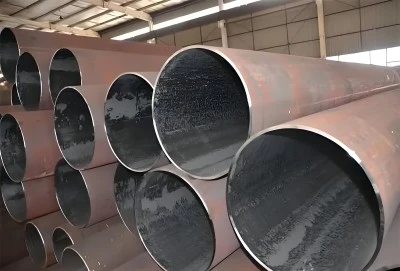
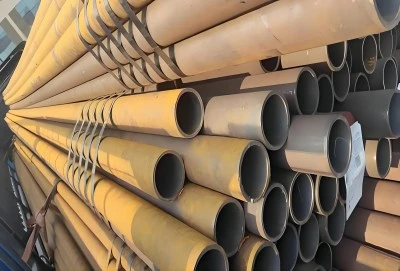
AS/NZS 1163 C450 pipe refers to cold‑formed structural steel hollow sections engineered for a minimum yield strength of 450 MPa and tensile strength ranging from 500 MPa to 620 MPa. Widely adopted for mining equipment, heavy‑duty machinery frames, renewable‑energy structures and long‑span civil infrastructure, C450 hollow sections enable engineers to achieve higher design loads while cutting overall steel weight. Compliant with the joint Australian‑New‑Zealand standard, this grade is the preferred option for export‑oriented equipment and projects where high strength and strict dimensional accuracy are critical.
|
|
|
Understanding AS/NZS 1163 C450 Pipe — Specifications & Material Properties
Key Mechanical and Chemical Properties
In AS/NZS 1163 C450 designation, “C” stands for cold‑formed, while “450” represents the 450 MPa minimum yield strength — around 28 % higher than the C350 grade. Depending on wall thickness, minimum elongation falls between 12 % and 16 %, with tensile strength within 500‑620 MPa. Its maximum carbon equivalent value (CEV) is controlled at approximately 0.43, securing good weldability despite the elevated strength. These properties are defined to satisfy the demands of fracture‑critical operating conditions where consistent material performance is paramount.
C450 vs C450L0: Core Difference
AS/NZS 1163 C450L0 adds one key requirement: guaranteed Charpy impact energy at 0 °C. For structures built for cold‑climate service, such as offshore platforms, Canadian mining facilities and Antarctic support infrastructure, designers must select C450L0 to avoid brittle fracture under dynamic loads. Deploying standard C450 pipe in sub‑zero environments creates compliance risks rather than being a mere design preference, and this distinction affects both material selection and supplier qualification during procurement.
Available Section Profiles
AS/NZS 1163 C450 pipe is manufactured in circular, square and rectangular forms. Such profile flexibility allows structural engineers to pick optimal cross‑sections for bending‑, torsion‑ or compression‑dominated load cases without switching steel grades. This simplifies procurement and streamlines inventory management for large‑scale projects.
Main Industrial Applications of AS/NZS 1163 C450 Pipe
High‑demand operating scenarios call for high‑strength structural hollow sections instead of lower‑grade steel alternatives, which would otherwise require thicker walls or extra bracing. AS/NZS 1163 C450 reduces member weight while preserving load‑bearing capacity, bringing tangible savings in fabrication, transportation and on‑site installation costs.
Major use cases include:
- Mining & mineral processing: Used for conveyor gantries, crusher frames and screen support structures across Australian and South‑African mine sites. It resists abrasive conditions and vibration‑induced fatigue. An equivalent load‑carrying capacity using C350 would come with substantial weight increases.
- Heavy machinery & transport equipment: Ideal for crane booms, material handlers and haul‑body frames where favourable strength‑to‑weight ratios are essential. Manufacturers can meet payload targets without over‑engineering structural frames.
- Renewable‑energy infrastructure: Applied to torque tubes and support pylons for utility‑scale solar tracking systems. The grade delivers sufficient stiffness to mitigate wind‑caused deflection, yet remains light enough for efficient operation of motor‑driven tracking hardware.
- Long‑span civil structures: AS/NZS 1163 C450 pipe permits longer clear spans with fewer intermediate supports, lowering material consumption and minimising visual obstruction. Typical projects include stadium roof trusses, airport terminal canopies and long‑span bridge brackets.
All these applications share one common need: reliable performance under static or cyclic loads in contexts where repair work carries high costs. The well‑validated mechanical performance of AS/NZS 1163 C450 gives engineers solid confidence at the design stage.
AS/NZS 1163 C450 vs Other Structural Hollow Sections
C450 versus C350
C350 is a more widely stocked grade. Its superior elongation makes it more suitable for cold bending and punching operations, and remains cost‑effective when design loads permit. Nevertheless, C450 becomes the logical selection where section dimensions are constrained, weight reduction is prioritised or higher design stress is required by structural calculations. Replacing C350 with C450 generally allows one standard wall‑thickness reduction, generating considerable material savings for large‑volume projects.
C450 versus ASTM A500 Grade C
ASTM A500 Grade C specifies minimum yield strength of 50 ksi (345 MPa), noticeably lower than C450’s 450 MPa minimum. For equipment and installations intended for Australia or New Zealand, compliance with AS/NZS 1163 is mandatory. Using ASTM A500 materials for AS/NZS‑specified projects creates non‑conformity, potentially triggering re‑inspection, component rejection or commissioning delays.
C450 versus Hot‑Dip Galvanised Sections
Hot‑dip galvanising is a corrosion‑protection treatment rather than a strength classification. AS/NZS 1163 C450 pipe can be hot‑dip galvanised per AS/NZS 4680, provided steel silicon content is properly controlled to prevent overly thick zinc layers. Combining high strength with galvanised anti‑corrosion coating is common for outdoor mining assets and coastal infrastructure subject to both heavy loads and rust risks.
Procurement Guidance for AS/NZS 1163 C450 Pipe
Mandatory Certifications for Supplier Vetting
Reliable C450 suppliers must supply third‑party Material Test Certificates (MTC), verifying yield strength, tensile strength, elongation and chemical composition against AS/NZS 1163 requirements. ISO 9001 certification and Factory Production Control (FPC) documentation are also needed for traceable quality assurance. Checking these documents prior to supplier approval is the most effective way to avoid costly non‑conformance issues during fabrication.
Custom Sizes and Long‑Lead Project Planning
Large‑scale mining and machinery projects frequently require non‑standard wall thicknesses or custom cut lengths. Confirm that your supplier can accommodate custom specifications and sustain consistent delivery over multi‑month procurement cycles. Clear contract clauses covering delivery milestones and non‑conformance remedies help keep projects on schedule.
Installation, Maintenance & Performance Optimisation
When welding AS/NZS 1163 C450 hollow sections, low‑hydrogen electrodes or matching MIG/TIG welding consumables are recommended. Its high yield strength imposes tighter limits on heat input; excessive heat will weaken the heat‑affected zone and negate part of the grade’s structural advantages. Cold‑bending radii must be carefully controlled: sharp bends may cause surface cracking or excessive wall thinning on outer bend surfaces, shortening fatigue service life.
Corrosion‑resistant finishes including FBE, 3LPE or hot‑dip galvanising extend service life in aggressive environments. Regular inspections should focus on weld toes and connection points — typical initiation sites for fatigue cracks — to enable timely remedial work. Good maintenance practice ensures C450 structures achieve their full design service life.
Conclusion
AS/NZS 1163 C450 pipe fills a distinct market niche: they excel for structures with high load requirements, restricted section envelopes, or cases where component weight directly drives overall project costs. Validated mechanical properties, conformance to AS/NZS 1163 and compatibility with standard fabrication workflows make this grade a technically and commercially sound solution for mining equipment, heavy machinery, renewable‑energy installations and long‑span civil works. Selecting a supplier that provides full material certification, custom dimensional options and stable bulk‑supply capacity ensures in‑service performance matches design expectations.
FAQ
Q: In practical structural design, what is the key difference between C450 and C350? A: AS/NZS 1163 C450 offers roughly 28 % higher yield strength than C350. For equivalent loading conditions, engineers can specify thinner‑wall sections, cutting material weight and costs for high‑load applications.
Q: Can C450 be deployed in outdoor and corrosive environments? A: Yes. C450 hollow sections support hot‑dip galvanising to AS/NZS 4680, alongside protective coatings such as FBE and 3LPE. That makes them fit for coastal, mining and general outdoor industrial conditions.
Q: When should C450L0 be specified instead of standard C450? A: C450L0 is required for structures operating at or below 0 °C, or exposed to dynamic and impact loads. It delivers guaranteed Charpy impact toughness to guard against brittle fracture.
Q: What documentation should C450 suppliers provide? A: Buyers should request third‑party material test certificates demonstrating AS/NZS 1163 compliance, together with ISO 9001 quality‑system certification and factory production control records.
Q: Are custom non‑standard dimensions available for C450 hollow sections? A: Yes. Qualified manufacturers can produce custom wall thicknesses and cut‑to‑length pieces tailored to project requirements, subject to minimum order quantities and agreed lead times.
Partner with Longma Group for Certified C450 Structural Pipe
Founded in 2003, Longma Group manufactures AS/NZS 1163‑compliant C450 pipe to international standards. We serve clients across more than 90 countries with annual output exceeding one million tons. As a trusted C450 supplier, we supply complete MTC documentation, ISO 9001 certification, custom dimensions and robust bulk‑order capabilities. Email our technical team: info@longma‑group.com or visit longma‑group.com for datasheets and custom quotations.