
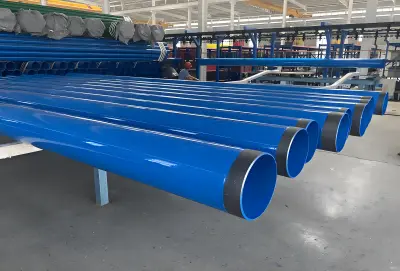
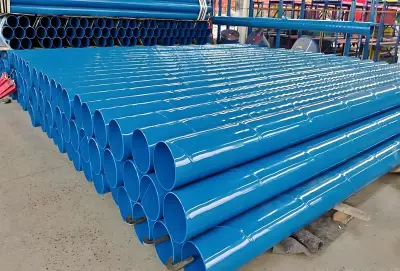
Epoxy coating represents a sophisticated protective barrier applied to carbon steel pipes. Fundamentally, it utilizes thermosetting polymer resins to create an impervious shield. This shield protects against corrosion, chemical attack, and environmental degradation. Therefore, this advanced coating system chemically bonds with the steel substrate. It forms a durable layer. Consequently, this layer significantly extends pipeline service life in demanding industrial applications. These applications include oil and gas, water distribution, and offshore construction projects.
The protective mechanism of epoxy coated carbon steel pipe works through molecular adhesion. Here, epoxy resins cure into a cross-linked polymer network. This network physically separates the steel surface from corrosive elements. Thus, understanding this technology becomes essential for engineers. Likewise, project managers seeking reliable pipeline solutions in challenging environments need this knowledge.
|
|
|
Understanding Epoxy Coated Carbon Steel Pipe Systems
Epoxy coated carbon steel pipe systems combine the structural strength of carbon steel with advanced polymer chemistry. Specifically, these systems utilize fusion-bonded epoxy (FBE). Alternatively, they use liquid epoxy formulations. Manufacturers apply these under controlled conditions. This ensures uniform coverage and optimal adhesion.
The coating process involves surface preparation. Typically, this occurs through abrasive blasting. This step achieves specific roughness profiles. Subsequently, operators immediately apply epoxy materials. Furthermore, temperature control during application is critical. It ensures proper cross-linking. It also guarantees chemical bonding between the coating and the steel substrate. Ultimately, this meticulous process creates robust pipes. They are capable of withstanding pressures up to 3000 PSI. Simultaneously, they maintain corrosion resistance for decades.
Manufacturing standards like DIN 30670 govern coating thickness. Similarly, AWWA C210 and ISO 21809-1 dictate adhesion requirements and quality control procedures. These specifications ensure consistent performance. They apply across different applications and environmental conditions.
The molecular structure of cured epoxy creates a powerful barrier. It offers excellent chemical resistance against acids. It also resists bases and organic solvents commonly encountered in industrial environments. Moreover, this protection remains effective across wide temperature ranges. These ranges span from -40°C to 120°C. As a result, epoxy coated carbon steel pipe is suitable for diverse geographic regions. This includes everything from arctic conditions to desert installations.
Finally, quality assurance involves holiday detection. It also includes adhesion testing. Additionally, coating thickness verification guarantees long-term performance. Advanced inspection techniques identify microscopic defects. Otherwise, these defects could compromise protective integrity over time.
Critical Challenges Addressed by Epoxy Pipeline Protection
Corrosion represents the primary threat to carbon steel infrastructure. In fact, it causes billions in annual losses across global industries. Unprotected steel pipes experience oxidation. This happens when exposed to moisture, oxygen, and chemical contaminants. Consequently, this leads to wall thickness reduction. It also causes structural failure and environmental contamination.
Traditional protection methods often prove inadequate. For instance, galvanizing or paint systems fail in demanding applications. Galvanized coatings can experience premature failure in acidic environments. Conversely, conventional paints lack the adhesion required for long-term service. They also lack necessary chemical resistance.
Epoxy-coated carbon steel pipe addresses these limitations effectively. It provides superior barrier properties. It also offers chemical inertness. The coating prevents electrochemical reactions. These reactions typically drive corrosion processes. Thus, the coating effectively stops oxidation at the molecular level.
Environmental factors create unique challenges for pipeline integrity. These include soil chemistry, groundwater pH, and atmospheric conditions. Fortunately, manufacturers can customize epoxy formulations. These address specific environmental threats. Examples include hydrogen sulfide exposure in oil fields. They also handle chloride contamination in marine environments. Furthermore, they protect soil-to-air transition zones where differential corrosion occurs.
The economic impact of corrosion extends beyond material replacement costs. Unplanned shutdowns create substantial indirect expenses. Similarly, environmental remediation and safety risks add to the cost. Epoxy coated carbon steel pipe systems significantly reduce these risks. They achieve this through reliable long-term protection.
Regulatory compliance requirements are increasing. They demand enhanced environmental protection. They also require pipeline integrity management. Epoxy coated carbon steel pipe systems help meet these standards. Simultaneously, they reduce maintenance burdens. They also extend asset life cycles.
Advanced Features and Protective Mechanisms
Epoxy coated carbon steel pipe offers multiple protective mechanisms. These work simultaneously to preserve steel pipe integrity. Primarily, the barrier function prevents moisture and oxygen penetration. It does this through dense molecular cross-linking. This creates microscopic pathways. These pathways are too small for corrosive species to pass.
Additionally, chemical resistance properties are vital. They enable these coatings to withstand exposure to hydrocarbons. They also resist industrial chemicals and aggressive soil conditions. Moreover, the thermosetting nature of cured epoxy provides dimensional stability. It also offers resistance to thermal cycling. It does so without cracking or delamination.
Adhesion strength exceeding 15 MPa is another key feature. This ensures the coating remains bonded to the steel substrate. This bond holds under mechanical stress. It also withstands thermal expansion and hydrostatic pressure. Consequently, this bonding strength prevents coating disbondment. Disbondment would otherwise allow corrosion to propagate along the pipe surface.
Flexibility characteristics are also important. They accommodate pipe movement during installation. They also handle movement during service without compromising protective integrity. Modern epoxy formulations balance hardness for abrasion resistance. They balance this with flexibility for impact tolerance.
Thickness uniformity is crucial. It applies across complex epoxy coated carbon steel pipe geometries. This ensures consistent protection. Advanced application techniques achieve specific coating thicknesses. These range from 300 to 3000 microns. The exact thickness depends on service requirements. It also depends on environmental severity.
Furthermore, electrical insulation properties prevent galvanic corrosion. This occurs when dissimilar metals contact the pipe system. This isolation protects against stray current corrosion. This is common in areas with electrical infrastructure.
Finally, some epoxy systems have self-healing capabilities. This allows minor coating damage to reseal through thermal cycling. Thus, it prevents corrosion initiation at small defects.
Technical Foundation of Epoxy Protection Systems
Technically, epoxy chemistry relies on thermosetting polymer reactions. These occur between epoxy resins and hardening agents. The result is a three-dimensional molecular network. These cross-linked structures provide superior mechanical properties. Ideally, they outperform thermoplastic coatings that can soften under heat.
Molecular adhesion occurs through chemical bonding. This happens between epoxy functional groups and oxide layers on prepared steel surfaces. Therefore, proper surface preparation is vital. It creates anchor profiles. These profiles enhance mechanical interlocking. Simultaneously, they expose reactive sites for chemical bonding.
Curing kinetics determine final coating properties. Controlled temperature and time parameters govern this. Undercured coatings exhibit poor chemical resistance. They also show poor mechanical properties. Conversely, overcuring can cause brittleness. It also reduces adhesion.
Formulation chemistry allows customization. Manufacturers select specific resin types, hardeners, and additives. For example, Bisphenol-A based epoxies offer excellent general-purpose protection. In contrast, novolac epoxies provide enhanced chemical resistance. This is necessary for severe environments.
Pigmentation systems provide color coding for identification. Additionally, they contribute to UV resistance and thermal stability. Functional pigments can enhance specific properties. These include conductivity or magnetic permeability for specialized applications.
Quality control involves rheological testing. This ensures proper application characteristics. Thermal analysis verifies curing behavior. Finally, mechanical testing confirms final properties meet specifications.
Key Advantages Driving Industry Adoption
Longevity stands as the primary advantage of epoxy coated carbon steel pipe. Properly applied systems provide 50+ years of corrosion protection. This extended service life reduces replacement costs. It also minimizes operational disruptions compared to uncoated alternatives.
Cost-effectiveness emerges through reduced maintenance requirements. Extended asset life cycles also contribute. Initial coating costs represent an additional investment. However, long-term savings substantially improve project economics. These savings come from prevented failures and reduced maintenance.
Environmental protection benefits are significant. They include prevention of hydrocarbon leaks. They also include reduced soil and groundwater contamination. Furthermore, they ensure compliance with stringent environmental regulations. These factors become particularly important in sensitive ecological areas.
Installation flexibility is another benefit. Epoxy coated carbon steel pipe creates options for diverse applications. These range from buried pipelines to above-ground installations. The coating protects against atmospheric corrosion. It also handles soil chemistry variations and marine environments.
Performance reliability under extreme conditions is proven. These systems are suitable for arctic installations. They also work in desert environments and offshore platforms. In these locations, replacement would be extremely costly. It would also be logistically challenging.
Design flexibility enables engineers to specify lighter wall thicknesses. This is possible when corrosion allowances are reduced. Effective coating protection makes this possible. This optimization reduces material costs. It also reduces installation complexity.
Finally, quality assurance ensures consistent performance. This is achieved through standardized testing. Inspection procedures also play a role. This applies across different manufacturers and application conditions.
Considerations and Application Limitations
Installation requirements demand specialized equipment. Trained personnel are also necessary. They achieve proper coating application and quality control. Surface preparation influences final performance significantly. Environmental conditions during application matter too. Curing parameters are also critical.
Initial investment costs exceed uncoated pipe alternatives. Therefore, this requires careful economic analysis. This analysis justifies long-term benefits. Project budgeting must account for material costs. It must also include application costs when evaluating coating options.
Mechanical damage can occur during handling. Transportation and installation pose similar risks. This damage can compromise coating integrity. Thus, proper procedures are essential. Damage repair techniques are also necessary for maintaining protective effectiveness.
Temperature limitations restrict some epoxy coated carbon steel pipe formulations. They function only within specific operating ranges. High-temperature applications may require specialized formulations. Alternatively, they may need other coating technologies to maintain long-term performance.
Chemical compatibility varies among different epoxy systems. This requires careful selection for specific process fluids. It also applies to environmental conditions. Compatibility testing may be necessary for unique applications.
Quality control requirements involve sophisticated inspection equipment. Trained personnel must verify coating integrity. Holiday detection requires specialized tools. Adhesion testing and thickness measurement do as well.
Repair procedures for damaged coatings can be complex. They may require field application of compatible repair materials. This must happen under controlled conditions.
Epoxy Coated Carbon Steel Pipe Performance Comparison
Epoxy coated carbon steel pipe demonstrates superior performance compared to galvanized steel pipes. This is especially true in acidic and high-temperature environments. Galvanizing provides sacrificial protection. However, it depletes over time. In contrast, epoxy coating maintains barrier protection throughout its service life.
Polyethylene coated pipes offer excellent flexibility. They also offer chemical resistance. However, they may experience stress cracking. They also have lower temperature ratings. Epoxy-coated carbon steel pipe systems provide better adhesion. They also offer thermal stability for demanding applications.
Stainless steel alternatives eliminate corrosion concerns. However, they involve significantly higher material costs. Epoxy coated carbon steel pipe provides comparable performance. It does so at a substantially lower initial investment for most applications.
Concrete-lined pipes offer good corrosion resistance. However, they add significant weight and thickness. Epoxy coating achieves similar protection. Yet, it has minimal dimensional impact and weight addition.
Fusion-bonded epoxy (FBE) represents the gold standard for pipeline coating. It offers an optimal combination of adhesion. It also provides chemical resistance and application efficiency. Liquid epoxy systems provide flexibility for field application. They are also useful for repair.
The choice between coating technologies depends on specific application requirements. It also depends on environmental conditions and economic factors. Ultimately, epoxy systems excel in applications requiring long-term reliability. They are also best for chemical resistance.
Target Applications and Engineering Considerations
Pipeline engineers designing oil and gas transmission systems benefit greatly. They rely on epoxy-coated carbon steel pipe for hydrocarbon compatibility. They also value its long-term reliability. These systems handle crude oil. They also transport natural gas and refined products. Simultaneously, they resist internal and external corrosion.
Water distribution infrastructure utilizes these pipes. They are used for potable water systems. Wastewater treatment plants use them too. Industrial process water applications also benefit. The coating prevents iron taste and discoloration. At the same time, it maintains water quality standards.
Structural applications rely on epoxy protection. This is common in offshore platforms and marine environments. It protects against saltwater corrosion and atmospheric exposure. The coating system withstands wave action. It also endures temperature cycling and UV exposure.
Industrial manufacturing facilities use these pipes extensively. They are found in chemical processing. Cooling water systems use them as well. Fire protection networks are another application. Chemical resistance properties enable handling of process fluids. These fluids would otherwise rapidly corrode unprotected steel.
Project procurement managers evaluate epoxy coated carbon steel pipe options. They value the reliability record. Standardized specifications are also attractive. Global availability is a key factor. Established coating standards facilitate specification writing. They also aid in quality assurance.
Plant equipment managers appreciate reduced maintenance requirements. Predictable service life aids budget planning. It also helps asset management. The coating system minimizes unplanned shutdowns. It also reduces emergency repairs.
Ready to Protect Your Pipeline Investment with Longma Group?
Do you need a reliable epoxy coated carbon steel pipe supplier for your next project? Longma Group delivers proven solutions. We are backed by over 20 years of manufacturing expertise. Furthermore, our comprehensive quality certifications ensure excellence. Our global project experience ensures your pipeline systems meet the highest protection standards. Whether you are managing oil and gas infrastructure, water distribution networks, or industrial facilities, we can help. Our team provides technical support from specification to delivery. Contact us today. Discuss your specific requirements. Discover how our epoxy coating solutions can enhance your project success. Contact us at info@longma-group.com.
Conclusion and Future Outlook
Epoxy coating technology continues advancing. Improvements occur in formulation chemistry. Application techniques are improving too. Quality control methods are also evolving. Consequently, these developments enhance protection performance. They also reduce application costs and environmental impact. The growing emphasis on infrastructure resilience drives increased adoption. Environmental protection goals also drive this trend across industries worldwide.
Future innovations focus on smart coating systems. These incorporate self-healing properties. They also include condition monitoring capabilities. Enhanced chemical resistance is another goal. These advances promise to extend service life. Simultaneously, they provide real-time performance data for optimized maintenance planning.
In summary, the combination of proven performance is compelling. Economic benefits are also clear. Environmental protection is a major plus. Therefore, epoxy coated carbon steel pipe positions itself as an essential infrastructure component. It is vital for sustainable industrial development.
FAQs
Q1: How long does epoxy coating last on carbon steel pipes?A: Properly applied epoxy coating systems typically provide 30-50 years of corrosion protection. This assumes normal operating conditions. However, service life depends on environmental factors. It also depends on coating thickness and application quality. Notably, some systems have demonstrated effective protection beyond 50 years in favorable conditions.
Q2: What coating thickness is required for epoxy coated steel pipes?
A: Coating thickness varies by application. It also varies by standard requirements. Typical ranges include 300-600 microns for fusion-bonded epoxy (FBE). Ranges are 500-3000 microns for liquid epoxy systems. However, severe environments may require increased thickness for enhanced protection.
Q3: Can epoxy coated pipes be used for drinking water systems?
A: Yes, epoxy coated carbon steel pipe meeting AWWA C210 or similar standards is approved. It is suitable for potable water applications. The coating prevents iron leaching. It also prevents taste issues. Meanwhile, it maintains water quality. NSF certification ensures compliance with drinking water safety standards.








