
ISO 3183 L390 pipe is primarily used in long-distance, high-pressure natural gas transmission networks and crude oil export pipelines where strength, reliability, and cost-efficiency are paramount. This line pipe grade, with its 390 MPa minimum yield strength, serves midstream oil and gas transportation projects, cold-region onshore installations, shallow subsea flowlines, and moderately sour service environments. Its superior pressure-bearing capacity allows engineers to specify thinner wall sections without compromising safety, reducing overall material costs and installation weight compared to traditional heavy-wall alternatives like L360.
|
|
|
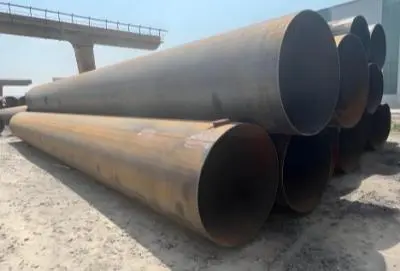
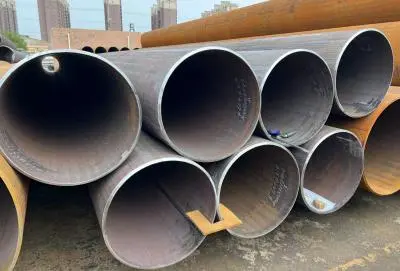
Overview of ISO 3183 L390 Pipe
What Defines the ISO 3183 Standard?
ISO 3183 L390 pipe sets standards for steel lines used in systems that move oil and natural gas that are accepted around the world. It's very similar to API 5L standards, which makes global integration easier and makes it easier to buy things and run projects across borders. The number L390 means that the minimum yield strength in metric units is 390 megapascals, which is the same as API 5L X56 in English units.
This standard meets the complicated needs of modern pipeline infrastructure by laying out limits on both chemical makeup and mechanical performance. Pipeline experts use ISO 3183 because it makes sure that all suppliers use the same materials and works with different production methods, such as seamless, high-frequency welded, and longitudinally submerged arc welded. The standard sets two levels of product quality: PSL1 is for standard needs, and PSL2 is for higher technical assurance with tighter tolerances and required impact testing.
Mechanical Properties and Material Characteristics
The mechanical properties of ISO 3183 L390 pipe are very different between PSL1 and PSL2 standards. This gives procurement managers the freedom to match material types to the needs of each project. PSL1 grade has a minimum yield strength of 390 MPa and a minimum tensile strength of 490 MPa. It is good for less important uses where cost is the main factor in choosing a material. With a yield range of 390 to 545 MPa and a tensile strength range of 490 to 760 MPa, PSL2 standards improve performance by making materials more resistant to stress and distortion.
The material is made up of high-manganese microalloyed steel that has been improved by finetuning the grains with niobium and vanadium. This metalworking method accomplishes two important goals: it keeps the weldability high by keeping the carbon equivalent values low, usually below 0.43%; and it provides a lot of low-temperature impact energy that stops brittle fracture in cold places. For PSL2 variants, the highest carbon content stays at about 0.22%, and manganese amounts of about 1.40% make the material stronger without making it less flexible. Niobium and vanadium, which are microalloying elements, smooth out the grain structure. This makes a steel core that is both tough and easy to work with.
Charpy V-notch impact testing is done on PSL2 ISO 3183 L390 pipe M (thermomechanically rolled) or ISO 3183 L390 pipe N (normalized) versions at temperatures as low as -45°C for projects that will be used in the Arctic or deep water. This test proves that the material stays tough enough to stop cracks from spreading even when it's being used or installed in very hot or cold conditions.
Technical Advantages for Pipeline Applications
ISO 3183 L390 pipe is liked by engineers because it can hold more pressure than lower-grade options, which lets the walls be thinner. Because of this trait, the cost of steel for large-diameter power lines that run for hundreds of kilometers is lower. When defined in L390 instead of L360, a 36-inch diameter pipeline working at 10 MPa can achieve the same safety factors with a lot less steel mass. This saves money on both materials and installation time.
This grade is very hard to break, especially when it is made into large-diameter submerged arc welded pipe. This toughness stays the same when temperatures change, which makes L390 perfect for pipes that go through a lot of different climate zones or have big yearly temperature changes. The mix of strength and toughness lowers the chance of a catastrophic failure due to working stresses, outside loads, or ground movement.
Applications and Benefits of ISO 3183 L390 Pipe in Industry
Primary Applications in Oil and Gas Transportation
ISO 3183 L390 pipe is most often used for high-pressure natural gas trunk lines that run over long distances. These transportation networks that connect states or countries need materials that can keep their structure strong under long-term high pressures and don't break down when loaded and unloaded many times. L390 pipe can handle working pressures of up to 12 MPa in large-diameter designs, which makes it possible to move gas quickly across continents. For important projects in Australia, North America, and the Middle East, this type of natural gas infrastructure has been required to connect production areas to urban delivery networks.
Its balanced qualities also help interregional crude oil export pipes. Transporting oil requires resistance to both internal pressure and the corrosive elements in crude oil, especially when the service conditions are relatively sour and the amounts of hydrogen sulfide stay below critical levels. When paired with the right interior coats, like fusion-bonded epoxy, ISO 3183 L390 pipe can be used to transport crude oil for many years without any problems.
Specialized Environments and Infrastructure
Onshore pipelines in cold regions have special problems that ISO 3183 L390 pipe can solve well. Pipeline materials are subject to thermal contraction stresses and possible impact loading from frost heave or ice movement in permafrost regions, mountain settings, and yearly freeze-thaw cycles. The PSL2 versions of L390, especially the L390 pipe M and N grades, stay flexible at temperatures below zero. This keeps them from breaking easily, which can happen with lower-quality steels in the same conditions.
When the water level stays below 300 meters, ISO 3183 L390 pipe is used for shallow subsea flowlines that connect offshore platforms to land docks or between production sites. At these average levels, the mix of hydrostatic pressure outside and working pressure inside calls for materials that have been shown to be strong and not corrode. The PSL2 standard gives offshore engineers more quality security by requiring non-destructive tests and written down impact properties for installations that are subsea.
Comparative Advantages Over Alternative Grades
When project managers look at pipeline materials, they usually compare L390 pipe to types that are close by, such as L360 and L415. Even though L360 pipe is cheaper per ton, it needs bigger walls to reach the same pressure levels. This means that more material is needed and the welding process is more complicated. Heavy-wall L360 pipe is heavier than other pipes, which makes it harder to move and install, especially in rural areas where cranes aren't available.
On the other hand, L415 and higher types are stronger, but they cost more and might not be as easy to weld in the field. Because ultra-high-strength types sometimes have higher carbon equivalent values, they need more complex welding and pre-heating processes that slow down the building process. ISO 3183 L390 pipe is the perfect balance between strength and ease of welding, making it suitable for most intermediate uses. This shortens project timelines and cuts down on the need for specialized labor.
Manufacturing Processes and Quality Assurance of ISO 3183 L390 Pipe
Production Methods and Heat Treatment
ISO 3183 L390 pipe is made in three main ways: it can be made without any joints, it can be high-frequency welded (ERW), or it can be longitudinally submerged arc welded (LSAW). We are experts at large-diameter LSAW production at Longma Group. This is when steel plates go through controlled rolling, exact forming, and double-sided submerged arc welding, which makes the welds very strong. Our LSAW process can work with pipes that are 16 inches to 60 inches in diameter and have wall thicknesses that are good for high-pressure transfer.
The steps for heat treatment depend on what the customer wants and how the service will be used. As part of the normalizing heat treatment (N name), the pipe is heated above its upper critical temperature and then cooled in still air. This creates a finer grain structure with consistent mechanical qualities. Thermomechanical rolling (M designation) uses precise temperature control and controlled rolling settings to make grains that are very small without having to go through different heat treatment processes. Quenched and tempered (Q designation) processing gives the L390 range its best strength values, but it costs more to process.
Quality Control and Testing Protocols
In the competitive pipeline market, trusted providers stand out by having strict quality control. Longma Group's quality control method includes checking the standard of raw materials through partnerships with top Chinese steel mills like HBIS, Baosteel, and Shougang. These sources give us hot-rolled coil and plate with approved chemical compositions and mechanical qualities. These are the building blocks on which we make ISO 3183 L390 pipe.
During production, we use thorough testing methods that go beyond what is required by PSL. Full-body ultrasound testing finds internal flaws, laminations, or inclusions that could weaken the structure of a pipe. For welded pipe, both the lengthwise weld seam and the heat-affected zone are checked with improved ultrasound to make sure they are completely fused and free of any flaws. Radiographic testing adds to the confidence of sample lengths from each production lot. It makes records that will last forever and is sent with material test certificates.
Every pipe is put through hydrostatic pressure testing, which involves holding it under pressure equal to 90% of its minimum yield strength for a certain amount of time. This shows any weak spots in the pipe body or weld seam. This test is done after all the heat treatment but before the protected coats are put on to make sure the base material meets performance standards. For PSL2 orders, we do Charpy V-notch impact testing at temperatures set by the customer. Usually, we test samples from the pipe body, the weld metal, and the heat-affected zone to make sure the hardness is the same everywhere.
Conclusion
For long-distance high-pressure transmission tubes, ISO 3183 L390 pipe is the best choice because it is strong, tough, and affordable. Its minimum yield strength of 390 MPa lets thinner-wall shapes be used, which saves money on materials while keeping safety and dependability. Natural gas main lines, crude oil export systems, cold-area infrastructure, and shallow underwater sites are all places where mechanical performance and resistance to the environment are very important. The grade is easy to weld, doesn't break easily, and comes in both PSL1 and PSL2 specifications. This gives procurement professionals the freedom to match the material's properties exactly to the needs of each project, balancing cost-effectiveness with technical performance in global pipeline development.
FAQ
What distinguishes L390 from API 5L X56?
ISO 3183 L390 pipe and API 5L X56 are both similar grades, but they use different unit systems. L390 lists the minimum yield strength as 390 MPa in metric units, while X56 uses 56,000 psi. The limits on chemical makeup and the requirements for mechanical properties are almost the same for both standards. ISO 3183 and API 5L keep their technical agreement close to make international trade easier. For the most part, procurement managers can use these specs in place of each other. However, certain projects and regulatory settings may require one standard over the other.
Can L390 pipe handle situations with bad service?
When ordered with PSL2 standards and extra testing needs, ISO 3183 L390 pipe can be used in mildly sour environments. The material needs to pass the NACE TM0284 hydrogen-induced cracking resistance test and the NACE MR0175/ISO 15156 sulfur stress cracking requirements test. In fluids that contain hydrogen sulfide, these tests make sure that the microstructure is not easily broken down by hydrogen or stressed out. Conditions that are very bad and have high H2S partial pressures may need special grades that aren't available in L390.
How does treating L390 pipes with heat change their properties?
Normalizing (N) heat treatment uses controlled heating and air cooling to make the grain structure uniform and the mechanical traits similar. Thermomechanical rolling (M) can make grains very small by carefully controlling the temperature during the shaping process, so there is no need for a separate heat treatment. Quenched and tempered (Q) processing makes the steel as strong as possible by cooling it quickly and then hardening it under controlled conditions. The project requirements should spell out the best delivery condition based on the working climate, the needed level of toughness, and the power levels.
Partner with Longma Group for Your ISO 3183 L390 Pipe Requirements
Longma Group is a reliable ISO 3183 L390 pipe maker that has worked on oil and gas pipeline projects around the world for more than 20 years. Our 230,000-square-meter factory makes more than 1,000,000 tons of large-diameter LSAW and ERW steel pipe every year. We are certified by API 5L and have full quality control systems in place. We only get high-quality raw materials from the best steel mills in China, like HBIS, Baosteel, and Shougang. This way, we can be sure that the chemical makeup and mechanical properties are always the same and meet the strictest project requirements.
Our technical skills go beyond just making pipes; we can also do full manufacturing jobs, like beveling, coating, and unique end treatments that make the fitting process easier. We offer complete paperwork packages that include Material Test Certificates, Manufacturing Procedure Specifications, and Inspection and Test Plans. These help with quality control and getting approval from regulators. Our engineering team works with yours to make sure that the ISO 3183 L390 pipe you need is delivered on time and on budget, whether your project needs PSL1 or improved PSL2 standards, cold-service impact testing, or sour-service qualification.
Contact Longma Group at info@longma-group.com right away to talk about your pipeline material needs with skilled experts who know the technical and business factors that affect the success of a project. We are a trustworthy L390 pipe provider that works with over 90 countries. Engineering companies and procurement managers rely on our quality, paperwork, and service for important infrastructure projects all over the world.








