
In petrochemical EPC procurement, power generation, or pressure vessel fabrication, you know that choosing the wrong pipe grade is more than just a budget problem; it’s a safety liability. The difference between the ASTM A672 pipe grades B60, B65, B70, C60 and C70 is the base plate material and the corresponding tensile strength grade. Grades "B" are made from ASTM A516 pressure vessel plate, grades "C" from ASTM A515 plate. (60, 65, 70) means minimum tensile strength in ksi. Getting this right dictates weld integrity, heat treatment suitability, and ASME B31.3 process piping code compliance.
|
|
|
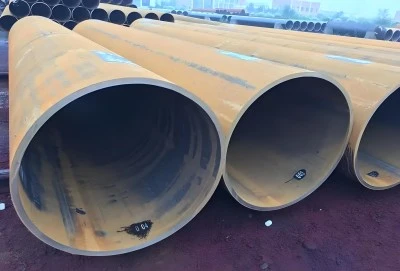
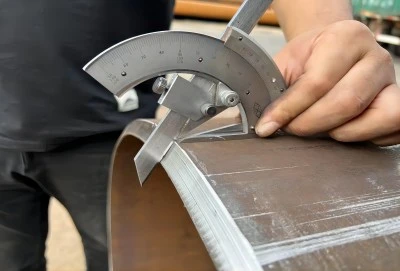
ASTM A672 Pipe Grades: B60, B65, B70, C60, and C70
ASTM A672 calls for steel pipes that are electric-fusion-welded (EFW), have an outside diameter of 16 inches or more, and are made from pressure vessel quality plate with filler metal added. It was made to work under high pressure at normal temperatures, and the type of heat treatment and x-rays that are needed are based on its class name.
The "B" Grade Series: A516-Based Plate
The grades B60, B65, and B70 are made from plates manufactured from ASTM A516 carbon steel. A516 has been specifically designed for improved notch toughness. This means that it can be used for moderate to low temperature applications. This is very important in LNG plants and other places where the risk of weak fracture has to be managed. B70 has the highest tensile strength in this series at minimum 70 ksi. B60 however has a minimum tensile strength of 60 ksi and is suitable for lower pressure applications.
The "C" Grade Series: A515-Based Plate
Grades C60 and C70 are made of ASTM A515 carbon steel plate. A515 is designed to have good performance at elevated temperatures and is the preferred material for power plant steam lines and industrial process heads that must continue to be in service at elevated temperatures for long periods of time. C70 has a tensile strength of minimum 70 ksi. Generally A515 is better than A516 at high temperatures because it has a slightly higher carbon content. But not as hard at low temperatures.
Class Designations: What the Numbers Mean Beyond Tensile Strength
Besides the type of plate, the ASTM A672 pipe class numbers (Class 12, 22, 32) refer to whether a full x-ray of the weld line is required and what type of post-weld heat treatment (PWHT) is required. For example, Class 22 must be stress-relieved heated and x-ray inspected 100% as is required by most project pipe material standards (PMS) for critical pressure service.
Comparing ASTM A672 Grades: B60, B65, B70, C60, and C70
When choosing a grade, mechanical qualities are the first thing that are looked at, but changes in chemical composition also play a big role in how well it welds and performs in the field.
Mechanical Properties Side by Side
On core mechanical tests, these are how the five grades stack up:
- B60 / C60: Minimum tensile strength 60 ksi (415 MPa); minimum yield strength 32 ksi (220 MPa). Suited for moderate-pressure headers and distribution lines.
- B65 / C65: Minimum tensile strength 65 ksi (450 MPa); minimum yield strength 35 ksi (240 MPa). Common in mid-range process piping where both pressure rating and cost efficiency matter.
- B70 / C70: Minimum tensile strength 70 ksi (485 MPa); minimum yield strength 38 ksi (260 MPa). Applied in high-pressure steam systems and demanding petrochemical process lines.
Application Guidance by Grade
ASTM A672 pipe B grades are more suitable for low temperature service and B60 and B65 are often used for LNG receiving terminals and cold climate gas transmission. The C grades, particularly C70, are standard for boiler feed systems, steam headers and catalytic reforming units where long term temperature exposure is the governing design condition. If you look at tensile strength alone you can miss the more important factor of service temperature.
How Do B and C Grades Compare to Other Pipe Standards?
Knowing how ASTM A672 fits in with ASTM A106, ASTM A53, API 5L, and ASTM A333 helps buying teams make sure they don't ask for too much or too little material for a service.
ASTM A672 vs. ASTM A106 and A53
ASTM A106 Grade B is a standard for seamless pipes that can be used at high temperatures. It only covers diameters where seamless production is possible. When you need pipes with a diameter of more than 16 inches outside diameter, seamless is either too expensive or can't be done at all. This gap is filled by ASTM A672 pipe, which has the same pressure values when made to Class 22 or Class 32 standards, which include a full x-ray check. If you need a pressure vessel, ASTM A53 is not a good option. It is also not a valid replacement in ASME B31.3 critical process service.
ASTM A672 vs. API 5L and ASTM A333
API 5L is a standard for pipeline transmission that has its own grade system (X42 through X80). It cannot be used in place of ASTM A672 for pressure vessels or power pipes. ASTM A333 covers service at low temperatures, but it doesn't cover the high-pressure EFW requirements that make up A672's scope. There is a separate application folder for each norm.
Cost-to-Performance Positioning
For general process lines, B65 and C65 are usually the best choices when it comes to cost-effectiveness and efficiency. The extra cost for B70 and C70 is worth it for their high-pressure and high-temperature work. When you over-specify C70 for a moderate-temperature header, you add extra cost and risk without any safety gain. This is a buying decision that experienced PMS reviewers catch during the technical evaluation phase.
Procurement Insights: Buying ASTM A672 Pipes by Grade
To find providers of EFW pipe that meet this standard, you need to make sure that they have recorded plate traceability, in-house NDT capabilities, and the range of sizes that your project needs.
What to Confirm Before Issuing an RFQ
Before you send out an RFQ for A672 EFW pipe, make sure that the supplier can give you full EN 10204 3.1 or 3.2 material test certificates, written NDE procedures for both RT and UT, and heat/lot number traceability from the original plate mill. These pieces of paperwork are not extra for following the ASME code; in fact, most EPC project inspection and test plans (ITP) require them to be turned in.
Lead Times, Stock, and Logistics
If you need a large diameter EFW pipe, the lead time will depend on the wall thickness and grade. For lots that are currently in stock, standard grades in common diameter ranges can be sent out within 7 days. Custom wall thicknesses or orders with a width between 914 and 1422 mm OD usually need 4 to 10 weeks to be made. Check to see if the stock is available early on in the planning process to avoid delays on the critical path.
Third-Party Inspection Coordination
Most EPC project specifications call for third-party inspection agencies to be present at key points during production. Choose a supplier that has a well-established way of working with TPI witness schedules so that production milestones don't get pushed back. This ability to coordinate is often a practical way to tell the difference between suppliers who are qualified and those who are not.
Ensuring Quality: Testing and Certification for ASTM A672 Pipes by Grade
Quality requirements under ASTM A672 are grade-specific and class-specific, and your purchase order must clearly state which class applies.
Mandatory NDE Requirements by Class
Class 12 requires only hydrostatic testing with no radiographic examination. Class 22 requires stress-relief heat treatment plus 100% radiography of the weld seam. Class 32 adds normalized heat treatment to the Class 22 requirements. For critical pressure service under ASME B31.3, Class 22 or 32 is the baseline expectation in virtually all project PMS documents.
Material Traceability and MTC Documentation
Each length of ASTM A672 pipe shall be traceable to the original plate heat number. The MTC shall include the chemical composition, mechanical test results, heat treatment records and NDE results. EN 10204 Type 3.1 is manufacturer certified documentation. Type 3.2 requires independent inspection body countersignature. This is the standard for SABIC, ADNOC and similar owner specifications.
Supplier Qualification Criteria
Verified manufacturing certifications (ISO 9001, API 5L), a documented quality management system, and references from previous pressure service projects are minimum qualification benchmarks. Suppliers who have supported third-party witness inspections for major EPC contractors demonstrate the process discipline that high-stakes procurement requires.
Conclusion
The service temperature range, base plate metallurgy, and the pressure class needs of your project will help you decide between ASTM A672 pipe B60, B65, B70, C60, and C70. B grades are good for service at low and mild temperatures, and C grades are good for service at high temperatures. The tensile strength level is set by the number at the end. If procurement engineers and quality managers use this specification matrix along with the correct class designation for heat treatment and NDE, they can write accurate purchase orders and accurately evaluate supplier proposals.
FAQ
Which ASTM A672 grade is best for low-temperature service?
Grades B60, B65 and B70 (all based on ASTM A516 plate) are the right choice for low-temperature applications. A516 is produced with improved notch toughness for use at sub-ambient temperatures. Charpy impact test results should always be verified to meet the required absorbed energy at the design minimum temperature for cryogenic LNG service.
What is the core difference between B grades and C grades?
The main difference is the base plate spec . B grades are made from ASTM A516 plate optimized for low temperature toughness. C grades use ASTM A515 plate that performs better at elevated temperatures due to its composition. Both employ the same numeric strength suffix system and are manufactured as EFW pipe to the same ASTM A672 specification framework.
Is ASTM A672 pipe interchangeable with ASTM A106 for high-pressure process lines?
Not directly. ASTM A106 is a seamless pipe standard for small diameters. ASTM A672 EFW pipe, if produced to Class 22 or 32 with 100% RT, serves the same high pressure function in large diameter ranges where seamless production is not practical. Substitution shall be subject to engineering review and code compliance verification per ASME B31.3.
Does ASTM A672 require post-weld heat treatment?
It is contingent upon the class. Class 12 does not require PWHT. Classes 22 and 32 require the manufacturing process to include stress-relief heat treatment. Your project PMS will decide which class is acceptable for each pipe line number.
What documentation should accompany an ASTM A672 pipe delivery?
Minimum: EN 10204 3.1 or 3.2 MTC, Hydrostatic Test Report, Radiographic Examination Records (Class 22/32), Heat Treatment Records, Dimensional Inspection Report, Plate Mill Traceability Certificate For ASME code projects, WPS/PQR records may be required for the pipe manufacturing weld as well.
Request a Quote from Longma Group — Your Trusted ASTM A672 Pipe Manufacturer
Longma Group has been making EFW steel pipe since 2003, and they send it to more than 90 different countries. We have ASTM A672 pipe in grades C60, C65, and C70, with outside diameters ranging from 457.2 mm to 1422 mm and wall thicknesses ranging from 7.92 mm to 75 mm. If the pipe is in stock, we can deliver it as quickly as 7 days. We provide all the necessary paperwork for EN 10204 3.1/3.2 and help with third-party inspection. To get a quote for a specific grade, please email our technical team at info@longma-group.com or visit our website at longma-group.com.