
If you work in offshore construction or structural steel fabrication, you have almost certainly encountered both API 2B and API 5L specifications on the same project bid sheet. The two standards share the "API" prefix, which causes confusion—but they serve fundamentally different purposes. API 2B pipe is a structural fabrication standard governing large-diameter, heavy-wall pipe built from rolled plate for load-bearing offshore applications such as jacket legs and foundation piles. API 5L, by contrast, is a line pipe standard designed for the pressure-contained transport of oil, gas, and water through pipelines. Choosing the wrong standard creates compliance failures, structural risk, and costly rework.
|
|
|
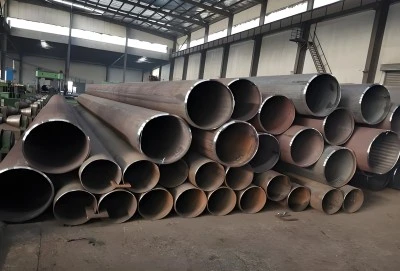
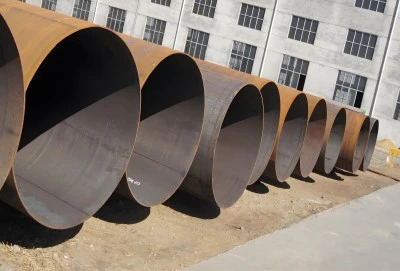
API 2B Pipe and API 5L Pipe Standards
What API 2B Pipe Actually Covers
API 2B tells you how to make structural steel pipe from plate using the Longitudinal Submerged Arc Welding (LSAW) method. The standard tells offshore structural members what shape to make, how good the weld should be, what base metal to use, and how big they can be. It's okay to use API 2H, 2W, and 2Y plate types, as well as ASTM A572 and A633 plates. The yield strength for Charpy V-Notch (CVN) must be between 36 ksi and 60+ ksi, and the tests must be done at temperatures as low as -40°F.
What API 5L Pipe Actually Covers
These are the rules for line pipes, which are used to move fluids. They cover both smooth and welded pipes. For each level of product specifications, PSL1 and PSL2, it sets the rules. PSL2 has stricter rules about chemical make-up, toughness, and nondestructive testing (NDE). A lot of people use grades X42, X52, X60, X65, and X70. This is the best standard for cross-country pipes and underwater flowlines because it only talks about keeping pressure inside and not about structural loads from the outside.
Why the Distinction Matters at the Procurement Stage
The buying teams could order pipe that doesn't pass design review if they mix up the two specs. When it comes to geometric roundness limits or through-thickness tensile standards, API 5L pipe doesn't have to follow the same rules as API 2B pipe. Engineers in the building industry want the out-of-roundness to be no more than 1% of the outside diameter (OD), or 0.25 inches. Only API 2B manufacturing controls can guaranty that range of sizes (16" to 56").
Technical Comparison: API 2B Pipe vs API 5L Pipe
Chemical Composition and Base Metal
Because they care most about being able to be welded and not splitting into lamellae, structural plate grades are used to make API 2B pipe. Heavy-wall sections that are hard to weld crack when they are made offshore because of hydrogen. This is why carbon equivalent values are closely watched. The yield and tensile strengths for hoop stress calculations under internal pressure are mostly controlled by the chemistry of API 5L grades. This is a completely different design driver.
Mechanical Properties and Testing Requirements
It is required by both specifications to check the tensile and yield strengths. However, API 2B adds CVN impact tests to make sure the material is strong in cold marine areas. An additional test called Z-direction testing (ASTM A770) is often added to API 2B pipe orders in places where there is a high chance of lamellar tears, such as node connection zones. You can do CVN tests as part of API 5L PSL2, but the temperature goals and absorbed energy needs are set for normal pipeline operation, not wave-action fatigue loads.
Dimensional Range and Wall Thickness Coverage
API 2B doesn't really set a maximum width because the plate-rolling process can make things from 16" OD to 100" OD or even bigger. An API 2B pipe from Longma Group can be 16" to 56" in diameter and has walls that are SCH10 to SCH160 thick. It has a single supply scope that can be used for jacket leg, pile, and conductor caisson works. Smooth, ERW, and DSAW are some of the other ways that API 5L pipes can be made. But production of smooth API 5L stops at 26" OD most of the time, so API 2B is the only choice for big structural members.
Procurement Considerations for API 2B and API 5L Pipes
Aligning Specification to Project Design Documents
Before you ask for quotes, check to see if the structure in your project follows API RP 2A-WSD or ISO 19902. In these offshore platform design codes, API 2B is used as the standard for making pipes for the pile members and jacket members. If you use this design to order API 5L pipe, the structural engineer won't agree with it. This will cause change orders and plan delays that cost a lot more than the difference in pipe cost.
Documentation and Third-Party Inspection
Please note that all offshore projects in Southeast Asia and the Middle East must have EN 10204 3.1 Material Test Certificates (MTCs), an ISO 9001-registered Quality Management System, and a way for a third party to check the work. The following pieces of paper can help you tell the difference between an API 2B provider that is following the rules and one that isn't:
- EN 10204 3.1 MTC: Heat-traceable test reports covering chemical analysis, tensile, CVN impact, and dimensional inspection, signed by an accredited inspector.
- ITP (Inspection and Test Plan): A fabrication hold-point schedule allowing client or third-party witnesses at plate receipt, fit-up, welding, NDE, and final dimensional check.
- NDE Records: 100% UT and RT of longitudinal seams, with reports referencing acceptance criteria in API 2B and any supplementary project specification.
- Weld Procedure Qualification Records (WPQRs): Pre-qualified DSAW procedures meeting API 2B mechanical property requirements for each wall thickness range.
These are called Weld Procedure Qualification Records (WPQRs). They list DSAW procedures that have already been approved and meet the mechanical property requirements set by API 2B for each range of wall thickness.
Lead Time, Stock, and Cost Management
Longma Group always has 100–200 tons of API 2B pipe in stock. Most sizes can be sent out in just 7 days. It takes longer to make things when the wall thickness and diameter get bigger. This is because larger wall thickness and diameter mean more field butt welds on your platform, which saves you money on labor. Bulk purchase contracts lock in prices before the steel plate market changes if they are talked about early in the project cycle. At the same time, this helps project cost controllers reach their goals for capital spending.
Industry Use Cases and Real-World Applications
Offshore Jacket Legs and Foundation Piling
This type of pipe is most often found in the main vertical legs of fixed offshore platforms and the driven piles that hold them to the seabed. These parts have to handle the force of a pile-driving hammer, the pressure of water, and the wear from waves over time. This API 2B pipe is made from API 2H or 2W plate that has been DSAW-welded and CVN-tested. It meets all three conditions.
Wind Turbine Monopile Foundations
They often need LSAW structural pipe that meets API 2B or a similar EN standard for monopile foundations when they build in the Gulf of Mexico or Southeast Asian seas. Thick walls of up to SCH160 give the twisting stiffness needed to handle rotor thrust loads without having too much steel mass, which has a direct effect on how much the installation tank costs and how much it can hold.
Marine Terminals and Berthing Structures
For mooing dolphins, berthing piles at LNG ports, and distant loading buoys, you need pipe that can handle the force of a ship hitting it without breaking easily. If API 2B pipe is made from a thermomechanically controlled process (TMCP) plate, it has a high yield strength and a high flexibility. This means that a single docking event can't permanently set the pipe in place or start a crack in the splash zone.
How to Choose Between API 2B Pipe and API 5L Pipe?
Which choice you make will depend on the main type of load your pipe will carry. With API 5L, you can make sure that a pipe moves fluids under pressure. The rule to follow is API 2B if the pipe is a load-bearing structural part that is being hit, squeezed, bent, or tensed axially.
There are two more questions that make the choice even better:
- Is your OD more than 24"? If that's the case, API 2B LSAW production is most likely the only way to make the item.
- If your project calls for heavy structural steel or steel used in ports, does it list the API RP 2A, ISO 19902, or AISC standards? These numbers go straight to API 2B for pipe parts.
Conclusion
API 2B pipe and API 5L pipe serve different engineering purposes and should be selected according to the specific requirements of each project. API 2B is intended for structural applications such as offshore jacket legs, foundation piles, and marine structures, where dimensional accuracy, material toughness, and resistance to external loads are critical. API 5L, in contrast, is designed for transporting oil, gas, and other fluids under pressure.
Before placing an order, project teams should verify the applicable specifications, material grades, dimensional tolerances, testing requirements, and inspection documentation to ensure compliance with project design criteria. For offshore and heavy structural applications, working with an experienced API 2B pipe manufacturer can help reduce procurement risks and avoid costly fabrication or installation delays.
Longma Group supplies API 2B structural pipe in a range of diameters and wall thicknesses, with material traceability and inspection support available to meet project requirements. Contact Longma Group to discuss your specifications and obtain a tailored quotation for your next project.
FAQ
Is API 2B pipe interchangeable with API 5L pipe?
No. The two specifications are not interchangeable for their primary applications. API 2B governs structural pipe where geometric tolerances, through-thickness ductility, and CVN toughness control fracture resistance under external loading. API 5L governs line pipe where chemistry and tensile properties control internal pressure containment. Substituting one for the other without engineering approval will fail design review.
Which specification costs more—API 2B or API 5L?
API 2B pipe generally carries a cost premium over standard API 5L pipe in equivalent wall thicknesses. The premium reflects tighter plate material qualification, mandatory CVN testing, 100% seam NDE, and EN 10204 3.1 documentation. For structural offshore members, that premium is a project risk mitigation cost, not an optional upgrade.
Does API 2B pipe come in spiral-welded form?
No. API 2B specifies plate fabrication with longitudinal seams only. Spiral-welded pipe is not considered suitable for critical offshore structural members because the helical weld geometry runs at an angle to the principal stress direction in jacket legs and piles, reducing confidence in fatigue performance at nodal connections.
What NDE methods does API 2B require for the weld seam?
API 2B requires 100% ultrasonic testing (UT) and radiographic testing (RT) of the longitudinal DSAW seam. Both methods together confirm full joint penetration and detect volumetric and planar defects that could initiate fatigue cracks under cyclic offshore loading.
Get API 2B Pipe From a Verified Manufacturer — Contact Longma Group
Longma Group has been making API 2B pipe since 2003. They make more than a million tons of it every year and sell it to more than 90 countries. We have structural pipe in stock that is 16" to 56" in diameter and has walls that are 10" to 160" thick. It is ready to be sent out right away. We can also cut the lengths to fit the number of welds on your platform. If you need API 2B pipes, we can help with third-party inspections and give you full EN 10204 3.1 MTCs and ISO 9001 QMS documentation. Go to longma-group.com or email info@longma-group.com about your project to get a technical offer right away.