
Procurement teams in oil and gas projects are often faced with a technical decision on line pipe options: whether to choose seamless, ERW or LSAW pipe types. API 5L steel pipe is the pipe manufactured under American Petroleum Institute Specification 5L. Pipe is produced in three basic types: seamless (SMLS), electric resistance welded (ERW), and longitudinal submerged arc welded (LSAW). Each type has different mechanical properties, dimensional ranges, cost profiles and application boundaries. Choosing the wrong type of equipment can put project compliance at risk, cause delays in third-party inspection approvals and ultimately eat away at EPC profit margins.
|
|
|
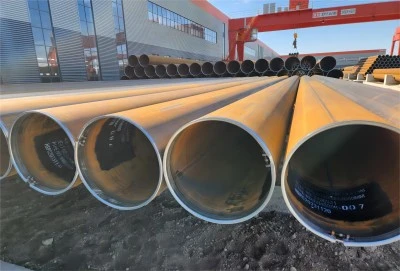
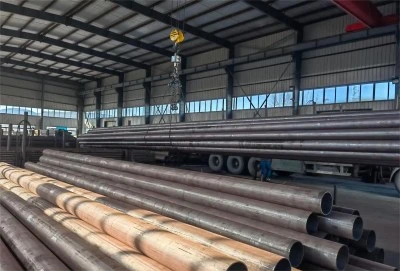
API 5L Steel Pipe Types
It is useful to know how these types of pipes are manufactured before comparing them directly, because the way they are made affects almost every property further down the line.
Seamless Pipe (SMLS)
A solid steel block is pierced by extrusion or rotating piercing and then hot-rolled to the correct diameter and wall thickness. This makes seamless tubing. This makes for a pipe that has no weld seams anywhere. Seamless pipe is available in grades B through X80 and sizes from 1/8" to approximately 16" OD. Its wall thickness is always the same and its metallurgical properties are always the same.
ERW Pipe (Electric Resistance Welded)
ERW pipe is produced by rolling flat steel strips into cylindrical shape and then welding the longitudinal seam using high frequency electric resistance. That method works fine for diameters 2" through 24". The area that needs to be heated up is not very large because no additional metal is added to the weld. ERW pipe is widely used for distribution lines and applications requiring low to moderate pressure.
LSAW Pipe (Longitudinal Submerged Arc Welded)
LSAW pipe is made from steel plate that is pressed into a "U" shape and then a "O" shape (UOE process). The lengthwise seam is then joined with submerged arc welding on both the inside and the outside. When you weld on both sides, you get thick, physically sound parts that can handle high pressures and thick walls. LSAW pipe is the standard for large-diameter transmission and offshore trunk lines because it can handle diameters from about 16" to 80".
Core Differences Between API 5L Seamless and ERW/LSAW Pipes
Figuring out the changes in how API 5L steel pipe is made is only the beginning. For procurement engineers, what counts is how these differences affect how well projects work and how well they follow the rules.
Manufacturing Process and Structural Integrity
Since seamless pipe doesn't have a weld zone, there is no chance of flaws related to welding. The immersed arc weld on both sides of an LSAW pipe makes a thick, fully penetrated joint that works very similarly to the base metal in most pressure tests. ERW pipe, on the other hand, uses electric fusion instead of filler, which means that the weld zone needs to be inspected more closely to meet PSL2 standards.
Mechanical Properties and Pressure Performance
Take a look at API 5L X65 PSL2 pipe as an example. When it is seamless, it usually has a minimum yield strength of 65,000 psi (450 MPa) all the way through the pipe body. LSAW pipe of the same grade meets the same yield and tension standards. Charpy V-Notch (CVN) testing is required to prove that the pipe is tough against impact. ERW pipe at X65 PSL2 also meets these mechanical minimums, but it needs to be inspected with ultrasonic waves that focus on the weld seam area.
Dimensional Range and Size Availability
This is where the three types differ most in real life. Because of how the billet piercing process works, seamless pipe can only have smaller diameters—usually less than 16" OD. In the middle is ERW pipe, which is usually 2" to 24". LSAW pipe can handle diameters from 16" to 80" OD. It can be used in large-diameter mainline and offshore areas that seamless pipe can't reach with the same wall thickness.
How to Choose Between API 5L Seamless, ERW, and LSAW Pipes?
The right pipe type depends on three interconnected factors: the application environment, the project budget, and supplier certification status.
Application and Service Environment
High-pressure gathering lines and wellhead connections operating above 1,500 psi typically call for seamless pipe, particularly when diameters fall below 8". Sour service environments containing H2S require compliance with NACE MR0175/ISO 15156—this applies to all three pipe types but is especially scrutinized in the weld zone for ERW and LSAW. Large-diameter gas transmission lines running at moderate-to-high pressures are the natural territory of LSAW pipe in X65, X70, or X80 grades.
Cost and Lead Time Considerations
ERW pipe generally offers the lowest unit cost among the three types because the strip-based production process is faster and generates less material waste. LSAW pipe sits at a higher price point due to the plate material and double-pass welding process. Seamless pipe commands a premium, particularly in thicker wall schedules (SCH80 through SCH160). For time-sensitive projects, ERW and LSAW pipes in standard grades can often ship in 7 days or more from stocked inventory.
Certification and Supplier Qualification
For any project subject to owner technical specifications or third-party audits, the API 5L steel pipe certificate—covering both PSL1 and PSL2 levels—must be current and must cover the specific grades and pipe types being purchased. Buyers should also request EN 10204 3.1 or 3.2 material test certificates (MTC), 100% ultrasonic testing (UT) or radiographic testing (RT) reports, and SGS or Bureau Veritas inspection records where the project requires third-party witness inspection.
Advantages and Limitations of Each Pipe Type
With each type of pipe comes its own set of pros and cons that buying teams must carefully weigh.
Here is a list of what each type of pipe does well and what it doesn't do so well:
- Seamless pipe achieves the most uniform wall thickness and eliminates weld-related failure modes entirely. It performs well in high-pressure, small-diameter service. Its limitation is the restricted diameter range and higher cost per ton compared to welded alternatives.
- ERW pipe offers fast production cycles and competitive pricing for mid-range diameters. It suits distribution and secondary lines effectively. The weld zone requires careful UT inspection under PSL2 conditions, and it is generally not specified for heavy-wall, large-diameter offshore applications.
- LSAW pipe is the preferred choice for large-diameter, high-pressure transmission lines and offshore applications where wall thickness can reach 40mm or more. The double-sided weld produces strong, traceable joints. Its limitation is higher cost than ERW and longer lead times for non-standard dimensions.
These differences have a direct effect on the type of pipe that passes the owner's technical review. When you specify the wrong type, like ERW when the owner's specification says LSAW for a certain width and pressure class, you have to deal with expensive replacement requests and delays.
Quality Testing and Standards Compliance
API 5L steel pipe quality in critical pipeline projects goes beyond mill certification. Third-party inspection, full traceability, and documentation completeness all factor into owner acceptance.
Non-Destructive Testing Requirements
Under API 5L PSL2, all weld seams in ERW and LSAW pipe must undergo 100% ultrasonic testing (UT). The pipe body is subject to UT or electromagnetic inspection for defect detection. Seamless pipe requires full-body UT or hydrostatic testing. Buyers should confirm that test records are traceable to the specific heat and pipe number on the MTC.
Certification and Documentation Package
A complete documentation package for EPC project procurement typically includes the API 5L mill certificate, EN 10204 3.1 MTC (or 3.2 with third-party countersignature), hydrostatic test records, dimensional inspection reports, and coating inspection reports where applicable. For sour service, the chemical analysis must demonstrate compliance with Annex H limits for sulfur and phosphorus content.
Third-Party and Owner Inspection Support
Owner-witnessed inspection at the mill—where an SGS or Bureau Veritas inspector verifies testing in real time—is standard practice on major EPC contracts. Suppliers who maintain an open factory policy for third-party inspection and provide dedicated documentation coordinators significantly reduce audit friction for procurement teams managing tight project schedules.
Conclusion
According to API 5L steel pipe, the differences between seamless, ERW, and LSAW pipe are how they are made, the range of diameters they come in, how well they work mechanically, and whether they are right for certain service conditions. For high-pressure service with a small diameter, seamless pipe is best. In mid-range delivery uses, ERW pipe works well. LSAW pipe is used to move things with a large diameter and high pressure. The best way to buy things for oil and gas pipeline projects is to match the right pipe type to the job, making sure that the pipes are current API 5L certified, have full NDT records, and have third-party inspection support.
FAQ
Can ERW pipe replace seamless pipe in high-pressure gas pipelines?
Yes, in some cases. API 5L PSL2 ERW pipe has the same mechanical minimums as seamless pipe in like grades, and 100% weld seam UT is required. But a lot of owner specifications for high pressure gathering or wellhead service require seamless pipe above certain pressure thresholds. Always consult the owner's technical specification before substitution.
How does LSAW pipe compare to seamless in sour service?
Both can be sour service configured, but must comply with NACE MR0175/ISO 15156 and API 5L Annex H. LSAW pipe needs further chemical and hardness qualification of the weld zone for sour service conditions. Seamless pipe eliminates the need to examine the weld zone, but still requires base metal HIC and SSC testing in H2S environments.
What certifications should I require from an API 5L steel pipe supplier?
Current API 5L license certificate for the grades and pipe type specified. EN 10204 3.1 MTC for each delivery lot Hydrostatic and UT test records Dimensional inspection reports. For owner audited projects, ask for 3.2 MTC with SGS or Bureau Veritas countersignature and full heat traceability documentation.
Get Certified API 5L Steel Pipe Directly from Longma Group
Longma Group has been making ERW and LSAW steel pipes since 2003, and they ship them to more than 90 different countries. We can supply API 5L steel pipes in grades B through X80, PSL1 and PSL2, with outside diameters ranging from 1/8" to 80" and wall schedules ranging from SCH10 to SCH160. We can deliver these pipes in as little as 7 days. We have up-to-date API 5L, ISO 9001, and QMS certificates, and we welcome full third-party inspections by companies like SGS and Bureau Veritas. To get a quote for your specific project, email our technical team at info@longma-group.com or go to longma-group.com.