
When sourcing pipeline materials for oil and gas projects, procurement directors often encounter two seemingly identical designations: ISO 3183 L290 pipe and API 5L X42. Both share a minimum yield strength of 290 MPa (42,000 psi), yet they originate from different standardization bodies—ISO (International Organization for Standardization) and API (American Petroleum Institute). While technically equivalent in mechanical performance, L290 follows metric-based international conventions prevalent across the Middle East, Southeast Asia, and South America, whereas X42 adheres to imperial measurements favored in North American markets. Understanding these nuances helps EPC contractors ensure seamless compliance with regional specifications while maintaining cost efficiency and project timelines.
|
|
|
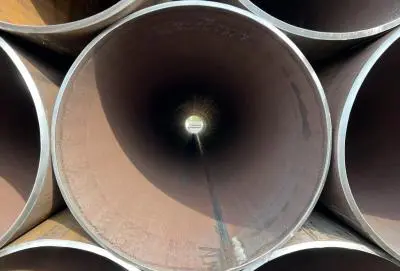
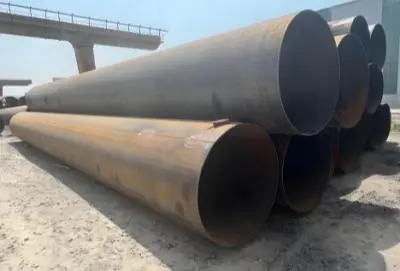
Overview of ISO 3183 L290 and API 5L X42 Pipe Standards
What Are the Core Standards Governing These Materials?
ISO 3183 spells out the rules for steel pipes used in the natural gas and oil industries. It focuses on the pipes' chemical make-up, their mechanical properties, and testing methods that are in line with standard international procedures. The American Petroleum Institute's API 5L does the same thing, but its specifications are more in line with North American business practices. Both standards cover Product Specification Levels (PSL 1 and PSL 2) for both seamless and welded pipe manufacturing. PSL 2 requires tighter tolerances, mandatory impact testing, and better traceability, which is important for projects that will be audited by SGS or Bureau Veritas.
How Do These Standards Differ in Manufacturing and Certification?
The methods used to make L290 and X42 are very similar. Longitudinal Submerged Arc Welding (LSAW) or Electric Resistance Welding (ERW) are the most common ways that mills make pipes. Pipes are then treated with heat in ways like leveling or thermomechanical rolling. Different types of pipes are certified in different ways. L290 must meet the requirements of ISO 3183 Annex H for sour service (H₂S environments), while X42 must meet the requirements of API 5L Appendix H. Pipes that are dual-certified (marked as L290/X42) make it easier to buy things for multinational projects by cutting down on lead times and unnecessary testing. Longma Group is certified by API 5L and ISO 9001:2016. This means that our plant can give out EN 10204 3.1 Material Test Certificates (MTC), which are accepted all over the world.
Why Global Acceptance Matters for Your Project?
In their technical specs, Saudi Aramco, Petrobras, and Petronas often use ISO 3183, while U.S.-based companies like ExxonMobil and Chevron use API 5L. Securing pipes that are certified under both standards reduces the risk of not meeting owner inspection requirements. Longma Group's production lines get high-quality steel strips from Shagang, TISCO, and HBIS. This way, we can track the raw materials from the melt batch to the final hydrostatic tests. For projects that need full documentation, like Inspection and Test Plans (ITP) and Manufacturing Procedure Specifications (MPS), this vertical integration helps.
Key Technical Differences Between L290 and API 5L X42 Pipes
Chemical Composition and Weldability
The main part of both grades is low-carbon manganese steel, and the maximum carbon content for PSL 2 types is 0.22% (seamless) or 0.20% (welded). The highest amount of manganese is 1.20%, and small amounts of niobium, vanadium, or titanium are added to make the grains smoother. With a Carbon Equivalent (CE) below 0.43%, these micro-alloying elements make the metal stronger without making it less flexible. This makes it perfect for field welding without preheating in mild climates.
The chemical windows for ISO 3183 are a little wider than those for API 5L. This makes it possible for steel mills in Asia and Europe to use their own methods. This freedom lowers the cost of buying things when you buy from more than one seller, but it requires careful checking of all arriving materials. Optical Emission Spectroscopy (OES) is used at our facility to make sure that the chemistry is correct before any cutting or shaping starts.
Mechanical Properties Across PSL Levels
ISO 3183 L290 pipe PSL 1 variants have simple requirements: they must have a minimum yield strength of 290 MPa and a minimum tensile strength of 415 MPa. The percentage of elongation depends on the thickness of the wall. PSL 2 exceeds predictions; its yield strength is between 290 and 495 MPa and its tensile strength is between 415 and 565 MPa. It also has managed yield-to-tensile ratios that keep it from breaking easily. Charpy V-notch impact testing at 0°C is required to make sure that installations will be tough in cold weather. Brinell or Vickers hardness checks make sure that the microstructure is the same across all weld zones.
Under PSL 2, tolerances for ovality are lowered to 1.0% of the nominal diameter, and tolerances for wall thickness are kept at ±10% (compared to ±12.5% under PSL 1). These precise standards reduce problems with fit-up during welding, which speeds up the building process and is very helpful for meeting contractual deadlines in fast-track EPC projects.
Inspection and Testing Protocols
For both grades, all seamless pipes must go through 100% ultrasonic testing (UT), and all ERW/LSAW welds must go through either electromagnetic testing (ET) or UT. Radiographic testing (RT) is only used in certain situations under PSL 2, mostly for important service pipelines that carry corrosive fluids. Hydrostatic testing, which uses test pressures determined according to ASME B31.4 or B31.8 standards, shows that the pressure is correct.
Longma Group uses automatic UT systems that can find flaws in walls as thin as 5%, which is thinner than what is required by API and ISO. Our ASNT Level II-certified quality control team looks over every inspection report before sending out material certificates. This makes sure that your QA/QC managers get data packages that can stand up to scrutiny from a third party.
Practical Applications and Performance Scenarios
Where L290 Excels?
The L290 is flexible and doesn't cost a lot of money. It works well in medium-low pressure oilfield gathering networks where operating pressures rarely go above 6 MPa. Its even toughness makes it possible to move crude oil from one place to another on land over short distances (less than 100 km), especially in mild climates with few temperature changes. Low-H₂S conditions (below 50 ppm partial pressure) are safe as long as the pipes meet the basic standards set out in ISO 3183 and don't need any extra sour service qualifications.
A recent project in Indonesia's Sumatra basin used L290 pipes for a 35-kilometer system with a 42-inch diameter that moved crude at 4.5 MPa. Within seven weeks, our team produced 8,500 tons, which included beveled ends and FBE coating that was put in the shop. This allowed the contractor to finish the installation early. The project's success depended on our ability to have TÜV SÜD do third-party inspections at our factory, which cut down on the time needed for verifications to be done elsewhere.
When X42 Becomes Necessary?
Specifications are moving toward API 5L X42 because it can handle higher working pressures (up to 10 MPa) and higher design factors (≥0.72 per ASME B31.4). This is especially true in North America, where PHMSA rules apply. X42 is also commonly used in subsea pipeline uses that need better fracture toughness, though X52 or higher grades are often used for these types of projects.
A midstream operator in Texas recently asked for X42 PSL 2 for a 24-inch natural gas lateral that will work at 9.2 MPa. We sent 3,200 tons of LSAW pipes with an external covering of 3LPE and an internal flow coating (IFC) that met the strict NACE MR0175 standards for trace H₂S exposure. Our mill certificates had both L290 and X42 certifications, which met the requirements of both the operator's API-focused quality program and the international parent company's ISO-based procurement standards.
Procurement Considerations for L290 vs API 5L X42 Pipes
Cost Structures and Supply Chain Dynamics
Prices for L290 and X42 are still about the same. They usually cost between $650 and $850 per ton FOB Chinese ports for normal wall thicknesses. For PSL 2 updates (+$50 to $80/ton), faster delivery (+$30 to $50/ton), and special coatings, there are extra fees. Orders of more than 500 tons qualify for bulk savings, and shipments that are combined lower the cost of freight per unit.
Lead times are usually 30 to 45 days for stock sizes (24 inches in diameter and 15 mm in wall), but they can be up to 75 days for large-diameter, heavy-wall shapes that need custom forming dies. Longma Group keeps extra stock of common sizes (8-inch to 20-inch, Grade X42/L290 PSL 1) of ISO 3183 L290 pipe so they can speed fulfillment seven days faster. This is very important when project plans get squished because of delays in getting permits or bad weather during certain times of the year.
Supplier Evaluation and Quality Assurance
Checking API monogram licenses is still a must; use the API Composite List database to make sure your supplier is still certified. In order to make sure that you are following ISO 3183, you should ask for copies of security audit reports from reputable organizations such as LRQA or DNV. Factory audits (FAT) give people the most trust. Every year, our Cangzhou plant hosts more than 30 audits from foreign clients, and production records, heat treatment charts, and calibration logs are all open for everyone to see.
The minimum order quantity (MOQ) changes based on the type of product: 50 tons for standard ERW pipes, 200 tons for LSAW versions, and 300 tons for dual-certified material that has extra testing. The terms of payment (30% down payment and 70% after receiving copies of the shipping papers) are standard in the business. However, repeat customers can often negotiate open-account terms after showing a steady stream of orders.
Logistics and Compliance Documentation
Commercial invoices, packing lists, bills of lading, certificates of origin, and mill test reports (MTR) in line with EN 10204 3.1 are all types of export paperwork. Destination-specific standards, like SASO certificates for imports to Saudi Arabia or PED compliance for projects in the European Union, add 10 to 15 days to the paperwork process if they are not planned ahead of time.
The operations team at Longma Group plans either container stuffing (35–40 tons per 40HC for small diameters) or break-bulk shipping (best for pipes bigger than 30 inches in diameter), working with freight forwarders to get the best ocean rates. Our CIF/DDP quotes include marine insurance and handling at the target port, which makes it easier for your company to get approvals for purchases.
Conclusion
ISO 3183 L290 pipe and API 5L X42 are two types of steel that are basically identical. They are split by standardization practices rather than performance gaps. They are not inherently better, but where the project is located, what the owner wants, and the rules and regulations that apply all play a role in the choice. To do a good job of buying, you need to be clear on PSL levels, sour service standards, and the validity of seller certification. Longma Group gets around these problems with output that is dual-certified, thorough documentation, and quick expert help. Whether your next pipeline goes through the jungles of Indonesia or the deserts of Saudi Arabia, we can get you materials that meet your needs and your schedule. Our 20 years of manufacturing excellence backs this up.
FAQ
What distinguishes ISO 3183 L290 from API 5L X42 chemically?
The chemicals that make up both grades are very similar. Low-carbon manganese steel has up to 0.22% carbon and up to 1.20% manganese. The main difference is in the way the standards are set. ISO 3183 uses metric units and allows for wider compositional ranges, while API 5L uses imperial standards and has tighter carbon equivalent limits for some wall thicknesses. Dual-certified pipes get rid of the practical differences between standards because they meet the requirements for both weldability and toughness.
Can L290 pipes handle high-pressure applications?
As designed, L290 can handle medium-pressure work up to 6–7 MPa (870–1,015 psi). When there are higher pressures (8–10 MPa) or important uses, X52, X56, or stronger grades are often needed. PSL 2 versions of L290, on the other hand, have controlled yield ratios and must pass impact tests. This means they can be used in more situations than PSL 1 versions, filling in performance gaps in fairly demanding setups.
What are typical lead times for L290/X42 orders?
Standard sizes (8–20 inches in diameter, ≤15 mm wall thickness) ship 30–45 days after the order is confirmed. It takes an extra 60 to 75 days for custom sizes, heavy walls (≥20 mm), or large diameters (≥30 inch). Longma Group offers expedited production (7–14 days) for some stock items, depending on the amount and finishing needs. Getting providers involved early on in the planning stages of a project lowers the risk of delays.
Connect with a Trusted ISO 3183 L290 Pipe Manufacturer
Longma Group can help you with your pipeline projects by making approved L290 and X42 pipes that meet the strictest international standards. As a well-known ISO 3183 L290 pipe supplier, we offer competitive prices, dependable delivery, and strict quality control, from choosing the raw materials at top Chinese steel mills (Shagang, TISCO, and HBIS) to final hydrostatic testing and third-party inspections. Our API 5L monogram and ISO 9001:2016 certifications make sure that everything can be tracked and that we're following the rules. We also offer value-added services like beveling, coating (FBE, 3LPE), and customized documentation (ITP, MPS, MTC per EN 10204 3.1/3.2) to make your procurement processes easier. You can talk to our expert sales team at info@longma-group.com about your needs, get quotes, or set up plant audits. Check out our full line of products at longma-group.com to see why top EPC companies in more than 90 countries trust us with their most important building materials.








