
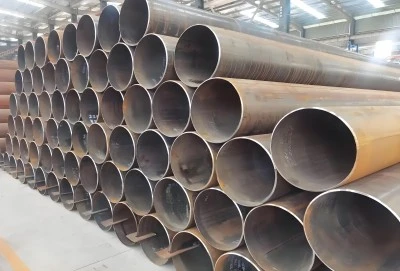
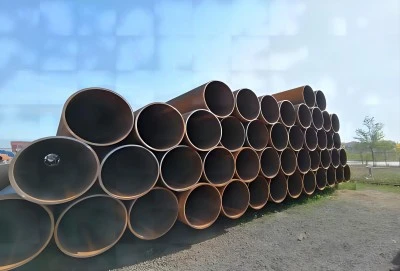
If a steel pipe meets the technical standards set by the American Petroleum Institute, it is called API pipe. These pipes have to meet strict specifications mainly found in API 5L, which controls line pipes used for moving oil, gas, and water. API 5L X56 pipe, one API pipe, stands out because it has a minimum yield strength of 56,000 psi, which means it can be used in medium- to high-pressure situations. Knowing about API pipe standards helps engineers and procurement managers choose materials that are safe, long-lasting, and in line with regulations for important building projects around the world.
|
|
|
Meaning and Specifications of API Pipes
What Does API Stand For in Pipeline Manufacturing?
A lot of rules were made by the American Petroleum Institute to control quality and performance in the energy industry. Line pipes that carry gas, water, and oil are especially talked about in API 5L. There are two levels of the standard, which are called PSL1 and PSL2. PSL1 sets normal quality standards that are good for most transmission lines. PSL2, on the other hand, requires stricter chemical composition limits, required impact testing, and better traceability for important uses that use dangerous materials or are in high-pressure areas.
Key Technical Specifications of X56 Grade Pipe
In API 5L, the minimum yield strength is shown by a "X" followed by a number. The number is in thousands of pounds per square inch. The minimum yield strength of API 5l X56 pipe is 56,000 psi. This puts it in the middle of smaller grades like X52 and higher grades like X60 or X65. This grade strikes a good mix between mechanical strength and weldability. This makes it a good choice for projects that need solid performance without having to pay more for ultra-high-strength options.
There are different ways that manufacturers join X56 pipe together. Electric Resistance Welding (ERW) and High Frequency Welding (HFW) work best with sizes that are small to middle, usually between 1/2 inch and 24 inches. Longitudinally Submerged Arc Welding (LSAW) and Double Submerged Arc Welding (DSAW) can work with larger diameters (16 inches to 80 inches), making major pipes stronger. Spirally Submerged Arc Welding (SSAW) is a flexible way to join big diameter parts while keeping the structure strong.
To get the right mechanical qualities, the carbon, manganese, phosphorus, sulfur, and other elements in X56 steel are carefully controlled in its chemical makeup. Carbon equivalent formulas help predict whether something can be welded, and PSL2 standards set upper limits to lower the risk of cold cracking during field welding operations.
Comparative Analysis: API 5L X56 Pipes Versus Other Pipe Grades
How X56 Compares to Adjacent Grades
When choosing between grades X52, X56, X60, and X65, performance needs and project funds must be balanced. The most cost-effective choice is X52 pipe, which is strong enough for lower-pressure devices. The X56 material has a higher capacity for moderate-pressure uses while still having good welding properties. The X60 and X65 types are stronger, but they need to be welded with more care and may cost more in materials.
The ratio of yield to tensile strength is still a key factor to think about. API 5l X56 pipe keeps its good flexibility, which means that the pipe can slightly bend under heavy loads without breaking in a terrible way. This feature is useful in places where there are earthquakes or where the ground moves, as it keeps the pipeline from breaking.
X56 Versus Alternative Materials
Because they are strong for the price, carbon steel types are used most often to build pipelines. It is better at resisting rust than other metals, but stainless steel is much more expensive to buy and make. The best performance for most oil and gas transfer tasks is achieved with carbon steel X56 pipe that has been coated properly. Three-layer polyethylene (3LPE) or fusion-bonded epoxy (FBE) coatings stop rust from the outside, and interior coatings or inhibitors stop corrosion on the product side.
L390 under ISO 3183 is the European counterpart of X56. Both terms mean about 390 MPa of bending strength. This international standardization makes it easier to buy things across borders and makes sure that performance standards are the same for all global projects.
Manufacturing Method Impact on Performance
When tight circle specs and smooth surface finishes are needed, ERW and HFW pipes work great. The constant production method makes sure that the material properties and wall thickness are always the same. When made from plates, LSAW pipes are stronger and can handle high pressures and large sizes. Deep penetration welds with great material qualities can be made with submerged arc welding. SSAW pipes are cheaper for uses with a big diameter and low pressure, but they still do a good job of supporting structures.
Application and Quality Testing of API 5L X56 Pipes
Primary Industrial Applications
The industry that uses the most X56 line pipe is the oil and gas industry. Gathering lines carry natural gas and heavy oil from wellheads to processing plants. They often have to go through rough terrain and weather. Transmission pipes move refined goods across countries, so they need materials that can last for many years. Natural gas is delivered to homes and businesses by networks called distribution networks, which must work reliably and safely.
API 5l X56 pipe is used for more than just moving oil. It is also used for water supply infrastructure, especially in large-diameter trunk lines that connect to city systems. The strength of the material lets it withstand large internal forces as well as loads from the ground and traffic. Offshore platforms use X56 pipe for structural purposes that need high strength-to-weight ratios and protection to rust. These pipes are used in construction projects for foundation piles and structural supports where their load-bearing ability makes them a better choice than regular structural steel.
Deepwater and submarine sites have very tough working conditions. X56 pipe has to be able to handle hydrostatic pressure, dynamic loads from waves and currents, and places where seawater could be harmful. In these tough situations, choosing the right materials, coatings, and cathodic protection will ensure long-term stability.
Comprehensive Quality Assurance Protocols
Checking the raw materials is the first step in quality testing. Mills give out papers that list the chemical make-up and mechanical qualities of steel plates or coils. Process controls keep an eye on the welding settings, making temperatures, and cooling rates during production to make sure everything stays the same.
Non-destructive testing finds flaws in the pipe without hurting it. High-frequency sound waves are used in ultrasonic tests to find internal cracks, laminations, and weld imperfections. An X-ray shows that the weld gaps are porous, have slag spots, and aren't fully fused together. Magnetic particle screening finds flaws on the surface and close to the surface of ferrous materials.
Hydrostatic testing uses internal pressure that is higher than the design grade to find leaks and make sure the structure is solid. Pressure tests are done on each pipe, usually at 90 to 95% of its minimum yield strength for a set amount of time. This proof test makes sure that the pipe can safely hold working pressures with enough room for error.
API 5l X56 pipes from every production lot are used in mechanical testing programs as samples. Tensile tests find out the final tensile strength, the yield strength, and the extension. Charpy V-notch impact tests measure how tough a material is at certain temperatures, which is especially important for PSL2 standards. Testing for flexibility and weld quality by flattening and bending the metal. Chemical research proves that the makeup is within the limits set by the specifications.
For sour service uses with hydrogen sulfide, PSL2 pipes may need more testing. Hydrogen-induced cracking (HIC) tests according to NACE TM0284 check how resistant something is to breaking inside. Sulfide stress corrosion cracking (SSCC) tests check how likely something is to crack in a sour climate when it is under tension stress.
Essential Certifications and Documentation
Manufacturers with a good reputation give complete paperwork packages. The chemistry make-up and mechanical test results for each heat or lot are written on Material Test Certificates (MTCs). Inspection and Test Plans (ITPs) spell out the steps and places where quality checks will be done during production. Manufacturing Procedure Specifications (MPS) list the specifications for welding, the steps for heat treatment, and the controls for the process.
FAQs
What certifications should I verify when purchasing API 5L X56 pipe?
Buyers should make sure that the makers have a current API 5L monogram license, which lets them mark pipes with API approval. Getting ISO 9001 approval for quality management means that processes are controlled in a planned way. Material Test Certificates that list the chemical and mechanical qualities for a particular order are proof that the requirements were met. Third-party inspection reports from reputable organizations offer independent confirmation, which is especially useful for important applications or sellers who are doing business for the first time.
How does heat treatment affect X56 pipe performance?
The microstructure of steel is fine-tuned by heat treatment, which improves its dynamic qualities and physical stability. The pipe is heated above its transformation temperature and then cooled by air. This creates a regular grain structure and lowers the stress inside the pipe. Through controlled heating and cooling processes, quenching and tempering makes things stronger and tougher. The right heat treatment makes it easier to join, lessens changes in strength, and makes it less likely to break easily at low temperatures.
Can X56 pipe be used in offshore and deepwater applications?
When correctly defined and protected, X56 pipe can be used in a lot of offshore situations. The grade is strong enough for underwater flowlines, platform supports, and risers. The harsh sea climate can be dealt with by using coatings, cathodic protection, and corrosion-resistant metal overlays to stop rusting. For deepwater uses, extra tests might be needed, like low-temperature impact tests, to make sure the material is tough enough for the job. Specialized end links and inspection rules make sure that the integrity stays the same even when there are high pressures and changing loads.
Conclusion
API pipes are an important part of the world's energy grid, and X56 grade provides the best mix of strength, weldability, and cost-effectiveness for tough uses. Procurement pros can make smart choices when they understand specification needs, manufacturing methods, and quality assurance processes. When you compare X56 to other grades, you can see where this material really shines and where higher or lower specs might be better. Tough testing procedures and the right approval paperwork make sure that the product will work reliably for decades in tough settings. Strategically choosing suppliers and doing thorough research on them lowers the risks of buying while ensuring competitive prices and on-time delivery.
Partner with a Trusted API 5L X56 Pipe Manufacturer
Since 2003, Longma Group has been making high-quality ERW and LSAW steel pipes that are known in more than 90 countries. Our sites are API 5L certified and use cutting edge production tools and strict quality controls to make X56 pipe in PSL1 and PSL2 grades. We only buy raw materials from the best local mills, like Shagang, BaoSteel, and HBIS, so the qualities of the materials are always the same. Chemical analysis, mechanical property proof, ultrasound inspection, radiography examination, and hydrostatic testing are just some of the many tests we can do. We offer full paperwork packages that include Material Test Certificates, Inspection and Test Plans, and inspection results from a third party that meet the needs of your project. With a yearly production capacity of more than 1,000,000 tons and an inventory of standard specs, we can offer low prices and fast delivery. Throughout the lifespan of your project, our expert team can help with manufacturing, coating applications, and engineering. Get in touch with our experts at info@longma-group.com to talk about your API 5L X56 pipe requirements and get a full quote from a dependable source who wants your business to succeed.