
The API 5L PSL2 standard says that the bending strength of API 5L X80 pipe must be at least a minimum of 555 MPa (80,500 psi). This important mechanical feature tells us the stress level at which the material changes from elastic deformation, where it can go back to its original shape, to plastic deformation, where it changes shape permanently. When building high-pressure transmission systems, it's important to know this number because it directly affects the highest operating pressure your pipeline can safely handle. The yield strength of X80 is about 14% higher than that of X70. This means that engineers can make pipes with thinner walls or that can work at higher pressures while still staying safe.
|
|
|
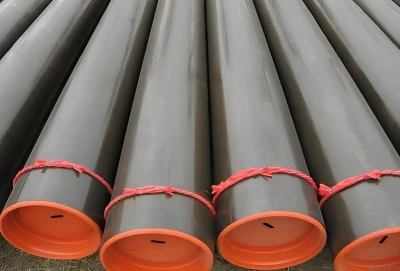
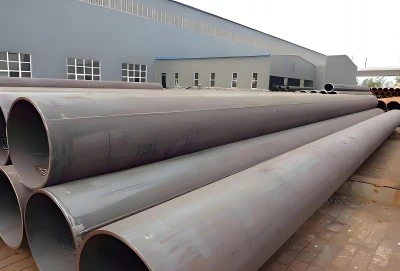
Understanding the Yield Strength of API 5L X80 Pipe
Yield strength tells you how much stress a material can take before it starts to change shape permanently. When you talk about API 5L X80 pipe systems that carry 12 MPa natural gas or crude oil over thousands of kilometers, this standard is what you use to do your engineering estimates.
Why Yield Strength Matters in Pipeline Design?
X80 grade pipes have a minimum yield strength of 555 MPa, which immediately leads to practical benefits. Engineers who work on pipelines use this parameter to figure out how thick the walls need to be using the Barlow formula. This formula connects internal pressure, pipe width, wall thickness, and allowed stress. Either higher working pressures or thinner walls are possible with higher yield strength, which is good for the economy. By switching from X70 to X80 standards, procurement managers have been able to cut the weight of steel by 10 to 15 percent on large projects. This saves money on both materials and shipping.
In addition to cost, yield strength affects how the pipeline acts when it is being installed and when it is being used. Materials that can handle a lot of strain are needed for pipelines that go through seismically busy zones or places where the ground is likely to move. The X80 grade keeps its shape under longitudinal strain conditions that would weaken lower-grade materials. This makes it ideal for strain-based design methods that are being used more and more in modern pipeline building.
API 5L Standards and Complementary Specifications
There are two types of product specifications set by the API 5L standard. These are PSL1 and PSL2. Most of the time, X80 pipes are made according to PSL2 standards, which include strict limits on chemical makeup, more thorough mechanical testing, and confirmed toughness qualities. Tensile strength ranges from 625 to 827 MPa, with a minimum yield strength of 555 MPa. It's important to note that PSL2 keeps the yield-to-tensile ratio at a maximum of 0.93. This makes sure that the material can be deformed enough before it breaks.
Standards that work with API 5L, such as ISO 3183 (which lists X80 as L555) and many national guidelines, make it easier to buy things and complete projects across borders. Not only must material test papers show the yield and tensile strengths, but they must also show the Charpy V-notch impact energy values and, if needed, drop-weight tear test results that show the material is not likely to break easily.
Relationship Between Yield Strength and Other Mechanical Properties
Yield strength is not something that exists by itself. Tensile strength shows the highest force that a material can take before it breaks. Elongation, on the other hand, shows how much it can stretch before it breaks, which indicates ductility. Impact testing measures a material's Toughness, which shows how well it stops cracks from starting and spreading, especially when temperatures are low.
The better performance of X80 pipes comes from thermomechanical controlled processing that creates a fine-grained substructure of acicular ferrite or bainite. This microstructure gives the material both great strength and excellent toughness at the same time, which is hard to do with normal processes. The carbon equivalent is carefully kept below 0.43% so that the weldability stays high even though the strength level is high. This solves a problem that field welding teams often have.
API 5L X80 Pipe Dimensions, Chemical Composition, and Manufacturing Impact on Yield Strength
The effectiveness of a material comes from where chemistry, geometry, and the production process meet. Each part is responsible for a different part of figuring out if API 5L X80 pipe regularly meets the requirements for big production runs.
Standard Dimensions and Their Influence on Properties
Longma Group makes X80 pipes with outer diameters ranging from 1/2" to 72" and wall thicknesses from SCH10 to SCH160. These sizes can be adjusted to meet the needs of a wide range of projects, from gathering lines to trunk transmission systems. Tolerances in dimensions affect both the uniformity of geometric properties and the consistency of mechanical properties. To make sure that the yield strength is the same across the wall thicknesses, cooling rates must be carefully controlled during thermomechanical processes for pipes with larger diameters and thicker walls.
The choice of wall width has to do with balancing building needs with cost concerns. Thicker walls offer more safety and protection against damage from the outside, but they also cost more and are harder to build. Because X80 has a higher yield strength, engineers can specify thinner walls than they would have to with lower grades. This is especially helpful in offshore uses where the weight of the hanging pipeline has a direct effect on the design of the platform.
Chemical Composition and Microalloying Strategy
The science of X80 steel shows how metalworking has changed over the past few decades. The Carbon content is purposely kept low—usually between 0.04% and 0.10%—so that the metal is easier to weld and stronger. Manganese, which is normally found in amounts between 1.6 and 1.9%, makes things stronger by solidifying solutions and stopping phase changes that aren't wanted.
The clear speed edge comes from Microalloying elements. Adding small amounts of Niobium, vanadium, and titanium to steel changes the grain size and makes fine precipitates that make the steel stronger without making it less tough. The X80 grade can reach a yield strength of 555 MPa thanks to these elements. It also has great low-temperature impact properties, often meeting standards down to -45°C for Arctic pipeline uses.
We only get our raw materials from the best local mills, like Shagang, HBIS, and Bao Steel. This way, we can be sure that the chemistry is always the same and meets both API 5L standards and customer-specific needs. Material tracking from the heat number to the finished product creates the paper trail needed for quality control and legal compliance.
Manufacturing Methods and Heat Treatment Effects
X80 pipes are mostly made in two main ways: seamless processes and welded building. By poking holes in and rolling solid billets, lengthwise seams are taken out, leaving only seamless pipes. Our LSAW (Longitudinal Submerged Arc Welded) and ERW (Electric Resistance Welded) pipes have longitudinal seams that join a formed plate or coil. The seam qualities are made to match or exceed the standards of the base material through complex welding and heat treatment.
Thermomechanical controlled processing is the technology that makes current high-strength pipeline steels possible. This method carefully manages the rolling temperatures and compression patterns to create fine-grained microstructures that provide better strength-to-toughness ratios. Accelerated cooling after the last few rolling passes makes the grain even better without having to go through another heat treatment.
Some types of X80Q go through quenching and tempering, a heat treatment cycle that makes the steel austenitized, quickly cools it to make martensite, and then tempers it at a medium temperature to get the right mix of strength and toughness. This process improves the regularity of properties, which is especially helpful for important uses.
Comparing API 5L X80 Yield Strength with Other Pipeline Grades
When choosing materials, it's important to know how different ones work and what that means for operations. The API 5L X80 pipe grade fills a special need because its properties match the needs of difficult projects.
X80 Versus X70 and X65: Strength and Economic Trade-offs
There are big differences between X80's minimum yield strength of 555 MPa and those of X70 at 485 MPa and X65 at 450 MPa. This 14 to 22 percent edge in strength means real rewards. Projects can work at higher pressures with the same wall thickness, which increases the amount of work that can be done without adding more compression equipment. On the other hand, keeping the working pressure steady lets the wall thickness go down, which cuts the amount of steel needed by 10-15% compared to X70.
Costs of both materials and assembly must be taken into account in economic research. Most of the time, X80 costs 15-20% more per ton than X70, but because less tonnage is needed, overall material costs are usually cheaper. It takes less time to weld and use less filler metal when the walls are thinner. This speeds up the building process, especially for big pipes that need thousands of girth welds.
When defining X80, the biggest problem is how to handle Welding considerations. The material needs stricter control over the warming and interpass temperatures than lower types. Welding supplies must have the same or higher power as the weld itself, and the welding process must be qualified through thorough testing. Organizations that know how to do X70 welding can change to X80 needs, but the real costs of the project are the training and process development.
X80 Compared to Alternative Materials
Stainless steel alloys are much more resistant to corrosion than X80, but they are much more expensive (usually three to five times as much) and need bigger walls to achieve the same pressure values. Carbon steel types below X65 are less expensive, but they don't have the efficiency gains that make X80 a good choice for long-distance transmission.
The X80 grade gives the best results for certain tasks. When working at 10-15 MPa, transcontinental gas transportation pipes benefit a lot from X80's high strength, good toughness, and easy welding requirements. X70 may be a better value for projects in mild climates that need regular corrosion protection. On the other hand, X80 or even higher grades may be needed for pipes in the Arctic that need to be very tough at low temperatures.
Conclusion
More than just a material standard, the 555 MPa minimum yield strength of API 5L X80 pipe is the technical basis for current high-capacity, long-distance pipeline transmission. When procurement workers and engineers know how this trait is related to chemical makeup, production processes, and operational needs, they can choose materials that are both good for performance and cost-effective. When projects need the best mix of strength, toughness, and weldability, X80 grade pipes have been used successfully in a wide range of situations, from sending gas through the Arctic to producing oil offshore.
FAQ
What distinguishes X80 from lower-grade pipeline steels?
The minimum yield strength of API 5L X80 pipe is 555 MPa, while the minimum yield strength of X70 is 485 MPa and the minimum yield strength of X65 is 450 MPa. This is a 14–22% increase in strength. This higher strength lets you make walls that are smaller or use higher working pressures. On big projects, this can cut material costs by 10–15 percent while keeping safety margins the same. There are some downsides, like stricter welding rules and generally 15-20% higher material costs per ton, but overall, X80 is usually the better choice for high-pressure, long-distance transportation uses.
Can X80 pipe be used in sour service environments containing H2S?
Standard X80 specs don't automatically make the material suitable for bad service. For uses involving hydrogen sulfide, you need X80MS or X80QS versions that are made with clean steel methods and controlled hardness levels that don't go over 250 HV10. This keeps sulfide stress cracking from happening. When choosing materials for bad service, it's important to talk to metallurgy experts and follow rules like NACE MR0175 to make sure they will last.
Why does API 5L say that X80 grade must meet PSL2 requirements?
The PSL2 standard level requires strict controls on chemical makeup, especially limits on carbon equivalents that make sure the material can be welded even though it is very strong. For PSL2, toughness must be proven through Charpy V-notch impact testing and drop-weight tear testing. These are important qualities for safe operation at the high stress levels that X80 lines go through. These standards are missing from the PSL1 specifications, which means they can't be used for high-strength uses where the toughness of the material directly affects safety.
Partner with Longma Group for Reliable API 5L X80 Pipe Supply
Choosing the right X80 pipe provider is just as important to the success of a project as choosing the right materials. Longma Group has been making things for 20 years, can make more than 1,000,000 tons of goods every year, and has many quality standards, such as API 5L and ISO 9001:2016. We make API 5L X80 pipe products with wall thicknesses ranging from SCH10 to SCH160 and sizes ranging from 1/2" to 72". These pipes are used for a wide range of projects, from small gathering systems to large transportation infrastructure. Our fully combined operations, which include buying raw materials from top mills like HBIS and Bao Steel, providing manufacturing services like welding, coating application (3LPE, 3PP, and FBE), and thorough testing, make sure that the quality is always the same and make transportation easier. Engineering workers and procurement managers like our full paperwork packages, which include test certificates for materials, inspection and test plans, and detailed instructions on how to make the products that meet the strictest project requirements. We can deliver in as little as seven days and have worked with clients in over 90 countries, so we can give global projects the stability they need. Get in touch with our expert team at info@longma-group.com to talk about your X80 pipe needs and find out how working with a well-known API 5L X80 pipe maker can save you money in more ways than one.