
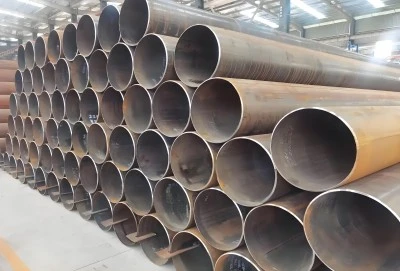
When purchasing API 5L X56 pipe for your oil and gas transmission projects, the decision extends far beyond selecting a grade designation. This high-strength line pipe, engineered with a minimum yield strength of 56,000 psi (390 MPa), demands careful evaluation across multiple dimensions—from compliance with international standards and manufacturing quality to delivery reliability and supplier credentials. As an EPC contractor managing complex pipeline installations, you need pipes that meet stringent technical specifications while arriving on-site exactly when your project schedule demands. Understanding what truly matters during procurement protects your project timelines, ensures regulatory compliance, and ultimately safeguards both your investment and reputation.
|
|
|

Understanding API 5L X56 Pipe Specifications and Properties
To choose the right line pipe, you must first understand the technical basis of L390 material performance. The science and mechanical properties of this grade have a direct effect on how well your pipes work under pressure, how well they handle environmental problems, and how well they keep their integrity over many years of use.
Chemical Composition and Its Impact on Performance
The chemicals that make up X56 steel make it different from lower grades and determine how well it welds, how tough it is, and how well it doesn't crack. In PSL2 specifications, the carbon content usually stays below 0.24%. This makes sure that the metal can be welded in the field without having to go through a lot of preheating steps. Manganese amounts around 1.40% make the pipe stronger while keeping its flexibility. This means that the pipe can handle changes in the ground and changes in temperature without breaking. Sulfur and phosphorus levels are tightly controlled—usually below 0.015% and 0.025%, respectively—to keep dangerous inclusions from getting into the structure and causing damage. Finding the right balance between strength and ease of use makes a material that works well and can be installed in tough conditions.
Mechanical Properties That Define Reliability
This grade's strength rating puts it in a good spot between normal Grade B material and high-end X65 products. Because these pipes have a tensile strength greater than 490 MPa and a minimum yield strength of 386-390 MPa, they can handle higher operating pressures than lower grades while needing thinner walls. This strength-to-weight advantage means that it costs less to ship and is easier to handle during installation. The material's elongation qualities make sure that it can bend and straighten in the field without breaking. Charpy V-notch testing at 0°C is required for PSL2 standards. This makes sure that the steel stays tough even in colder areas, avoiding dangerous brittle fractures that could cause catastrophic failures.
Manufacturing Methods and Quality Implications
The way pipes are made has a big impact on how well they work and what applications they are best for. Seamless production makes pipes without horizontal welds, which is better for high-pressure services that need to be very strong. But because they are more expensive and have smaller diameters, seamless options aren't as good for large-diameter transmission lines. Electric Resistance Welding (ERW), High Frequency Welding (HFW), Longitudinally Submerged Arc Welding (LSAW), Double Submerged Arc Welding (DSAW), or Spiral Submerged Arc Welding (SSAW) can be used to make welded lines with sizes from 1/2" to 80". These methods are all cost-effective. Each type of welding has its own benefits. LSAW is best for heavy-wall, large-diameter jobs, while ERW is better for smaller jobs with quick production cycles. Knowing about these differences in manufacturing helps you choose pipes that meet your performance needs and your budget.
Key Performance Indicators to Evaluate When Choosing API 5L X56 Pipe
Several important performance measures, in addition to basic specs, tell you if a pipe really meets the operational needs of your project. By checking these indicators, you can avoid expensive field failures and make sure that your assets will work well for a long time.
Pressure Ratings and Safety Margins
It takes more than just using simple formulas to figure out the right pressure ratings. When choosing wall thickness, you need to think about things like internal pressure, changes in temperature, possible loads from the outside, and rust allowances over the design life. The higher yield strength of the API 5L X56 pipe grade allows walls to be thinner than those made of Grade B material at the same pressures. This lowers the cost of materials and the weight of the installation. The benefit, on the other hand, only shows up when the pipes in an order all have the same mechanical properties. You can be sure that your pipes will work the way they're supposed to when they are put to use by asking for detailed mill test certificates that show tensile testing, yield strength verification, and elongation measurements for each heat number.
Corrosion Resistance for Harsh Environments
How long a pipeline lasts depends a lot on how well the material can fight corrosion caused by the goods being moved and the environment. With the right coats on the outside, standard X56 material is corrosion-resistant enough for sweet service (non-sour) uses. However, areas with bad gas that contain hydrogen sulfide need extra care. In these situations, it is important to use X56MS material that has been tested further according to NACE TM0284 for Hydrogen Induced Cracking (HIC) and NACE MR0175 for Sulfide Stress Corrosion Cracking (SSCC) protection. A clean steel chemical with less sulfur and managed inclusions stops hydrogen from absorbing, which causes severe cracking. This extra requirement slightly raises the cost of the materials, but it keeps much bigger costs from happening due to early failures and emergency repairs.
Compliance with International Standards and Certifications
Making sure that pipes meet established standards is a good way to make sure they are of good quality and makes it easier for regulatory authorities and project owners to accept them. API 5L certification is still the standard for line pipe used in oil and gas uses. PSL1 offers normal quality, while PSL2 requires tighter chemical composition limits, required impact testing, and maximum yield strength caps. The equivalent ISO 3183 L390 code meets the same standards. Longma Group has current API 5L approval for both PSL1 and PSL2 grades, which shows that they follow the rules and has been checked by outside inspectors. Certifications that work together, like ISO 9001 for quality management, ISO 14001 for environmental systems, and ISO 18001 for health and safety at work, show that industry is fully controlled. These credentials don't just mean that you follow the rules; they also mean that you have a system in place that makes sure you always get solid goods that meet the requirements.
Critical Procurement Factors for API 5L X56 Pipe Buyers
A successful procurement process includes more than just technical details. It also includes practical factors that affect whether the pipes arrive on time, on budget, and ready to be installed right away.
Balancing Price, Lead Times, and Order Quantities
The line pipe market changes based on the cost of raw materials, how well production capacity is used, and how demand is distributed across regions. Knowing about these things helps you bargain better and plan when to buy things more carefully. The price of steel plates is a major factor because they make up about 60–70% of the cost of final pipes. For standard specifications, production lead times are usually between 30 and 45 days, but mills that have stock may be able to offer faster delivery. Longma Group can deliver standard requirements within seven days, which meets the needs of urgent projects without charging extra for faster delivery. Minimum order amounts depend on the diameter and standard. For example, for large-diameter LSAW pipes, the minimums may be higher than for smaller ERW sizes. Combining orders for different diameters or planning purchases for different stages of a project can lower costs and make sure that the materials are all the same.
Evaluating Manufacturer Credentials and Reliability
The choice of supplier will finally decide whether your procurement goes smoothly or causes problems for the project. Risks are lower when you buy from established manufacturers with a track record than when you buy from sources that haven't been tested but offer good prices. It's important to have enough production capacity. Manufacturers that run at reasonable usage levels keep quality better than those that rush orders through overworked facilities. Longma Group's annual output of more than 1,000,000 tons shows that their operations are stable and that they can keep their delivery promises. Getting raw materials from well-known Chinese mills like Shagang, Shangang, TISCO, BX Steel, Shougang, HBIS, and Bao Steel guaranties quality from the start. Advanced heat treatment methods make welds stronger, and high-tech checking tools like ultrasound testing, radiographic examination, and hydraulic pressure testing find flaws before they are shipped. Full traceability from raw materials to finished goods lets you act quickly if there are any quality issues for API 5L X56 pipe.
Documentation Requirements for Project Compliance
EPC companies who are in charge of foreign projects have to keep a lot of paperwork for project owners, third-party inspectors, and regulatory bodies. Full material test certificates (MTC) according to EN 10204 3.1 or 3.2 show that the chemical makeup and mechanical qualities of each batch of pipes are correct. Inspection and test plans (ITP) list quality steps that happen during production. Manufacturing process standards (MPS) describe the conditions for welding, the cycles of heat treatment, and the ways that the parts will be inspected. Nondestructive testing results show that ultrasound, x-ray, or other tests did not find any flaws that are unacceptable. Hydrostatic test papers prove that the product was tested under pressure at certain levels for the needed amounts of time. Keeping certificate packages organized by heat number and pipe identification makes it easier for third parties to check them and speeds up the project's acceptance. As standard, Longma Group provides full documentation because they know that delays in paperwork can stop construction just as easily as late deliveries.
Conclusion
Before buying API 5L X56 pipe, you need to do a full evaluation that goes beyond just checking the basic specs. This evaluation should include things like the quality of the manufacturing, how reliable the supplier is, how fast they can deliver, and how complete the documentation is. A good procurement process balances technical needs with project deadlines and budget limits, while also making sure that rules are followed and assets are reliable in the long term. The grade is strategically placed between standard and premium choices, and when bought from qualified makers, it offers great value for medium-pressure transmission uses. Pipe buying goes from being a one-time purchase of a commodity to a strategic relationship that helps the project succeed thanks to strict quality control, full certifications, and quick support. Your careful choice of supplier and development of specifications keeps costly problems from happening in the field and sets the stage for decades of reliable pipeline operation.
FAQ
What differentiates PSL1 from PSL2 specifications for X56 pipe?
PSL1 offers standard quality that works for most transmission tasks that only need basic mechanical properties and chemical makeup ranges. PSL2 has stricter rules, such as lower carbon equivalent limits to make welding easier, required Charpy V-notch impact tests to check how tough the material is, maximum yield strength caps to stop materials from becoming too hard, and more thorough nondestructive testing. PSL2 specifications are usually needed for high-pressure or dangerous gas transmission projects. PSL1 standards may be enough for lower-risk uses.
Can L390 material handle sour service environments?
Standard X56 pipe isn't always good for sour service that has hydrogen sulfide in it. According to NACE guidelines, you must choose X56MS material or PSL2 with extra HIC and SSCC tests. According to these rules, steel needs to have a cleaner chemistry with less sulfur, phosphorus, and nonmetallic inclusions that cause hydrogen cracking. Before pipes are put into service, they are tested to make sure they won't get damaged by hydrogen.
How does delivery time affect project planning?
Standard production has lead times of 30 to 45 days, so planning ahead is needed to avoid construction delays. Manufacturers who keep popular sizes in stock can offer faster delivery. For example, Longma Group can meet urgent needs in seven days for normal specs. Scheduling risks can be reduced by coordinating the purchase of pipes early in the project's growth and keeping extra supplies of important things on hand.
Partner with Longma Group for Your API 5L X56 Pipe Requirements
Longma Group is ready to be your reliable API 5L X56 pipe provider. For more than 20 years, they have been making high-quality products for big EPC contractors around the world. Through ERW and LSAW production, we can make pipes from 1/2" to 80" in diameter and with wall thicknesses from SCH10 to SCH160. All of these pipes are certified by API 5L PSL1 and PSL2. We make sure that every pipe we sell meets your needs by getting the best raw materials from the best mills in the country and using high-tech quality control methods like 100% ultrasonic testing, radiography examination, and hydraulic pressure testing. Our standard size delivery in seven days keeps your projects on track, and full documentation packages with MTC, ITP, and MPS make third-party audits easier. Email our skilled technical team at info@longma-group.com to talk about your project needs, get competitive quotes, and find out how our high-quality manufacturing helps your pipeline succeed.