
Engineers must choose API 5L X70 pipe that satisfies strict toughness, chemical makeup, and dimensional standards designed for subzero temperatures when selecting it for Alpine cold areas.
The main technical requirements are minimum Charpy V-Notch impact energy values at temperatures as low as -45°C, controlled carbon equivalent for better weldability, PSL2-grade mechanical properties with a yield strength of 485 MPa, and Drop-Weight Tear Testing to prove resistance to brittle fracture. These requirements make sure that the system works safely and lasts a long time in tough, cold environments where regular pipe grades often fail.
|
|
|
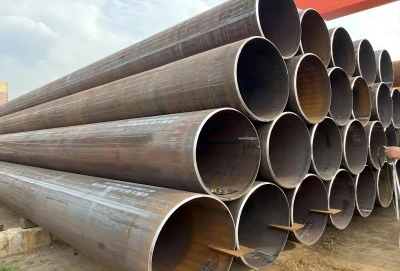
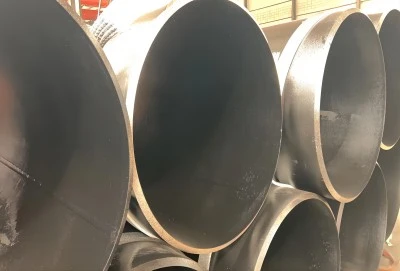
API 5L X70 Pipe Importance in Alpine Cold Regions
API 5L X70 pipe is a standard grade of high-strength line pipe set by the American Petroleum Institute. It is mostly used in oil and gas transportation systems that work at high pressures. The name "X70" means that the minimum strain strength is 70,300 psi (485 MPa). This makes this grade the best choice for high-capacity, long-distance pipes.
The operating difficulties in cold Alpine areas are very different from those in mild climates. Temperatures often drop below -40°C, which makes steel more likely to brittle fracture, a catastrophic failure mode in which cracks spread quickly through the pipe wall without first being deformed. When pipeline engineers work on projects in Alaska, northern Canada, Siberia, or high-altitude construction sites in the Andes or Himalayas, they have to deal with harsh weather conditions like intense temperature changes, permafrost interactions, high wind loads, and being cut off from other people, which makes maintenance difficult and expensive.
If you choose the wrong type of material for these conditions, bad things will happen. Brittle fractures can cause pipelines to burst, pollute the environment, stop production, and even cause accidents that could be deadly. Not only do bad material choices pose instant safety risks, but they also raise lifetime costs by requiring more inspections, speeding up corrosion, and replacing things too soon.
The API 5L X70 grade strikes a good mix between mechanical strength and fracture toughness. This lets designers use thinner walls, which saves money on materials while still keeping the structure strong under the high mechanical and thermal stresses that are common in mountain installs.
Key Technical Specifications for API 5L X70 Pipes in Cold Climates
Chemical Composition Requirements
To make sure that the API 5L X70 pipe made for cold service works well at low temperatures, its chemical makeup has to stay within tight limits. For PSL2 grade, the carbon content usually stays below 0.16%, which keeps the roughness in the heat-affected zone during welding to a minimum. Manganese levels between 1.4 and 1.7% improve strength and grain fineness. Niobium (0.02-0.06%), vanadium (0.03-0.08%), and titanium (0.005-0.02%) are microalloying elements that improve toughness without losing strength through precipitation strengthening.
For mountain uses, Carbon Equivalent (CE) estimates are very important. It is important for the IIW formula (CE = C + Mn/6 + (Cr+Mo+V)/5 + (Ni+Cu)/15) to stay below 0.43% so that cold cracking doesn't happen during field welding. Nickel additions of up to 0.3% make the material much tougher when it comes to impact at temperatures below zero, and copper additions of up to 0.25% make it more resistant to rust from water condensation and soil contact.
Mechanical Properties and Impact Toughness
The yield strength for API 5L X70 PSL2 pipe grade must be between 485 and 635 MPa, and the tensile strength must be between 570 and 760 MPa. The yield-to-tensile ratio can't be higher than 0.93. This makes sure that the pipe can still bend plastically before it breaks, which is an important safety factor for pipelines that are in areas where the ground moves because of frost heave or earthquakes.
Charpy V-Notch (CVN) testing is used to check the impact toughness of cold-climate requirements and standard uses. API 5L Annex G sets the rules for testing in subzero temperatures and needs minimum numbers for received energy at design temperatures. It is common for mountain standards to call for 40 joules of force at -45°C for full-size models that are tested across the rolling direction in both the base metal and weld seam areas. These strict requirements make sure that the material stops cracks from spreading instead of breaking in a terrible way.
Dimensional Standards and Heat Treatment Protocols
Outer diameters range from 1/2" to 80" for both seamless and welded construction (ERW for smaller diameters and LSAW for larger diameters). The wall thickness runs from Schedule 10 to Schedule 160. Custom thicknesses are estimated using design codes such as ASME B31.4 or B31.8 that take into account the temperature, operating pressure, and safety factors that are unique to cold places.
The way heat is treated has a big effect on how well something works at low temperatures. When controlled rolling plans are followed by fast cooling, thermomechanically rolled (TMR) pipe is made. This type of pipe has fine-grained microstructures that make it tougher without needing any extra heat treatment. Normalized or quenched-and-tempered conditions offer different ways to meet strict impact standards. This is especially true for seamless pipe or thick-walled LSAW products that are hard to process using TMR. When you heat something the right way, you get rid of any leftover stresses from the forming process and smooth out the grain structure. This makes the material more resistant to brittle fracture under thermal shock conditions that are common during startup procedures in cold areas.
Corrosion Resistance and Testing Methods for Alpine-Grade API 5L X70 Pipes
Corrosion Challenges in Alpine Environments
High levels of moisture in the air, frequent freeze-thaw cycles that damage protective layers, acidic snowmelt with dissolved carbon dioxide, and changes in electrical conductivity in permafrost zones that encourage galvanic activity are all things that make corrosion happen faster in Alpine areas. Even though API 5L X70 pipe carbon steel doesn't naturally fight corrosion like stainless metals do, its microalloying elements and fine-grained structure make it more resistant than regular carbon steels.
Adding copper and nickel makes the oxide layer tighter, which slows down electrochemical processes. Controlled thermomechanical processing gets rid of coarse carbides at grain boundaries, which gets rid of preferred corrosion routes. External coating systems (3LPE, FBE, or tape wraps) are the main defense, but the rust resistance of the base material is also very important in case the coating gets damaged during installation or because the ground moves afterward.
Non-Destructive Testing Requirements
There are more quality checks than just normal factory checks that are done on cold-service pipes. Ultrasonic Testing (UT) uses automatic systems to look over the whole pipe body and longitudinal weld lines. These systems can find flaws like laminations, inclusions, or lack-of-fusion as small as 2mm. Magnetic Particle Testing (MPT) finds surface and near-surface flaws that can't be seen with the naked eye. This is especially useful for checking the quality of welds in heavy-wall goods.
Radiographic Testing (RT) uses X-ray film or digital imaging to make lasting records of the soundness of a weld. It finds internal flaws that could become crack starters under repeated loading. Testing a material under water at 95–100% of its minimum yield strength makes sure it can handle pressure and stresses it enough to find weak spots that could break in service.
The Drop-Weight Tear Test (DWTT) checks a pipeline's crack arrest capability, which is its ability to stop a moving fracture from going across long distances. Alpine standards usually need shear area percentages higher than 85% at the lowest possible temperature. This makes sure that the material will stop cracks from spreading before they break in a big way. These test results are confirmed by third-party inspection agencies, and full paperwork packages that include Material Test Certificates (MTC), Inspection and Test Plans (ITP), and Manufacturing Procedure Specifications (MPS) give buyers trust and proof that the company is following the rules.
Conclusion
Mechanical strength, fracture toughness, and practical constructability must all be taken into account when choosing API 5L X70 pipe for cold places in the Alps. The grade's 485 MPa yield strength and proven low-temperature impact protection make it the best choice for most high-pressure transmission tasks that need to be done in cold places. Paying attention to chemical composition limits, heat treatment methods, and full quality checks through CVN and DWTT testing makes sure that materials work well in harsh circumstances. Choosing makers with proven cold-service experience, getting full documentation packages, and negotiating terms that take into account the logistical challenges of alpine building projects are all important parts of a successful procurement process.
FAQ
What minimum impact toughness is required for alpine applications?
Charpy V-Notch energy absorption of 27–40 joules is usually required by Alpine standards at the lowest design temperature, which is usually -45°C for Arctic areas. Transverse samples from both the parent metal and the weld zones are used for testing. For Drop-Weight Tear Tests to be valid, the shear area percentage must be higher than 85% at the working temperature.
Can X70 pipe be welded in subzero field conditions?
Field welding is still possible if you follow the right steps. Hydrogen cracking can't happen with low-hydrogen electrodes (E9010 or E10018 classifications). Depending on the thickness of the wall and the temperature outside, the preheat temperature needs to be between 100°C and 150°C. For heavy-wall uses, it might be necessary to control the temperature between passes and heat treat the metal after the welding process. The requirements for the welding process must be checked at temperatures that are similar to those in the field.
How does heat treatment affect cold-temperature performance?
Thermomechanical rolling creates fine-grained ferrite-pearlite microstructures that are very tough without any extra heat treatment. Normalizing finetunes the grain size and evens out the structure, which makes the material more resistant to impact. Quench-and-temper processing is more expensive, but it makes pipes with thick walls or that are used in sour service more durable. The right heat treatment gets rid of any remaining stresses and improves the grain so that it doesn't break easily.
Partner with Longma Group for Alpine-Grade API 5L X70 Pipe Solutions
Longma Group knows that projects in alpine cold regions need more than just normal pipe supply. They need a production partner with a lot of technical know-how and a track record of getting things done on time. Our production sites are fully certified by API 5L and have a history of making PSL2 X70 material that meets the low-temperature standards in Annex G. Getting high-quality coil and plate from Bao Steel, HBIS, and Shagang guarantees uniform chemistry and cleanliness, which are important for impact hardness.
Our high-tech heat treatment equipment and fully automated ultrasonic tests give engineering companies the quality guarantee they need. We make sure that our production plans work with your project deadlines because we produce more than 1,000,000 tons of goods every year and can send them quickly (within seven days for stocked sizes). Every shipment comes with full documentation packages that include ITP, MPS, MTC, and third-party inspection records. These meet legal rules and procurement standards.
Whether your project is to send gas across continental borders through tundra or high-altitude water through mountain passes, our expert team can help you choose the right materials, follow the right welding processes, and make sure the coatings are the right kind for use in cold climates. Please email us at info@longma-group.com to talk about your needs with skilled API 5L X70 pipe suppliers who know how to meet the specific needs of alpine settings.








