
Charpy impact test temperature standards must be known when selecting API 5L X60 pipe for important transmission projects. API 5L PSL2 says that 5L X60 pipe has to go through Charpy V-notch impact testing at temperatures that are usually between 0°C (32°F) and -20°C (-4°F), but this can change based on the pipeline's position and the temperature it is designed to work at. For PSL1 grade X60 pipe, impact testing is not required. But for PSL2, minimum energy absorption values—usually 27 Joules for full-size specimens—must be met at the specified test temperature. This makes sure that the material is tough enough to resist brittle fracture under operational stress and cold climate conditions.
|
|
|
Understanding Charpy Impact Test and Its Relevance to API 5L X60 Pipes
The Fundamentals of Charpy V-Notch Testing
The Charpy impact test checks how much energy an object with a hole in it absorbs when hit by a swinging hammer moving at a set speed. This standard damaging test gives a toughness number in Joules or foot-pounds that shows how resistant a material is to breaking suddenly. The V-notch shape makes a stress gathering point that looks like a defect or stress riser in a piping system.
The weather has a big effect on how tough steel is. When temperatures drop, materials that are flexible at room temperature may change to brittle fracture modes. This ductile-to-brittle transition temperature (DBTT) is very important for pipes that work in cold places or underwater, where temperatures stay close to or below freezing all year.
Why Impact Testing Matters for X60 Grade Linepipe?
High-pressure transmission uses API 5L X60 pipe, which has a minimum yield strength of 415 MPa (60,300 psi). This steel is so strong because it goes through controlled thermomechanical processing and is micro-alloyed with things like titanium, niobium, and vanadium. Even though these methods make things stronger, they shouldn't hurt toughness, which is the ability to bend or break before breaking.
Pipelines are loaded in a number of different ways, in addition to internal pressure. Dynamic stresses are caused by things like ground movement, earthquakes, the effects of building tools, and temperature changes. If a pipe doesn't have enough impact toughness, it could have tiny flaws that spread quickly when it's suddenly loaded, breaking the pipe in a terrible way. With Charpy testing, you can find out if the steel can still absorb enough energy at the lowest temperature that it will be used at. This gives you the safety cushion you need for long-term pipeline stability.
Decades of study and accident investigations have shown that Charpy test scores are related to performance in the field. Pipelines that met the basic Charpy standards and were tested at the right temperatures had much lower failure rates than pipelines that weren't tested properly or were tested at temperatures that were too high.
Impact of Charpy Test Temperature on Mechanical Performance and Pipeline Safety
Temperature Effects on Steel Microstructure and Behavior of Steel Fractures
As the temperature drops, steel changes from a flexible to a brittle mode of breakage. At high temperatures, steel deforms plastically by dislocation movement and gap coalescence, taking in a lot of energy before it breaks. As the temperature drops, the thermal energy that can be used to move dislocations lowers. This causes fractures to move toward cleavage along crystallographic lines, which is a catastrophic, low-energy failure mode.
This change temperature is greatly affected by the composition of API 5L X60 pipe. Fine-grained structures with carbide particles spread out stay tough at lower temperatures than materials with larger grains. When pipes are made, thermomechanical controlled processing (TMCP) is used to finetune the grain size and make the most of precipitation. This moves the change from ductile to brittle to lower temperatures and raises the Charpy values.
Engineering Decisions Based on Impact Test Data
Charpy test results directly affect choices about design and material choice. When test results show that the material can only absorb a small amount of energy at a certain temperature, engineers may ask for thicker wall schedules to make the cross-sectional area bigger and stress concentrations smaller. Instead, they may need post-weld heat treatment (PWHT) to improve the microstructure of the heat-affected zone near the welds, which is usually less tough than the parent pipe material.
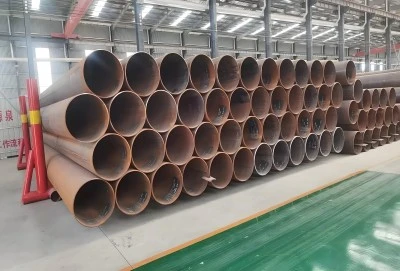
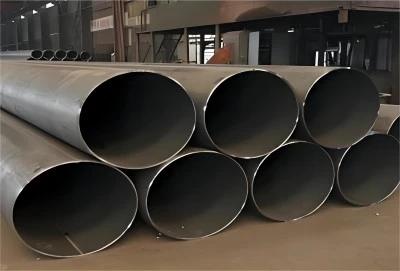
The way an item is made also affects its effect qualities. LSAW (longitudinally submerged arc welded) pipes from Longma Group go through controlled heating and cooling processes that can be used to make them stronger. Through carefully controlled thermal processing, our LSAW pipes with sizes from 16 inches to 80 inches and wall thicknesses up to SCH160 (59.54mm) always meet PSL2 Charpy standards at certain temperatures.
Electrically resistance welded (ERW) and high-frequency welded (HFW) pipes with diameters from 1/2" to 24" are very tough because they are welded quickly, with little heat input, while keeping the fine-grained microstructures. Our ERW production lines have live heat treatment systems that make the weld seam normal. This makes sure that the Charpy values in the weld zone match or go beyond the qualities of the parent material.
Real-World Implications: Case Study Insights
Failures of pipelines in the past show what happens when impact testing isn't done properly. During a very cold winter, temperatures dropped below the pipe's tested impact level, causing a fatal rupture in a gas transmission line in North America. The investigation showed that the pipe grade met the standards for tensile strength, but it had been tried for impact toughness at temperatures well above the failure temperature, which caused a small gouge on the outside to start a brittle fracture.
On the other hand, pipes that were designed with Charpy test temperatures that match the minimum design temperatures have shown amazing endurance. Offshore bases in the North Sea use API 5L X60 pipe flowlines that were tested at -20°C and have been through decades of changing loads, external hits from dropped items, and seabed movement without breaking. Putting money into proper impact testing during purchase prevented huge losses that would have been much worse than the difference in the cost of the materials.
These cases show again why procurement managers can't give in on Charpy test temperature requirements. The safety gaps for a pipeline are directly affected by the standard that was chosen during the bidding process.
Comparison of API 5L X60 with Other Pipes Regarding Charpy Impact Test Standards
Other API 5L Grades vs. X60
Each grade in the API 5L family has its own strength and toughness traits. When tested at the same temperatures, X52 grade (yield strength 360 MPa) usually has better Charpy values than API 5L X60 pipe. This is because it has less carbon equivalent and rougher microstructures, which make it more flexible. If toughness is more important than highest pressure rating, projects might choose X52 PSL2 and try it at higher temperatures.
The yield strength of X70 grade (485 MPa) is better than that of API 5L X60 pipe, but it takes more advanced metalworking techniques to keep the same level of toughness. X70 can meet Charpy standards at the same test temperatures as X60 pipe, but it costs more in materials because it has more alloying and more advanced TMCP methods. The choice between these grades is based on the project's unique price, toughness standards, and pressure rating needs.
Even though the strength specs for X42 and X46 grades are smaller, they usually have great impact properties at all temperatures that are important to pipeline uses. These grades are used in systems with smaller pressures and don't need the extra power of API 5L X60 pipe.
X60 Compared to Specifications That Aren't API
ASTM A106 Grade B is a standard for carbon steel pipes that are used in high-temperature settings, mostly in power plants and refineries. Its 240 MPa (35,000 psi) yield strength is a lot less than API 5L X60 pipe's 415 MPa. Even though A106 works well at high temperatures, it doesn't have the required impact tests and can't be tracked like API 5L PSL2. For projects that need both a pressure number and proof of low-temperature toughness, X60 PSL2 is recommended instead of A106.
ASTM A53 is another general-purpose pipe standard that doesn't require impact testing. It is used in places where design rules don't need to check for effect, just like A106. The change from A53 or A106 to API 5L X60 PSL2 is a big improvement in both strength and quality assurance, which is necessary because transmission pipeline service is so important.
The austenitic microstructure of stainless steel pipes (ASTM A312, for example) keeps their hardness at cryogenic temperatures because it doesn't change from ductile to rigid. But they are five to ten times more expensive than carbon steel, so they can only be used for corrosive work or specific tasks and not for bulk transfer.
Being aware of these grade differences helps procurement teams make the best choices, choosing API 5L X60 pipe PSL2 when its power, proven toughness, and low cost make it the best value. These are the standards that Longma Group works with when making products, so we can help you choose the best material for your needs and price.
Conclusion
The temperature standards for the Charpy impact test on API 5L X60 pipe directly show the safety limits for the pipeline under working pressures and environmental conditions. According to the PSL2 standards, testing must be done at temperatures that are similar to the lowest possible service conditions. These temperatures can be anywhere from 0°C to -20°C, based on the area and the application. When procurement professionals know these standards, they can tell suppliers what tests they need to do, make sure they follow them by keeping thorough records, and choose materials that are strong, tough, and affordable. The extra money spent on proper impact testing is small compared to the terrible things that can happen if the toughness isn't good enough. As the world's pipeline network continues to grow, strict respect to Charpy test temperature standards is still necessary to ensure decades of safe, reliable operation in a wide range of regions and tough service conditions.
FAQ
Why is test temperature critical in Charpy impact testing?
The test temperature is a direct reflection of the coldest conditions the pipeline will face in real life. As the temperature drops, steel's toughness goes down, and trying it at temperatures higher than what it will be used for gives false confidence that it is tough enough. If a pipe is tried at 20°C and passes easily, it could fail completely at -10°C if that is the minimum design temperature. By choosing the right test temperature, you can be sure that the toughness you get will work in real-world situations.
What are the most important foreign rules for Charpy testing?
In North America and many other countries, API 5L is still the main standard for linepipe, and PSL2 requires impact testing. ISO 3183 sets standards that are the same everywhere. In Europe, EN 10208 is a regional standard, and in Australia, AS 2885 is. There are also many national standards that are similar to API or ISO rules but make a few small changes to fit local conditions.
How can I be sure that the provider is following the rules for the impact test?
Ask for full Material Test Certificates that show the chemical make-up, mechanical properties, and thorough Charpy data for each heat. Make sure that the test temperatures are exactly what you asked for and not warmer. Make sure the seller is still certified to work with API 5L. Third-party inspection services can help you see the testing and make sure the paperwork is correct, which is especially important for large sales or important applications.
Partner With Longma Group for Certified API 5L X60 Pipe That Exceeds Impact Test Standards
Longma Group is one of the biggest companies in China that makes API 5L X60 pipe. Our 230,000-square-meter factory makes over 1,000,000 tons of pipes every year. We can make ERW pipes from 1/2" to 24" in diameter and LSAW pipes from 16" to 80" in diameter with wall thicknesses up to SCH160. All of these sizes and wall thicknesses meet strict PSL2 Charpy impact standards at temperatures as low as -60°C.
Each pipe goes through a lot of tests, such as a study of its chemical makeup, confirmation of its mechanical properties, acoustic inspection, hydrostatic testing, and Charpy V-notch impact testing at the temperature you choose. We only get our base materials from the best Chinese mills, such as HBIS, Shougang, and Baosteel. This way, we can be sure of consistent metallurgy that provides reliable toughness performance. Our ISO 9001 quality management, API 5L certification, and full traceability tools give your project the paperwork and guarantee it needs.
Longma Group has been making high-quality products for 20 years, so they can help you whether you're a pipeline contractor planning transmission infrastructure in harsh climates, a procurement manager looking for an API 5L X60 pipe supplier with experience working on global projects, or an engineering firm that needs technical collaboration during specification development. Email our team at info@longma-group.com to talk about your unique Charpy test temperature needs, get full product specifications, or get quotes from other companies. We reply within 24 hours with technical suggestions that are specific to your application. For standard specs, we can deliver in as little as seven days, and our prices reflect how efficiently and in large quantities we can make things.