
If you are sourcing or specifying structural steel hollow sections for building projects, understanding the testing requirements underlying grade classification is not optional – it is a procurement need. The grade designation for AS/NZS 1163 C250 pipe can only be given after passing a specific range of mechanical, chemical, dimensional and durability tests. In this article we’ll break down exactly what those tests are, why they matter and how you can use that knowledge to make smarter buying decisions.
|
|
|
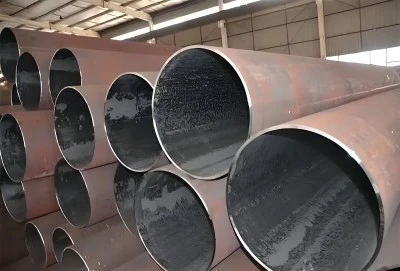
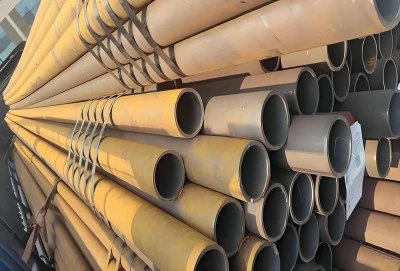
Understanding AS/NZS 1163 C250 Pipe Testing Requirements
AS/NZS 1163 is the Australian/New Zealand joint standard for cold formed welded structural steel hollow sections. The “C250” mark tells you two things, one it is cold-formed and second it has a minimum yield of 250MPa. That figure is not a marketing claim. It’s an industry standard, based on mandatory testing.
The standard covers four main testing categories:
- Mechanical tests — yield strength, tensile strength, elongation, and ductility
- Chemical analysis — elemental composition limits for weldability and performance
- Dimensional verification — tolerances on diameter, wall thickness, length, and mass
- Surface and corrosion assessment — finish quality and durability under environmental exposure
Together, these tests confirm that every pipe leaving the production line meets the same structural baseline. For procurement teams in the United States working with Oceania-based projects or cross-border supply chains, knowing these requirements protects your investment before the pipe ever reaches a job site.
Mechanical and Physical Tests for C250 Hollow Sections
Mechanical testing is the backbone of grade verification. It tells you how the pipe will actually behave under load, not just what the datasheet claims.
Tensile and Yield Strength Testing
The pipe shall have a minimum yield strength of 250 MPa and a tensile strength of between 320 and 510 MPa. This is verified by pulling a sample coupon to failure. The ratio of yield to tensile strength is also important: if a pipe yields at a stress too close to its tensile strength, it is likely to fail by rapid fracture rather than by gradual deformation.
Bend and Flattening Tests
These tests are ductility tests. A flattening test crushes a pipe sample until the distance from wall to wall is a predetermined fraction of the original diameter and checks for cracking or separation at the weld. Bend tests show the pipe will bend without breaking. The minimum elongation specified by AS/NZS 1163 is 18% to 22% depending on wall thickness.
Impact Testing
The Charpy impact test does not usually applicable to all pipe sizes but may be required for pipes used in low-temperature service. This test is a direct measure of fracture resistance at cold temperatures by striking a notched sample with a pendulum to detect energy absorption.
Material Composition and Chemical Analysis
The chemical makeup of a C250 pipe directly controls its weldability and long-term mechanical behavior. AS/NZS 1163 sets strict elemental limits to prevent issues during fabrication and in service.
Carbon and Manganese Limits
The carbon content of AS/NZS 1163 C250 pipe is usually 0.20 to 0.25 per cent, manganese being permitted up to 1.50 per cent. It 's not just a number . Keeping carbon low immediately decreases the Carbon Equivalent Value ( CEV ) , which forecasts how prone the steel is to hydrogen induced cracking during welding . Lower CEV is easier and safer to do on site.
Non-Destructive Weld Inspection
The integrity of the longitudinal weld seam of the C250 hollow parts has to be checked. Ultrasonic testing (UT) uses high frequency sound waves that are transmitted through the weld to locate interior voids or laminations. Radiographic Testing (RT) is a visual method of documenting weld quality via X-ray imaging. Both approaches detect problems that no optical inspection could catch.
Heat Number Traceability
Each pipe that conforms shall be continuously marked with a stencil giving the manufacturer’s name, the standard (AS/NZS 1163), the grade (C250) and a heat number. That heat number ties the physical pipe back to its chemical test report – your main instrument for traceability in any supply chain audit.
Dimensional and Physical Properties Verification
When a pipe comes with different sizes, it causes real problems when it gets to the job site. Incorrectly aligned wall widths cause uneven load distribution, and incorrectly aligned diameter errors stop connections from fitting properly.
Outer Diameter and Wall Thickness Tolerances
AS/NZS 1163 specifies limits on outside diameter of circular hollow sections (CHS) to within ±1% or a specified millimetre limit, whichever is greater. The allowable wall thickness range is typically ±10% of the nominal. These tolerances must be met on all pipes in a batch, not just sample pieces.
Length and Mass Verification
The cut lengths are supposed to be within some restrictions and the real mass per metre is compared with the theoretical value. A substantial shift in mass can indicate that the wall width is not the same all the way through the pipe body. This is a bad sign for the structure’s stability.
Surface Quality Assessment
The pipe top shall be free of any imperfection that may be detrimental to the pipe such as thick seams, laps or cracks. The standard permits minor surface imperfections provided they do not extend below a specific depth. Pipes to be hot dip galvanised or powder coated to AS/NZS 4680 require very clean surfaces for good coating adhesion.
Corrosion Resistance and Durability Tests
Structural steel exposed to weather, moisture, or industrial atmospheres will corrode without adequate protection. Testing for durability helps confirm that treated C250 pipes will last the design life of the structure.
Salt Spray and Accelerated Weathering Tests
Salt spray testing (ASTM B117 or equivalent) is performed to expose coated AS/NZS 1163 C250 pipe samples to a constant saline mist to measure how long the coating can withstand the onset of corrosion. Accelerated weathering chambers imitate years of UV exposure and cycling of moisture in a couple of weeks. Such testing are especially significant when pipes are requested for coastal infrastructure or for exposed architectural applications.
Coating Adhesion and Thickness Checks
Magnetic gauges are used for measuring the coating thickness on galvanised sections and adherence is checked by means of bend and peel tests. In actuality this gives little protection, as the zinc covering flakes off under slight mechanical stress. These checks make that corrosion resistance is built in, not just assumed.
Long-Term Inspection Guidelines
Durability studies suggest that the inspection intervals for C250 pipes under moderate air exposure are usually five-year cycles. Pipes may need to be checked every year in marine or industrial areas. By documenting the baseline condition during installation, the maintenance crew has a physical reference point.
Practical Implications for Procurement and Use
It’s not enough to know about the tests. The hazard of a supply chain is that it is not using what you know in the purchase process, but a compliant one does.
When you are analysing the sources, ask for Material Test Certificates (MTCs) for each batch. The MTC should include the specific heat number, chemical analytical reports and mechanical test results. The MTC should also be signed by a qualified tester.” If there is not an MTC, or it is not specified, that should be a red flag.
You get even greater peace of mind with factory checks and third-party approval. Independent organisations can examine that the testing equipment is properly calibrated and that the methods of sampling are in compliance with the criteria included in AS/NZS 1163 and that the tests have been appropriately recorded. One technique to reduce risk in long or high volume supply agreements is to inspect the commodities at the mill before shipment.
Conclusion
C250 cold-formed hollow sections are graded by a series of tests which determine their durability, chemical composition, mechanical performance and dimensional accuracy. Each test group considers an actual failure mode, such as a weld cracking under strain, a part bowing because the wall thickness is not consistent, or a coating failing after two years outside. Knowing these standards will allow you to ask the correct questions before you place an order for AS/NZS 1163 C250 pipe and to be sure that you receive what you were promised.
FAQ
What is the minimum yield strength required for C250 pipe?
Tensile strength is between 320 and 510 MPa, and yield strength is at least 250 MPa. Sample coupons from each production heat are used for tensile testing to make sure these numbers are correct.
How do I verify that a pipe genuinely meets AS/NZS 1163?
Check out the stamp markings that go all the way around the pipe body. It needs to show the name of the maker, the grade (C250), the standard number (AS/NZS 1163), and the heat number. Compare that heat number to the MTC that was given.
Can C250 pipe be used in coastal or marine environments?
Yes, but it needs the right corrosion protection, like high-performance coating systems or hot-dip galvanizing. Salt spray testing helps make sure that the chosen finish works well before it is specified.
Is C250 the same as C350?
No, the minimum yield for C250 is 250 MPa and the minimum yield for C350 is 350 MPa. C250 is usually chosen for general structural uses where saving money is more important than reducing weight as much as possible.
Does cold-forming make the pipe brittle?
No. AS/NZS 1163 sets specific extension standards, which are between 18% and 22%. These make sure that the pipe stays flexible enough for structural use and doesn't break suddenly when it's loaded.
Partner With Longma Group for Verified C250 Pipe Supply
Longma Group sells AS/NZS 1163 C250 pipe to engineering and procurement teams all over the world. Each batch goes out with full MTCs, heat numbers that can be tracked, and records of measurement inspections. We help you make sure the quality of your AS/NZS 1163 C250 pipes from the time they are certified at the mill until they are delivered. You can email your requirements or a sourcing question to info@longma-group.com, or you can go to longma-group.com to look at our products right now.