
One of the most important engineering choices in pipeline project design is choosing the right wall thickness for L485 steel pipes that will be used in high-bearing-pressure situations. API 5L X70 pipe comes in thick-wall shapes ranging from SCH 40 to SCH 160 for high-bearing pressure pipeline systems. If the needs of the project require it, custom wall thicknesses can be made that go beyond normal schedules. Typical width ranges from 1/2 inch to 80 inches to handle different flow rates. Engineers choose the wall thickness based on estimates of the internal pressure, safety factors, and working conditions. For gas pipeline and offshore uses with pressures above 10 MPa, heavier schedules like SCH 120 and SCH 160 are favored.
|
|
|
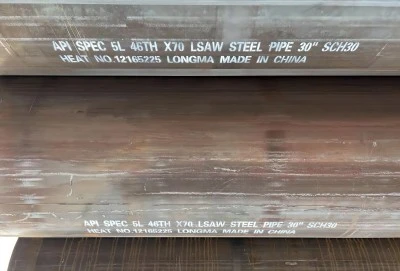
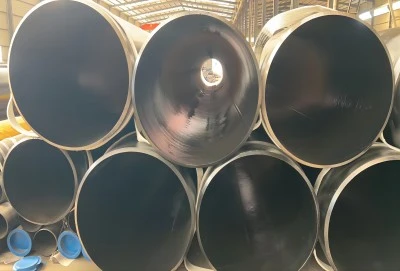
API 5L X70 Pipe for High Bearing Pressure Applications
Mechanical Properties Defining Thick-Wall Performance
The number X70 means that the steel has a yield strength of 485 MPa to 635 MPa and a tensile strength of 570 MPa to 760 MPa. This higher strength-to-weight ratio lets walls be thinner than with X52 or X60 grades when the pressure is the same. However, thick-wall versions are still needed when outside loads, the possibility of impact damage, or big changes in pressure require more conservative design methods. The maximum yield-to-tensile ratio allowed by PSL2 is 0.93. This provides enough ductility and stops catastrophic brittle failure even in thick-section pipes that are exposed to dynamic stress cycles.
Wall Thickness Standards and Pressure Ratings
The wall thicknesses for api 5l x70 pipe sizes are set by standard pipe plans from SCH 10 to SCH 160. However, high bearing pressure pipelines usually need SCH 80 or higher. In gas transport lines, a 24-inch diameter SCH 120 pipe with a wall thickness of about 1.031 inches (26.19 mm) can normally handle internal pressures of about 12 MPa. In addition to normal schedules, custom wall thicknesses are defined by direct measurement. This is typical in the production of LSAW (Longitudinal Submerged Arc Welded) pipes, where plates can be ordered to exact thickness needs ranging from 15 mm to 50 mm or more, dependent on the mill's capabilities.
The Barlow formula is used to figure out the pressure capacity: P = (2 × S × t × E) / D, where P is the pressure inside, S is the allowed stress (found by yield strength and design factor), t is the width of the wall, E is the efficiency of the weld joint, and D is the diameter of the outside. This shows how proportional increases in wall thickness directly raise pressure-bearing capacity. This means that thick-wall setups are necessary in high-risk places where ASME B31.8 requires conservative safety margins of 0.72 or less.
Critical Factors in Selecting Thick-Wall Sizes for High Bearing Pressure Pipelines
Engineering Design Codes and Safety Margins
Design standards, such as ASME B31.4 for liquid pipes and ASME B31.8 for gas transport systems, say that the minimum wall thickness must be calculated by taking into account internal pressure, external loads, temperature derating, and rust. When a building is in a populated area, the permitted design factors drop from 0.80 to 0.50. This means that the walls have to be stronger to keep the same maximum allowable operating pressure (MAOP). When procurement teams define thick-wall pipe, they need to make sure that the minimum thickness they figure includes large corrosion margins, which are usually 1.5 mm to 3.0 mm. This is because walls will still lose strength over decades of service, even with protective coatings.
Environmental and Operational Load Scenarios
Mechanical loads from the outside, like dirt pressure, traffic surcharges, or earthquakes, put more stress on the structure than the internal pressure. Thick walls that don't buckle or fall down are good for buried pipes that cross shaky ground or areas that are prone to earthquakes. When the water level is more than 1,000 meters deep, offshore platforms are subject to very high hydrostatic pressure. This means that collapse resistance, not internal pressure control, becomes the main design factor. In these situations, wall thicknesses that are much higher than normal are needed, sometimes getting close to 60 mm for large-diameter offshore uses.
Extreme temperatures affect the choice of material and the width that is needed. When used at temperatures above 150°C, allowed stress values drop, which means that the wall thickness needs to be increased to make up for it. On the other hand, Charpy V-Notch impact testing is required in low-temperature settings to make sure the material is strong enough not to break. Thick parts are more likely to break, so the PSL2 quality level with required impact testing is a must for cold climate deployments.
Lifecycle Cost Optimization Through Thick-Wall Investment
Even though the original cost of materials goes up with wall thickness—heavy-wall api 5l x70 pipe costs 20% to 40% more than standard schedules—the long-term economics usually support strong building. Thicker walls increase service life by protecting against corrosion, lower the number of inspections needed, and lower the number of unexpected shutdowns that cost production centers a lot of money. The cost of maintenance goes down as wall thickness protects against wear and tear, weathering, and the spread of fatigue cracks. A full net present value analysis usually shows that investing in thick walls pays off through increased reliability and pushed back repair cycles. This is especially true in distant areas where accessing pipelines would cost too much to move.
Procurement Insights: Sourcing Thick-Wall API 5L X70 Pipes Globally
Certification Verification and Quality Assurance
When buying thick-wall L485 pipe for important infrastructure, mill test certificates (MTC) that show the pipe's chemical make-up, mechanical qualities, and non-destructive testing results must be carefully checked. In order to meet the PSL2 quality level, extra standards must be met. These include Charpy V-Notch impact tests at certain temperatures (usually -20°C or -45°C), carbon equivalent limits below 0.43% for field weldability, and traceable heat numbers that allow for full material history. Third-party inspection agencies should see hydrostatic testing, which is usually done at 95% to 100% of the minimum yield strength, as well as acoustic testing that covers the whole pipe body and weld cracks to find problems below the ground.
Evaluating Manufacturing Capabilities and Lead Times
The LSAW process is mostly used to make thick-wall pipes with widths bigger than 24 inches. To do this, mills need plate-forming presses, multi-torch submerged arc welding stations, and expanding equipment that can exactly size heavy-wall products. Due to limitations of pierce mills, seamless production is not possible for diameters larger than 20 inches. This means that seamless API 5L X70 pipe is mostly only available in smaller sizes with relatively thin walls. When looking for thick-wall LSAW pipe, make sure the mill can handle plate widths that meet your needs. Some facilities can only make pipes with a 40 mm wall, but some specialty mills can handle pipes that are 60 mm or thicker.
Pricing Dynamics and Negotiation Strategies
The cost of thick-wall pipes is based on the amount of raw materials used, how hard they are to make, and how much testing they go through. In addition to the cost of the steel itself, you can expect to pay more for PSL2 compliance (about a 10% to 15% adder), impact tests, and faster shipping. When you commit to a volume that will be shipped over multiple shipments, you have more buying power. Mills offer better prices when production runs have fewer changeovers. Costs are often cut by 8 to 12 percent when you deal directly with manufacturers instead of going through middlemen. Communication about technical standards and inspection planning also gets better. When you buy things from other countries, you can lower your financial risk by using payment terms like letters of credit or payment against inspection goals.
Conclusion
To choose the right thick-wall configurations for API 5L X70 pipe grade pipeline systems, you have to weigh the need for pressure capacity, environmental loads, and lifetime cost against the ability to manufacture and project funds. Standard plans from SCH 80 to SCH 160 cover most high-pressure uses below 15 MPa. Custom wall thicknesses are used for harsh circumstances in the Arctic and offshore. Checking for PSL2 approval, making sure the factory can make heavy walls, and setting realistic delivery dates that work with building goals are all important parts of the procurement process. The case studies show how smart thick-wall selection leads to long-term dependability, which justifies extra material costs by increasing safety gaps and extending service intervals.
FAQ
What maximum wall thickness is available in API 5L X70 pipe?
Standard plans go up to SCH 160, which gives a 24-inch diameter pipe a wall thickness of about 2.34 inches (59.5 mm). For specific offshore and ultra-high-pressure uses, custom LSAW manufacturing can handle wall thicknesses greater than 60 mm. However, supply relies on the plate mill's capabilities and the number of orders that are low enough to support custom production runs.
How does increased wall thickness affect corrosion allowance planning?
Larger corrosion allowances—often 3 mm to 6 mm—allow thicker walls, which extends service life decades beyond minimum-wall options. This reserve allows for internal corrosion from produced fluids and external rust even with coating systems. This means that expensive pipeline repair projects can be put off while the structure stays strong for the entire design life.
Can I order custom wall thicknesses between standard schedules?
LSAW manufacturing makes it easy to meet custom wall thickness standards because plate providers can provide the exact thickness needed for the project. For custom plate rolling and mill setting to make sense, the minimum order quantity is usually around 100 tons. This method works for big projects but might not be cost-effective for small-volume needs that are better met by regular schedules.
Partner with a Trusted API 5L X70 Pipe Manufacturer
With thick-wall API 5L X70 pipe made to stringent PSL2 standards, Longma Group is ready to assist you with your high-bearing pressure pipeline projects. Our LSAW and ERW production plants cover 230,000 square meters and produce more than 1,000,000 tons of steel every year. We can make walls as thick as SCH 10 or as thin as SCH 160, or to your specific requirements. We get high-quality plate from Shagang, HBIS, and Baosteel. This makes sure that the mechanical qualities are always the same, and we have full paperwork for API 5L, ISO 9001, and EN certifications.
In addition to supplying pipes, we also offer full manufacturing services, which include beveling, hydrotesting, and finishing application (FBE, 3LPE, 3PP) based on the needs of the project. Our methods for quality assurance include 100% ultrasonic testing, hydrostatic testing that is watched, and full material tracking through thorough MTCs and inspection test plans. Longma Group makes it easier to buy things for tough pipeline uses by offering delivery times of as little as seven days for stock sizes and clear contact throughout custom orders.
Get in touch with our engineering team at info@longma-group.com to talk about your thick-wall pipe needs, get cheap API 5L X70 pipe supplier prices, and get expert help with wall thickness calculations that are in line with your pressure ratings and design codes. We provide the quality, documentation, and dependability that your projects need, whether they are looking for gas transmission lines in the Middle East, offshore platforms in Australia, or manufacturing sites in Southeast Asia.