
API 5L X60 pipe is made to withstand working pressures that change based on wall thickness, pipe diameter, and operating situations, among other things. Using Barlow's formula and adding the right safety factors, X60 pipe can usually handle working pressures between 1,000 psi and over 2,400 psi in gas pipeline uses. The minimum yield strength of the pipe is 60,300 psi (415 MPa), and its minimum tensile strength is 75,400 psi (520 MPa). These strengths make high-pressure gas transportation systems possible. When engineers choose X60 grade steel for gas pipelines, they have to think about design gaps, rust allowances, and changes in temperature to make sure the pipes will work safely for a long time.
|
|
|
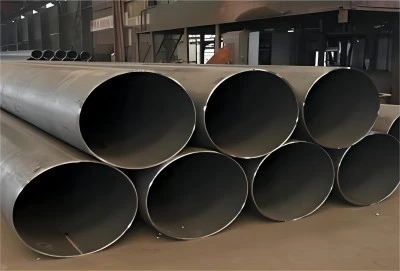
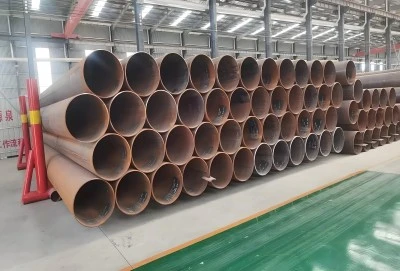
Understanding API 5L X60 Line Pipe Specifications
To choose the right material for a pipeline, you must first understand the basic requirements that determine its performance and dependability.
Chemical Composition and Mechanical Properties
The X60 grade is stronger than other grades because its chemical makeup is carefully controlled. For smooth pipes that follow PSL1, the carbon content usually stays below 0.28%. For pipes that follow PSL2, the rules are even stricter. Micro-alloying elements like Niobium, Vanadium, and Titanium smooth out the grain structure, making the metal tougher without making it harder to join. At least 415 MPa of yield strength and 520 MPa of tensile strength make up the mechanical backbone of X60. Because of these features, engineers can make pipes with smaller walls that stay structurally sound even in tough situations. This saves money on materials while still meeting pressure needs. Maximum yield limits are added to the PSL2 standards to stop materials from becoming too brittle. This makes sure that the materials work well across the wide range of temperatures that they will be exposed to in the field.
Manufacturing Processes and Quality Assurance
ERW (Electrical Resistance Welding), HFW (High Frequency Welding), LSAW (Longitudinally Submerged Arc Welding), DSAW (Double Submerged Arc Welding), and SSAW (Spirally Submerged Arc Welding) are some of the welding methods we use to make API 5L X60 pipes. Depending on the pipe width and wall thickness needs, each method has its own benefits. During the whole creation process, our factories follow strict quality control rules. In hydrostatic testing, all pipes are put under forces that are measured as a portion of their yield strength. This makes sure that the pipes don't leak. Ultrasonic Testing and X-ray examination are two non-destructive testing methods that can find flaws inside the material, such as slag spots or lamination faults. PSL2 grades must go through Charpy V-Notch impact tests at certain temperatures to make sure they don't break easily, which is especially important for pipes that work in cold places or underwater.
International Standards Compliance
Longma Group makes API 5L X60 pipes that meet API 5L PSL1 and PSL2 standards, as well as other standards that are similar, like ISO 3183 L415. Our products are made to meet ASTM and EN standards, which means they can be used with world project needs. This multi-standard compliance makes buying things easier for foreign projects, so there are no worries about regional specification clashes. Every package comes with certification paperwork, such as Material Test Certificates, Inspection and Test Plans, and Manufacturing Procedure Specifications. These detailed records give engineering contractors the tracking they need for regulatory compliance and project checks. Our 230,000-square-meter facility's API 5L license and ISO 9001 quality management system show that we are dedicated to producing high-quality goods.
Working Pressure Capacity of API 5L X60 Line Pipe for Gas Pipelines
Finding correct working pressure numbers is a very important part of designing pipelines and buying them.
Design Pressure vs. Working Pressure Fundamentals
When choosing materials, pipeline engineers make a distinction between the plan pressure and the actual pressure. The design pressure includes safety margins above the highest expected working pressure. Depending on the type of pipeline and government rules, these margins are usually between 1.25 and 1.5. Working pressure is the real pressure that stays in the pipe during normal activities. It should be well below the pipe's burst pressure. Safety factors take into account things like sudden changes in pressure or temperature and the long-term breakdown of materials. The strong yield strength of the X60 grade gives designers a lot of freedom in how they make things, so they can balance pressure capacity with cost concerns. Higher-grade specifications, like PSL2, provide extra security through stronger chemical controls and better toughness qualities. This is especially helpful in important transmission situations where failure would have serious effects.
Calculating Pressure Capacity Using Barlow's Formula
Barlow's formula tells us how to rate the pressure inside a pipeline: P = 2St/D, where P is the pressure inside the pipeline, S is the allowed stress (usually the yield strength split by a safety factor), t is the wall thickness, and D is the outside diameter. Take a look at a real-life example: an API 5L X60 pipe with a width of 24 inches (609.6 mm) and a wall thickness of 0.500 inches (12.7 mm). Using a safety factor of 1.5 and a yield strength of 415 MPa, the math gives us an allowed working pressure of about 1,850 psi (12.75 MPa). When it comes to pressure capacity, pipes with thicker walls are better, while pipes with wider widths are worse. Our production range includes wall thicknesses from SCH10 to SCH160 (6.35 mm to 59.54 mm) and diameters from half-inch to 80 inches. This means that we can make unique pressure grades for a wide range of project needs.
Real-World Variables Affecting Pressure Ratings
The real working pressure limits are affected by operating factors in a way that goes beyond theoretical calculations. Elevated temperatures weaken materials, so gas transfer lines that are exposed to temperatures above normal need "derating factors." Allowances for corrosion take away from the effective wall thickness. Pipelines that are in acidic settings need extra material thickness to keep their pressure capacity over the course of their service life. Installation forces from bends, especially in directional drilling, add to the strain and lower the pressure cushion that is available. Heat-affected zones next to gaps are changed by welding procedures. Following the right welding procedure specs and doing a post-weld heat treatment keep the strength of the joint. The technical team at our company helps customers look at these factors and make sure that the pipe grades and sizes they specify can handle the necessary pressure in the real world, not just in a lab.
Comparing API 5L X60 with Other Pipe Grades for Gas Pipelines
Choosing the right materials has a big impact on the cost, safety, and life of a job.
Mechanical Performance Across Grade Options
The number in the X-series tells you how strong the yield is in thousands of pounds per square inch (psi): X52 has a yield of 52,000 psi, X56 has a yield of 56,000 psi, X60 has a yield of 60,000 psi, X65 has a yield of 65,000 psi, and X70 has a yield of 70,000 psi. While X65 and X70 are more expensive, X60 is a good medium ground because it is much stronger than X52 and X56 grades without being as expensive. When project requirements are open to change, X60 often turns out to be the best compromise between speed and cost. To get the same pressure values, walls on lower grades have to be bigger, which increases the amount of material needed, the cost of shipping, and the cost of welding. Higher grades allow for thinner walls, but they also require stricter welding methods and may pose risks of weakening if heat treatment techniques aren't carefully monitored. X60 has been used in thousands of projects and has a track record of steady performance that procurement managers can rely on.
Cost-Efficiency and Material Selection Strategies
When planning a budget, it's important to think about more than just the prices of the materials themselves. When compared to smaller grades that need stronger walls for the same pressure service, API 5L X60 pipes are cheaper to ship. As wall thickness goes down, so does the amount of welding consumables that are needed. The cost of coating and protecting against rust goes up with the pipe's weight and surface area, which supports designs that are more efficient when they use higher-strength types. However, X60 doesn't need the special welding techniques and pre-heating steps that X70 and X80 grades do, so it can be installed more quickly in the field. When it comes to pipeline projects that go through rural areas, X60's high strength and easy welding properties are especially useful. Our production size lets us offer reasonable prices on X60 production, and our yearly output of more than 1,000,000 tons supports bulk order economies that help big transmission projects.
Application Advantages in High-Pressure Scenarios
X60 works great in situations where the pressure needs to be higher than what smaller grades can provide cheaply. X60 can keep pressure steady over long distances with fewer compression points, which is good for long-distance communication lines. Offshore and subsea pipes use X60 PSL2 because it has to pass required impact tests that make sure it is tough under high water pressure and cold temperatures at the bottom. In the Middle East and Southeast Asia, projects often call for X60 for natural gas trunk lines that have to go through rough territory where lighter pipe is easier to place. The MOBIL OIL AUSTRALIA project shows how the X60 can be used in tough settings that need both high pressure and protection to corrosion. For sour service uses, X60MS or X60NS versions with controlled hardness and chemistry that stop sulfide stress cracking in H2S-containing gas streams are required. These grades meet safety worries that lower-grade alternatives can't always meet.
Conclusion
The mechanical properties of API 5L X60 pipe have been optimized to balance strength, toughness, and weldability, making it a safe choice for gas transportation systems. When engineers use standard methods to figure out working pressure rates, they have to take into account things like weather, corrosion, and installation stresses that happen in the real world. The fact that X60 is in the middle of lower and higher grades makes it a cost-effective choice for a wide range of uses, from local transmission lines to underwater subsea installations. For buying to go well, suppliers must be checked out, quality documents must be looked over, and delivery must be coordinated so that it fits with the project timeline. Installing pipes correctly and protecting them from rust will make them last longer, protecting the money that was spent on building pipelines that are essential to energy transportation networks around the world.
FAQ
What is the main difference between API 5L X60 PSL1 and PSL2?
When compared to PSL1, PSL2 standards have tighter quality requirements. PSL2 requires full tracking from raw materials to final goods, stricter limits on chemical composition, such as limits on carbon equivalents, and Charpy V-Notch impact tests to confirm toughness at certain temperatures. Impact testing isn't needed for PSL1, and the composition ranges are wider. This makes PSL2 the best choice for important transmission uses where higher reliability is worth the extra cost.
Can API 5L X60 Pipe be used for sour service applications?
If you buy API 5L X60 pipes in the X60MS or X60NS types that meet API 5L Annex H and NACE MR0175 standards, they can be used in sour environments with hydrogen sulfide. These rules limit the hardness to less than 250 HV10 and the chemicals that can be used to stop sulfur stress cracks. Standard X60 types don't have these controls, so they shouldn't be used in H2S-containing service until they've been properly checked against the specifications.
How does X60 compare to ASTM A106 Grade B?
At 60,000 psi, X60 has a much higher yield strength than A106 Grade B, which is only 35,000 psi. The A106 specifications are made for high-temperature use in processing and power generation, while the X60 specifications are made for high-pressure transfer at mild temperatures. Because they are stronger, X60 pipes can handle higher pressures or use thinner walls to keep the same pressure grade.
Partner with Longma Group for Your API 5L X60 Pipe Requirements
Longma Group is ready to help you with your gas pipeline projects by making approved API 5L X60 pipe that meets the strict API 5L PSL1 and PSL2 standards. We can make pipes with sizes from 0.5 inches to 80 inches and wall thicknesses of up to 59.54 mm using ERW, LSAW, and SSAW welding methods. As a company that has been making API 5L X60 pipes since 2003, we have strict quality control measures in place. These include hydraulic pressure testing, ultrasound examination, and mechanical property validation. Our yearly production capacity of more than 1,000,000 tons ensures that we always have enough inventory to meet tight project deadlines, and normal orders ship within seven days.
Our full paperwork packages include Material Test Certificates, Inspection and Test Plans, and Manufacturing Procedure Specifications that are needed for projects to be compliant. These are useful for procurement managers and engineering companies. We only buy base materials from trustworthy steel mills in the United States. This way, we can be sure that the quality will stay high from the start of production. Our fabrication services offer custom end treatments and anti-corrosion coatings, which make the pipes ready for placement and lower the amount of work that needs to be done in the field. Get in touch with our technical team at info@longma-group.com to talk about your unique pressure needs, shipping times, and specification information. We give you customized quotes that show you how much cheaper it is to buy in bulk while still meeting the quality standards your important infrastructure needs.