
Selecting between API 5L X52 pipe and X60 grades demands careful consideration of project specifications, operational pressures, and long-term performance expectations. The X52 grade, with a minimum yield strength of 52,000 psi (360 MPa), provides an excellent balance of mechanical strength, weldability, and cost-efficiency for medium-pressure applications. Meanwhile, X60 delivers higher yield strength at 60,000 psi (415 MPa), suitable for elevated-pressure environments where pipeline integrity is paramount. Your choice hinges on matching technical requirements with budget constraints while ensuring compliance with API 5L standards.
|
|
|
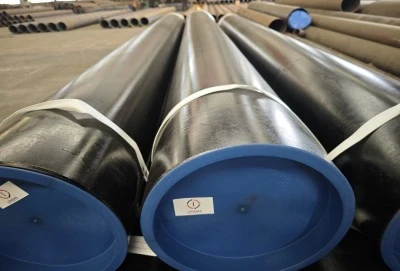
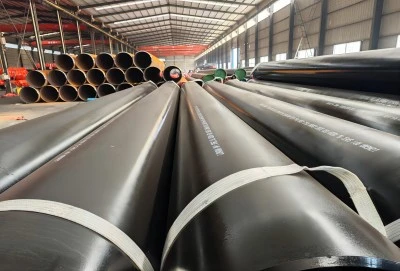
Understanding API 5L X52 and X60 Pipes: Specifications and Applications
Choosing the right pipeline is one of the most important parts of building oil and gas infrastructure that works. The API 5L specification covers both the X52 and X60 grades. This specification controls the production of line pipes for moving oil and natural gas. These names show the lowest values for yield strength, which have a direct effect on pressure ratings and operational safety margins.
API 5L Grade Classifications and Standards
American Petroleum Institute develops API 5L, ISO 3183 and ASTM specifications . It is used to provide tight specifications . The product specification has two levels: PSL1 and PSL2. The PSL2 needs more stringent chemical composition restrictions, improved mechanical testing and more comprehensive non-destructive assessment procedures. Ultrasonic testing and radiographic inspection are employed for fault detection on the inside of PSL2-grade pipes. This satisfies the high quality assurance standards that EPC contractors normally have for cross-border pipeline projects.
Chemical Composition and Mechanical Properties
The differences in chemical composition between the X52 and X60 grades directly affect their weldability and toughness. X52 generally comprises about 0.26% carbon, up to 1.35% manganese and very low sulfur (≤0.015%) to prevent cracking when hydrogen is present in sour service conditions. The X60 grades have increased tensile strength due to slightly more carbon and alloying constituents. They may have minimum yield strengths of 60,000 psi and maximal tensile strengths of 75,000 psi. These properties permit X60 to operate at higher internal pressures, however careful welding processes may be required to avoid the heat-affected zones becoming weak.
Typical Industry Applications
Both types are important for distinct jobs in oil and gas infrastructure. The X52 is most frequent in medium pressure transmission lines, water injection systems and light load level gathering networks. It can be cold bent during installation because of its ease of forming which reduces the cost of manufacturing in the field. X60 is utilized for trunk lines carrying crude oil over rugged terrain, offshore platform lifts and high-pressure gas transmission lines. The higher the strength to weight ratio, the smaller the wall thickness that can hold a given pressure. This saves material for large diameter constructions.
Technical Differences and Performance Analysis Between X52 and X60 Pipes
By knowing the differences in performance between these grades, procurement teams can choose the best materials without going overboard or lowering safety margins.
Pressure Ratings and Structural Integrity
Barlow's method is used to figure out the pressure capacity. It connects the yield strength, wall thickness, and pipe width. An API 5L X52 pipe with a 16-inch diameter and a wall thickness of 0.375 inches can safely handle about 1,440 psi. An X60 pipe with the same dimensions can handle 1,660 psi, which is 15% more. This difference is very important when building systems that will be used close to their maximum allowable operating pressure (MAOP) limits. This is because X60 increases safety factors or lowers wall thickness, which lowers the total project tonnage and freight costs.
Corrosion Resistance and Protective Coatings
Base corrosion resistance is about the same for both X52 and X60 grades because they are both made of low-alloy carbon steel that can rust and corrode when it comes into contact with water. When something is covered in acidic soils, bathed in seawater, or exposed to hydrogen sulfide, the environment determines the type of coating that should be used, not the grade. Buried pipelines are well protected by three-layer polyethylene (3LPE) and fusion-bonded epoxy (FBE) coatings. Specialized NACE MR0175-compliant versions of both grades stop sulfide stress cracking in sour gas applications. When it comes to getting decades of service life, the right way to prepare the surface and apply the coating is more important than the grade itself.
Welding Considerations and Installation Practices
Because different types have different carbon equivalents, the way they are welded is a little different. X52 is better at welding and doesn't need to be heated up as much, which means that welding cycles can happen faster and with less heat input. To keep the heat-affected zone from breaking, X60 requires controlled welding conditions, such as preheat temperatures of 150–200°F for thick-wall sections. Both grades can be made using ERW, LSAW, and DSAW techniques. For important applications, submerged arc welding produces the best seams. X52 is easy to work with during alignment and fit-up tasks, which is appreciated by installation teams, especially on projects with short schedules.
Cost, Procurement, and Supply Chain Considerations
When choosing pipeline materials, financial and logistical factors play a big role, especially for EPC contractors who have to balance project budgets with performance requirements.
Price Comparison and Value Analysis
X52 usually costs 8–12% less per ton than X60 because it is easier to make and more widely available on the market. Total cost analysis must, however, take into account the best wall thickness. Because X60 is stronger, it may be possible to make walls that are thinner, which would make up for the higher starting price by saving on material volume and shipping costs. If a 500-kilometer pipeline project used X60 instead of X52, it could save 50–80 tons of steel, which would save a lot of money on shipping and installation and more than make up for the higher unit cost.
Supplier Landscape and Certification Requirements
API 5L certifications are kept by reputable manufacturers and are checked every year by audits that look at quality management systems, production controls, and testing protocols. Longma Group is a great example of certified output because it has both ISO 9001 quality management certification and API 5L license. Our factories get high-quality raw materials from well-known mills like Shagang and HBIS. This makes sure that the chemical makeup and mechanical properties are always the same. Every shipment comes with a full mill test certificate (MTC) that meets the requirements of the EN 10204 3.1 standard. This lets you track the product all the way from the heat number to the finished product.
Delivery Timelines and Global Logistics
Lead times affect how a project is scheduled, especially for quick-track developments with short windows for construction. Standard specifications usually ship between 30 and 45 days, but common sizes can be delivered in seven days with expedited production if they come from strategically located manufacturers with ready stock. Coordinating inspections, paperwork, and freight forwarding is part of export operations. This is done by experienced suppliers who handle third-party inspections by SGS or BV, clearing customs, and multimodal transportation to targets in the Middle East, Southeast Asia, and Latin America.
Making the Right Choice: Decision Criteria for Selecting X52 or X60
Systematic evaluation frameworks help procurement managers make sure that technical requirements are met in the real world of business.
Operational Pressure and Safety Margins
Design pressure is the main factor used for choosing. Systems that work below 1,200 psi usually choose API 5L X52 pipe without sacrificing safety, while lines that go over 1,500 psi benefit from X60's higher strength. Minimum safety factors are often required by regulators (0.72 for gas pipelines and 0.8 for liquid pipelines), which have a direct effect on grade choice. Conservative engineering practices might choose X60 to make the system future-proof, since they expect output increases that cause working pressures to rise above the initial design limits.
Environmental Exposure and Service Conditions
When choosing materials for harsh settings, you need to think about more than just how strong they are. Charpy V-notch impact testing must be done at temperatures below zero for placements in the Arctic. Either grade can meet the standards by controlled rolling or normalization heat treatment. NACE compliance is needed for sour service uses. It comes in two types, X52MS and X60MS, with lower hardness levels and higher cleaning standards. Offshore settings with repeated loads and salt spray corrosion may benefit from X60's fatigue resistance, but using the right coating systems is just as important.
Budget Constraints and Total Cost of Ownership
Project economics include more than just the initial cost of materials. They also include installation costs, maintenance schedules, and the length of time that the project can be used. When design pressures allow it, X52 is the best value for jobs on a budget, especially when paired with standard wall thicknesses that make welding easier. When wall thickness is lowered in high-pressure systems, X60's higher price is justified because it saves money on materials, reduces welding time, lowers freight costs, and makes building easier. When the right corrosion protection methods are used regularly across both grades, long-term maintenance costs stay about the same.
Conclusion
When deciding between X52 and X60 pipe grades, you have to weigh technical requirements against business needs while keeping your project's specific requirements in mind. API 5L X52 pipe has been tested and proven to work well in medium-pressure situations, and it is also very cost-effective and easy to weld. On the other hand, X60 is stronger and better for high-pressure systems that need it, and optimizing the materials used can save even more money. Both grades are reliable as long as they are made according to API 5L standards, are properly defined, and are covered with the right corrosion-prevention methods. To do a good job of procurement, you need to know what the operational needs are, figure out the total cost of ownership, and work with certified manufacturers who can give you full quality documentation and quick technical support throughout the whole project.
FAQ
Can X52 pipes handle high-pressure gas transmission applications?
When built correctly and with the right wall thickness estimates, X52 pipes can handle gas transmission systems that work below 1,400 psi. The grade's yield strength of 52,000 psi is high enough for many regional transportation networks and gathering systems. But for trunk lines that go over 1,500 psi, X60 or higher types are usually required to meet safety standards and get the best wall thickness. Always look at design codes like ASME B31.8 and do hydraulic calculations that are specific to your diameter, pressure, and temperature.
What factors cause price differences between X52 and X60?
Price changes because of how hard it is to make, what alloys are needed, and how the metal is heated and treated. To get the right mechanical properties, X60 needs more precise control over its chemical makeup and often needs to be normalized or thermomechanically rolled, which raises the cost of production. The availability of the market also affects the price. For example, X52 can be made at more mills around the world, while X60 may need custom production runs. Unit prices are affected by the amount of material ordered, and bigger orders get better rates no matter what grade they are.
How can I verify supplier API 5L certification authenticity?
The API Composite List database, which can be searched by anyone on the American Petroleum Institute website, has real API 5L licenses. Get copies of the most recent license certificates and check the license number against API records. Reputable producers, like Longma Group, offer proof of their products' quality by giving ISO certifications, mill test certificates with traceable heat numbers, and inspection reports from third parties, like SGS or Bureau Veritas. Factory audits are a straight way to check the quality management systems and production skills of a company.
Partner with Certified API 5L X52 Pipe Manufacturers for Your Next Project
If you need certified API 5L X52 pipe made to strict PSL1 and PSL2 standards, Longma Group is ready to meet your pipeline material needs. Our 230,000-square-meter factories use modern ERW and LSAW methods to make pipes with diameters from 1/2 inch to 80 inches and wall thicknesses from SCH10 to SCH160. We offer full documentation packages that include mill test certificates, non-destructive testing reports, and coordination of third-party inspections. Our quality management system is certified by ISO 9001 and licensed by API 5L. Our technical team can help you match the pipe specs to the needs of your project, and we can deliver common configurations within seven days thanks to our fast production capabilities. Get in touch with our procurement experts at info@longma-group.com to talk about your needs and get detailed quotes that come with full technical data sheets and quality assurance protocols that meet the strictest EPC project requirements.








