
Construction projects all around the world need plumbing systems that can handle tough weather conditions. Infrastructure developers are under more and more pressure to find cheap materials that don't lower the quality. For many uses, ERW galvanized pipe has become the most popular choice. These pipes work great in anything from plumbing systems to building frames.
|
|
|
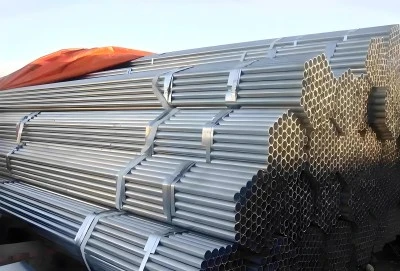
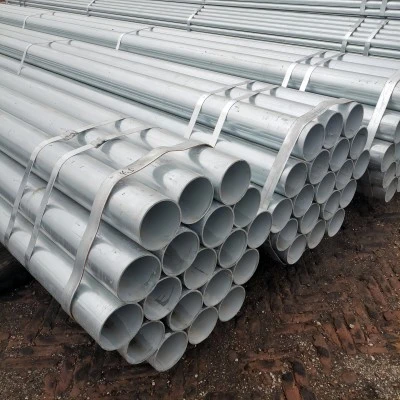
Understanding ERW Galvanized Pipe Technology and Benefits
Electric Resistance Welded pipe manufacturing represents a sophisticated production method. The process begins with high-quality steel coils. These coils are unwound and fed through leveling equipment. Precision trimming ensures clean edges for optimal welding performance.
Forming rollers gradually shape the flat steel into cylindrical form. High-frequency current heats the edges to welding temperature. No filler material is added during this process. The heated edges fuse together under pressure, creating a continuous longitudinal seam. This welding method produces smooth, uniform joints with minimal distortion.
Why choose ERW technology over other manufacturing methods? Production efficiency stands out immediately. ERW pipes are manufactured using advanced automated welding lines and are available in diameters up to 24 inches. The automated process ensures consistency across large production runs. Dimensional accuracy surpasses many alternative welding techniques. Tight tolerances benefit installation contractors significantly.
Galvanization is an important way to guard against rust. In the hot-dip galvanizing process, completed pipes are dipped in hot zinc. Galvanized steel pipe has a zinc coating that protects it against corrosion, rust, and mineral deposits, which makes it last longer. This metallurgical bond makes layers of zinc-iron alloy. The outside layer of pure zinc acts as a sacrificial barrier. The zinc around the steel keeps it safe even if the coating is damaged.
Service life becomes remarkably extended through galvanization. Properly galvanized pipes deliver 30 to 50 years of rust-free performance. This longevity dramatically reduces replacement costs over a project's lifespan. Maintenance requirements decrease substantially compared to bare steel alternatives.
Certification Standards That Define Quality
International standards provide the foundation for quality assurance in ERW galvanized pipe manufacturing. Understanding these specifications helps buyers make informed decisions. ASTM A53 stands among the most widely recognized standards globally. This specification covers seamless and welded black and hot-dipped galvanized steel pipe in NPS 1/8 to NPS 26.
The standard specifies chemical composition requirements precisely. Carbon content, manganese levels, phosphorus, and sulfur must fall within defined ranges. These chemical parameters directly influence mechanical properties and weldability. Manufacturers must provide mill test certificates documenting compliance.
Mechanical testing requirements under ASTM A53 ensure performance reliability. Tensile strength tests verify the material meets minimum requirements. Yield strength measurements confirm structural integrity under load. Flattening tests assess the pipe's ability to withstand deformation. Hydrostatic testing proves pressure containment capability without leakage.
API 5L specifications govern pipes intended for petroleum and natural gas transportation. This standard divides products into two specification levels: PSL 1 and PSL 2. Each level imposes progressively stricter requirements. Chemical composition, mechanical properties, and testing protocols become more rigorous at PSL 2.
EN10210 and AS/NZS 1163 standards address structural hollow sections. These specifications focus on applications where pipes serve as load-bearing members. Requirements emphasize dimensional accuracy, surface quality, and mechanical performance. Compliance ensures pipes perform reliably in building frameworks and infrastructure.
Galvanizing standards complement pipe specifications. ASTM A123 defines requirements for zinc coating weight, uniformity, and adhesion. Coating thickness varies by pipe diameter and application environment. Minimum coating weights prevent premature corrosion failure. Inspection procedures verify coating quality before shipment.
BS 1387 standards remain prevalent in Commonwealth nations. This British standard specifies requirements for screwed and socketed steel tubes. Threading dimensions must match established British pipe thread standards. Galvanizing requirements ensure adequate corrosion protection for plumbing applications.
Third-party certification adds another quality layer. Independent inspection organizations like SGS, Bureau Veritas, and TÜV provide verification services. Inspectors witness production processes and review documentation. Their reports give buyers confidence that products meet stated specifications. Many international projects mandate third-party inspection as a contract requirement.
Evaluating Chinese Suppliers: Critical Selection Factors
Manufacturing capacity indicates an ERW galvanized pipe supplier's ability to fulfill substantial orders. Large-scale producers typically maintain multiple production lines. Annual outputs exceeding 500,000 tons suggest adequate scale for major projects. However, capacity alone doesn't guarantee quality or reliability.
Production facility location matters more than many buyers realize. Cangzhou City in Hebei Province has evolved into China's premier pipe manufacturing hub. Companies are located in Mengcun County, Cangzhou City, Hebei Province, benefiting from established supply chains and technical expertise. Proximity to major ports like Tianjin facilitates efficient international shipping.
Equipment sophistication directly impacts product quality. Modern ERW production lines incorporate computer-controlled forming systems. Automated welding equipment maintains consistent heat input and welding speed. Online ultrasonic testing identifies defects during production rather than after completion. Automated galvanizing lines ensure uniform coating application.
Quality management systems demonstrate organizational commitment to excellence. ISO 9001 certification indicates structured quality processes exist. Documentation control, process monitoring, and continuous improvement principles guide operations. Suppliers without ISO certification often lack systematic quality approaches.
Technical expertise separates exceptional manufacturers from average ones. Engineering teams should understand international standards thoroughly. They must translate customer specifications into production parameters accurately. Problem-solving capability becomes crucial when addressing unique project requirements.
Export experience reveals supplier competence in international business. Manufacturers who regularly ship to North America, Europe, and other demanding markets understand documentation requirements. They navigate customs procedures efficiently. Communication skills in English facilitate smoother project coordination.
Customer references provide invaluable insights into supplier performance. Request contact information for previous customers with similar project requirements. Inquire about delivery reliability, product quality, and responsiveness to issues. Consistent positive feedback indicates trustworthy supplier relationships.
Customization capabilities address specialized project needs. Some applications require non-standard dimensions or special threading. Suppliers offering flexible manufacturing parameters serve diverse requirements better. Custom length cutting, beveling, and special coating options add significant value.
Longma Group: Manufacturing Excellence Since 2003
Longma Group has established itself among China's leading ERW and LSAW steel pipe manufacturers over two decades. The company specializes in producing large-diameter, thick-walled pipes using advanced welding technologies. Double-sided submerged arc welding ensures exceptional structural integrity.
Strategic location in Cangzhou's industrial belt provides competitive advantages. Regional infrastructure supports efficient raw material procurement and finished product shipping. By the end of 2023, annual output exceeded 1,000,000 tons. This substantial capacity enables Longma Group to serve major international projects reliably.
Navigating the Procurement Process Successfully
Specification clarity prevents misunderstandings and delivery issues. Define pipe standard requirements explicitly in purchase orders. Specify whether ASTM A53, API 5L, or other standards apply. Include grade designations like Grade A or Grade B. Wall thickness, outer diameter, and length requirements must be stated precisely.
ERW galvanized pipe specifications require equal attention to detail. Hot-dip galvanizing represents the standard protection method. However, coating weight varies by application environment. Indoor applications may accept lighter coatings than outdoor or underground installations. Specify minimum coating thickness or weight per unit area.
End preparation affects installation efficiency dramatically. Plain ends suit certain applications while threaded ends facilitate mechanical connections. Beveled ends prepare pipes for field welding. Communicate end finish requirements clearly to avoid receiving unsuitable products.
Quantity calculations should account for waste factors. Order slightly more pipe than theoretical requirements indicate. Cutting waste, rejected pieces, and potential damage during handling create actual consumption above design quantities. A 5 to 10 percent overrun prevents project delays.
Payment terms balance risk between buyer and seller. Letters of credit provide security for international transactions. They protect both parties when structured properly. Partial prepayment combined with balance upon inspection represents another common arrangement. Payment timing should align with inspection and quality verification milestones.
Shipping arrangements significantly impact total landed cost. Ocean freight dominates bulk pipe shipments from China. Container shipping works for smaller orders while bulk carriers handle large quantities more economically. Transit times from Tianjin Port to major destinations range from three to six weeks.
Documentation requirements vary by destination country. Commercial invoices, packing lists, and bills of lading constitute basic requirements. Certificate of origin may provide duty advantages under trade agreements. Material test reports verify compliance with specifications. Proper documentation prevents customs delays.
Inspection timing offers options depending on buyer preferences. Pre-shipment inspection occurs at the manufacturer's facility before loading. Inspectors verify dimensions, coating quality, and marking. This approach prevents receiving non-conforming products. Some buyers prefer destination inspection despite increased risk of discovering issues after shipment.
Conclusion: Making Informed Sourcing Decisions
Global construction and infrastructure development continue accelerating demand for quality piping products. ERW galvanized pipe serves countless applications across industries worldwide. China's manufacturing sector offers tremendous capacity and competitive pricing advantages. However, successful procurement requires careful supplier evaluation and quality verification.
Understanding certification standards enables buyers to specify requirements clearly. ASTM, API, EN, and other international standards provide common quality benchmarks. Suppliers demonstrating consistent compliance with these standards through documentation and testing deserve serious consideration. Third-party verification adds valuable independent confirmation.
Longma Group represents the manufacturing excellence available from established Chinese producers. Since 2003, the company has specialized in ERW and LSAW pipe production using advanced technologies. Strategic location in Cangzhou's industrial belt provides logistical advantages and access to technical expertise. Annual production capacity exceeding one million tons enables reliable delivery for projects of any scale.
The company maintains comprehensive quality management systems aligned with international standards. Advanced production equipment ensures dimensional accuracy and weld quality. Hot-dip galvanizing facilities apply protective coatings that extend service life significantly. Complete testing protocols verify every pipe meets specifications before shipment.
Project success depends on selecting the right supplier for your specific requirements. Consider technical capabilities, quality systems, and international business experience. Evaluate communication effectiveness and willingness to address special requirements. Long-term supplier relationships provide greatest value through consistent quality and reliable delivery.
Ready to source certified ERW galvanized pipe for your next project? Longma Group stands prepared to support your requirements with high-quality products meeting international standards. Our manufacturing expertise, proven track record, and commitment to customer satisfaction make us an ideal partner. Contact our team today to discuss your specifications and receive detailed quotations: info@longma-group.com
FAQs
Q1: What advantages does ERW galvanized pipe offer compared to seamless pipe?A: Many applications benefit from ERW galvanized pipe. It's clear that ERW is cheaper than seamless. Spiral submerged arc welded tube is rougher and less attractive than ERW steel pipe. ERW pipes are sized and straightened for higher dimension accuracy. Straight longitudinal welds verify quality. ERW pipe is cheaper than seamless for low-pressure, low-temperature applications.
Q2: How long does hot-dip galvanized coating protect steel pipe from corrosion?
A: Properly applied hot-dip galvanized coating prevents corrosion for years. Galvanized pipes, cheaper than steel, can withstand corrosion for 30 years and maintain strength with a durable coating. Environmental exposure affects service life. Pipes in non-aggressive soils seldom corrode after 50 years. Indoor usage under controlled conditions last longer. For steel protection, zinc corrodes preferentially. Scratches and paint damage do not impair this protection.
Q3: What pipe standards should I specify for water distribution systems?
A: Water distribution requires ASTM A53 or similar galvanized steel pipe. The standard covers seamless and welded pipe from NPS 1/8 to NPS 26. Grade B is stronger than Grade A and used in pressure applications. Commonwealth countries use BS 1387 for water delivery. Threading sizes and galvanizing quality are specified. Check that coatings fulfill local potable water standards. Some applications require NSF or other health clearances.