
When selecting an API 5L steel pipe for natural gas transmission, the right grade depends on your operating pressure, environmental conditions, and owner specifications. For most mid-pressure onshore gas lines, X52 or X60 PSL2 strikes the best balance between mechanical strength and weldability. High-pressure or sour-service projects in regions like the Middle East or South America typically call for X65 or X70 PSL2 with NACE MR0175 compliance. Grades B and X42 remain cost-effective choices for lower-pressure distribution networks. Matching grade to service conditions protects your project schedule, budget, and third-party audit outcomes.
|
|
|
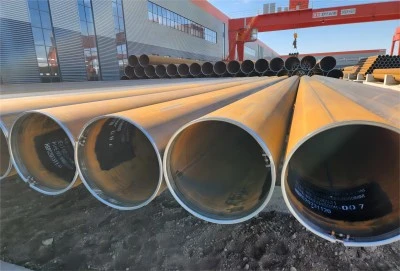
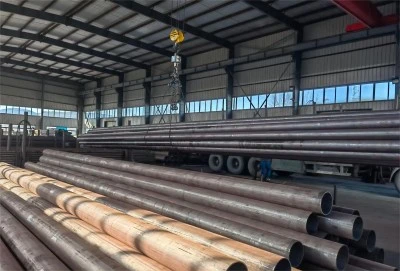
API 5L Steel Pipes for Natural Gas Pipelines
What Is API 5L and Why Does It Matter?
It's called API 5L and it was made by the American Petroleum Institute. It covers both seamless and welded line pipe for moving water, gas, and oil. It has been published 46 times since it came out in 1965. It has two product standard levels, PSL1 and PSL2, and steel types from B to X80. Companies that make things have to renew their API license every three years and go through audits. This gives teams that buy pipes a quality standard they can use to check each pipe before it leaves the mill.
PSL1 vs. PSL2: Which Level Fits Your Project?
PSL1 sets the basic mechanical and chemistry needs for everyday use. As of now, PSL2 says that Charpy V-Notch (CVN) impact tests must be done. It also has stricter rules for sulfur and phosphorus (max 0.015% S and 0.025% P) and weld checks. Instead of being a choice, PSL2 is generally a must-have level for natural gas transportation projects that will be exposed to low temperatures, sour gas, or checks picked by the owner from a third party.
Common Grades Used in Gas Transmission
API 5L steel pipe has Grades B, X42, X46, X52, X56, X60, X65, X70, and X80. The minimum yield strength in ksi is written next to each grade name. That limit is shown by the "X" number. X52 can produce at least 52,000 psi (358 MPa), and X70 can reach 70,000 psi (482 MPa). Higher grades make it possible for walls to be thinner while still holding the same amount of pressure when the plan calls for it. This will save steel tons and money on the project as a whole.
Criteria for Selecting the Right API 5L Grade for Natural Gas Pipelines
Operating Pressure and Wall Thickness
The MAOP tells the first grade selection filter how much pressure it can handle. You should usually use X60 or X65 if you have a high-pressure trunk line that carries gas at 10 MPa or higher. This will keep the wall thickness within the limits for welding and building. Feed lines with less than 4 MPa of pressure can be handled by Grade B or X42. It doesn't matter how big the walls are in this case; the cost of the material is more important than how much it weighs.
Sour-Service and Corrosive Environments
There are rules that projects in gas areas with hydrogen sulfide (H2S) must follow, according to NACE MR0175/ISO 15156. For this, pipes must be made to meet the needs of API 5L Annex H or Annex J. It is very important that these pipes have very little sulfur in them and that the shape of their particles can be controlled so that they don't break when hydrogen is added or sulfur is stressed. For marine sour gas service in Central Asia and the Middle East, X52 or X60 PSL2 Annex H is most often used.
Weldability and Field Construction Conditions
The carbon equivalent (CE) of an API 5L steel pipe has a direct effect on how easy it is to weld it in the field. Most high-grade steels get their strength from micro-alloying with niobium, vanadium, and titanium, not from adding carbon. CE stays low because of this. In the case of X70 PSL2, the CE is usually less than 0.43%. This means that it can be welded outside in mild weather without being heated first. This feature is very helpful for EPC workers who are in charge of big pipeline spreads and need to quickly weld to keep to schedules.
Comparison of API 5L Grades and Competing Standards for Gas Pipelines
API 5L vs. ASTM and ISO Equivalents
API 5L Grade B is the same as ASTM A53 Grade B and ASTM A106 Grade B in terms of how it works and what it is made of. However, API 5L has tighter rules for testing. L360 is the same as X52 in ISO 3183 and L450 is the same as X65. Putting both API 5L and ISO 3183 in the purchase papers for foreign EPC projects lets you pick from certified mills in different parts of the world without lowering the technical standards.
Seamless vs. Welded Pipe for Gas Service
When there needs to be very high pressure, small sizes, and walls that need to be the same all the way through, seamless pipe is the best choice. For trunk lines with a diameter of 16 inches or more, longitudinal submerged arc weld (LSAW) pipe is the best choice. It is possible to use LSAW to make things with thick walls that are made of high-grade steel. Weld seams can also be tested for defects without damaging them, and this meets the standards for non-destructive examination set by most owners.
Grade-to-Application Quick Reference
It's easier to understand how to choose a grade when you know what kind of application it is for. In gas pipeline projects around the world, these grade-to-service routes are often used:
- Grade B / X42 PSL1: Low-pressure distribution networks, gathering lines, and short tie-in spools where cost minimization is the primary driver.
- X52 / X56 PSL2: Mid-pressure onshore transmission lines and feeder systems with moderate environmental exposure, providing a solid balance of cost and performance.
- X60 / X65 PSL2: High-pressure trunk lines and cross-country transmission systems in demanding environments, including sour-service variants under Annex H compliance.
- X70 / X80 PSL2: Long-distance, large-diameter, high-pressure gas transmission projects where weight reduction and material economy justify higher-grade steel.
Procurement Insights: Choosing and Purchasing API 5L Steel Pipes
Certifications and Documentation That Protect Your Project
If you are looking into an API 5L steel pipe supplier, make sure that their API 5L manufacturer certificate is still valid and covers the grades and types of product that are on your buy order. Not only the API badge should you look for. You should also have an ISO 9001 Quality Management System certificate, Material Test Certificates (MTC) from EN 10204 3.1 or 3.2, and inspection records from respectable companies like SGS or Bureau Veritas. This is what your QA/QC manager needs to clear up any owner hold points that come up while the building is going on.
Delivery Lead Times and Bulk Purchasing
It takes 45 to 90 days to make large-diameter LSAW pipe after an order is approved. You can get popular grades and sizes in as little as 7 days if you work with a maker that keeps approved stock. This is great for jobs that need to be done quickly. When you buy in bulk for more than one project area, you get better unit prices and a guaranty of material supply. This makes it less likely that prices will go up when you buy.
Factory Audit and Owner Witness Testing
Most owners of international gas pipelines want to hold a pre-production meeting and a mill qualification audit before start making the pipe. Allowing owner officials and third-party inspectors to visit at any time and having expert staff who speak English on hand during the audit will speed up the approval process and help you stay on track with your project.
Best Practices and Case Examples in Selecting API 5L Grades for Natural Gas Pipelines
Lesson from a Middle East Sour-Gas Project
When the idea to send high-pressure gas to Saudi Arabia was first thought of, X60 PSL1 was to be used. There was more H2S than what is allowed by NACE during the technical review by the owner's engineer. It cost about 3–5% more to make the pipes when they were upgraded to X60 PSL2 Annex H, but there was no longer any chance that the HIC would fail in wet sour service. It was a cost-benefit study that kept the owner's asset safe and the EPC contractor's guaranty risk low.
Grade Optimization on a High-Volume Trunk Line
Someone in South America first asked for X52 for a 300 km gas trunk line. The wall thickness that had to be met dropped from 14.3 mm to 11.9 mm when X65 PSL2 was used instead. This saved about 12% of the steel that was used. As part of an order for 30,000 tons, the cheaper grade more than made up for its higher price per ton. It also saved money on shipping and handling in the field.
Key Takeaways for EPC Procurement Teams
Two main lessons can be learned from these examples: first, always compare service conditions to sour-service limits before picking a grade; second, try to find the best wall thickness before picking a lower grade. Often, making small changes to the grade choice can save a lot of money on a project level without having an effect on honesty or following the rules.
Conclusion
People in business and engineering should not just pick the best API 5L steel pipe grade without giving it a lot of thought. Most of the service conditions for natural gas transmission in the Middle East, Southeast Asia, and South America are covered by X52 to X65 PSL2. Sour-service areas need the extra checks that come with following Annex H. To make the grade choice process work, the project pipeline engineer, QA/QC manager, and buying team should always work together, using the owner's technical specifications and any relevant codes. If the plans are correct, there won't be any need for expensive changes to the materials or delays in inspections while the building is going on.
FAQs
What is the most widely used API 5L grade for natural gas transmission?
X52 and X60 PSL2 are the most frequently specified grades for onshore natural gas transmission lines globally. They offer sufficient yield strength for operating pressures in the 6–10 MPa range while maintaining good field weldability and documented toughness through CVN testing.
Does a higher API 5L grade always mean better corrosion resistance?
Not automatically. Corrosion resistance in sour-gas service is governed by chemistry controls, inclusion shape treatment, and compliance with NACE MR0175—requirements tied to PSL2 and Annex H, not simply to grade number. A higher-grade pipe without Annex H compliance may perform worse in H2S environments than a lower-grade Annex H pipe.
What documentation should I request from an API 5L supplier?
Request the EN 10204 3.1 MTC, valid API 5L mill certificate, ISO 9001 certificate, and third-party inspection report (SGS, BV, or equivalent). For sour-service applications, add HIC test reports per NACE TM0284 and SSC test reports per NACE TM0177.
Can I source large-diameter API 5L pipe with short delivery?
Yes. Some manufacturers maintain certified stock in common grades (X52, X60) and standard sizes. Delivery windows as short as 7 days are achievable for in-stock items. Confirm grade, outer diameter, wall thickness, and MTC availability before relying on quick-delivery claims in your project schedule.
Request a Quote from Longma Group — Certified API 5L Steel Pipe Manufacturer
It has been making API 5L steel pipe since 2003. They sell more than 90 countries more than a million tons of steel pipe every year. We have grades B through X80, as well as PSL1 and PSL2. The outside diameters of our products range from 1/8" to 80" and the wall thicknesses from SCH10 to SCH160. When an item is in stock, it will be delivered in 7 days. Email our technical team at info@longma-group.com or go to our website at longma-group.com to get a quote or catalog for your project.