
The industry standard for oil and gas transportation is API 5L steel pipe, which offers unparalleled dependability and performance in demanding pipeline applications. These pipes are the favored option for petroleum transmission systems all over the world because of their exceptional strength properties and ability to endure high pressures and corrosive conditions. The strict production criteria of the specification guarantee constant quality, and the range of grade possibilities, from B to X80, offers adaptability for varying operating needs. The reasons why procurement managers and pipeline engineers often select API 5L steel tubing for important infrastructure projects are examined in this thorough examination.
|
|
|
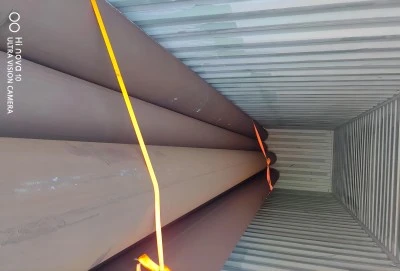
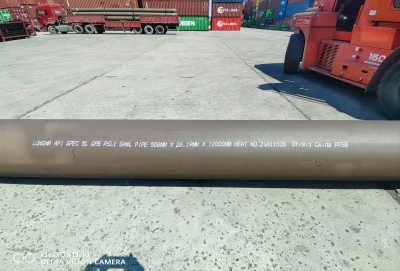
Understanding API 5L Steel Pipes and Their Specifications
Defining API 5L Steel Pipes and Industry Standards
The API 5L specification was created by the American Petroleum Institute to regulate the production of line pipes for the transportation of water, gas, and oil in the natural gas and petroleum sectors. This standard is very different from ASTM A106, which deals with seamless carbon steel pipes for high-temperature use, and API 5CT, which deals with oil well casing and tubing. API 5L particularly addresses transportation pipeline needs, whereas ASTM A106 concentrates on power plant applications and API 5CT pipes manage downhole drilling activities.
PSL1 and PSL2 quality levels apply to API 5L pipes, with PSL2 providing improved mechanical property testing and chemical composition control. With exterior diameters ranging from 1/8 inch to 80 inches, the standard can accommodate a wide range of project sizes, from big transmission lines to minor distribution networks.
Steel Grades and Their Chemical Composition
Several steel grades, each designed to meet certain strength criteria, are included in the API 5L standard. While higher grades such as X42, X52, and X65 offer progressively enhanced yield strength capabilities, Grade B offers fundamental strength qualities appropriate for low-pressure applications.
With a minimum yield strength of 42,000 PSI, X42 grade is perfect for pipeline systems operating at moderate pressure. To improve weldability and corrosion resistance, the chemical composition usually consists of a carbon content of less than 0.26%, manganese in the range of 1.20 to 1.65%, and regulated amounts of sulfur and phosphorus.
With a minimum yield strength of 52,000 PSI and improved alloy additives that increase toughness without sacrificing weldability, X52 grade improves performance. High-strength applications needing a yield strength of 65,000 PSI are represented by X65 grade, which uses sophisticated metallurgy to deliver higher mechanical qualities while keeping outstanding manufacturing characteristics.
Manufacturing Methods and Quality Control
The two main manufacturing techniques used in the fabrication of API 5L pipes nowadays are seamless and welded construction. Solid steel billets are heated and punctured to form hollow shells, which give seamless pipes their consistent wall thickness and remarkable pressure resistance. Because this technique removes weld seam weaknesses, seamless pipes are especially useful for high-pressure applications.
Electric Resistance Welding (ERW) and Longitudinal Submerged Arc Welding (LSAW) are two techniques used in the production of welded pipes. Through electrical resistance heating, ERW technology produces consistent quality seam welds that are appropriate for the majority of pipeline applications. Larger diameter pipes are handled by LSAW production, which forms steel plates into cylindrical shapes and welds longitudinal seams while protecting them from flux.
Throughout the production process, quality control methods include non-destructive inspection, mechanical property testing, and chemical analysis verification. By ensuring that each pipe satisfies specification criteria prior to shipment, these procedures boost field performance confidence.
Core Benefits of Using API 5L Steel Pipes in Oil and Gas Pipelines
Superior Strength and Durability PerformanceMaterials for pipeline infrastructure must be able to survive harsh operating conditions, and API 5L pipes perform very well in these demanding settings. The strength criteria of the standard guarantee that pipes can withstand internal pressures more than 1,440 PSI while retaining structural integrity at temperatures ranging from -50°F to 200°F.
Fine-grain steel structures made using advanced metallurgical techniques are resistant to fatigue failure and fracture propagation. Because of the improved material toughness brought about by the regulated chemical composition, pipes can absorb impact energy without breaking easily. In well-designed installations, this resilience translates into a longer service life that frequently surpasses 50 years.
Design versatility for varying pressure ratings and safety considerations is offered by wall thickness variations ranging from SCH10 to SCH160. Without over-engineering, engineers may optimize pipe selection to match particular project needs, resulting in affordable solutions that satisfy performance goals.
Corrosion Resistance and Operational Reliability
Elements that naturally resist corrosion in petroleum conditions are included in the composition of API 5L steel pipe. While regulated carbon levels preserve strength without raising corrosion susceptibility, controlled sulfur concentration below 0.015% in PSL2 grades reduces sulfide stress cracking.
Throughout the pipe's service life, flow efficiency is maintained by the smooth interior surface finish, which lessens erosion and turbulence during fluid transport. In multi-phase flow applications, where sand and debris may accelerate the wear of rougher pipe materials, this feature becomes very crucial.
Experience in the field shows that well installed API 5L pipes require less maintenance, which lowers related expenses and operational disturbances. Accurate budget forecasting and lifecycle planning are made possible by the predictable performance characteristics.
Regulatory Compliance and Safety Standards
API 5L is frequently cited as the recognized standard for transmission line construction in international pipeline legislation. Permitting procedures are expedited and regulatory approval times are shortened by this widespread acceptance. Simplified compliance documentation is advantageous for pipeline operators utilizing certified API 5L products.
The safety margins in the standard take into consideration a number of loading scenarios, including as environmental stressors, external loads, and internal pressure. These inherent safety features satisfy insurance requirements for significant infrastructure expenditures while offering assurance throughout operation.
Third-party certification programs provide procurement teams with further assurance by verifying production quality and specification compliance. Independent inspection organizations lower supply chain risk by confirming mechanical characteristics, chemical composition, and dimensional correctness.
How to Choose the Right API 5L Steel Pipe for Your Pipeline Project?
Assessing Project Requirements and Environmental FactorsA comprehensive examination of operational factors, such as maximum permissible operating pressure (MAOP), design temperature range, and conveyed fluid properties, is the first step in a successful pipe selection process. Wall thickness criteria and minimum strength classes are determined by these basic requirements.
Environmental factors have a big impact on the choice of materials. External corrosion rates are influenced by soil chemistry, and pipelines must adapt to cycles of temperature stress brought on by climate change. Applications in the desert demand materials that retain their qualities at high temperatures, whereas Arctic installations need increased toughness to avoid brittle failure.
Higher-grade materials offer superior resistance to ground movement and stress concentrations, and seismic activity levels in the installation location have an influence on design considerations. In order to obtain improved safety factors, pipeline routing through populated regions could need updated materials.
Comparing Steel Grades and Manufacturing Types
When choosing a grade, strength needs must be balanced with installation difficulty and expense. With 24% more strength than Grade B and exceptional weldability qualities, X52 grade is a great bargain for moderate-pressure applications.
For high-pressure systems, where the enhanced strength permits thinner walls or greater operating pressures, X65 grade becomes economically appealing. By reducing pipe weight or increasing capacity, the 25% strength advantage over X52 can support the higher material cost.
The choice of manufacturing process is influenced by the size, quantity, and quality requirements of the pipes. Although seamless pipes remove weld-related issues, they are expensive and only come in a few number of sizes. While LSAW construction effectively manages large-diameter needs, ERW pipes offer affordable alternatives for typical applications.
Supplier Certification and Quality Assurance
Credible vendors hold certifications from reputable organizations such as regional quality groups, API, and ISO 9001. These certifications show a dedication to reliable production procedures and quality assurance systems.
Complete supply chain verification, from raw materials to final inspection, is made possible by material traceability documentation. In order to comply with regulations and make warranty claims, suppliers must keep thorough records during the production process.
Independent confirmation of surface condition, dimensional correctness, and specification compliance is offered by pre-shipment inspection services. By identifying any problems prior to installation, these checks help to prevent expensive field replacements or changes.
Real-World Applications and Case Studies of API 5L Pipes in Oil and Gas
Onshore Pipeline Infrastructure ApplicationsAPI 5L X65 and X70 grades are used for long-distance natural gas transportation in major transmission pipelines throughout North America. With exceptional safety margins, these high-strength materials allow for operation at pressures as high as 1,440 PSI. From grassland installations to mountain crossings, the Trans-Canada Pipeline system shows how API 5L pipes may be successfully used in a variety of environmental settings.
For effective production conveyance, API 5L steel pipe X52 grade pipes are essential to crude oil collection systems in the Permian Basin. While the material's strength qualities adapt to pressure changes throughout production operations, its corrosion resistance can tolerate different crude compositions. Over a 15-year operational span, field experience demonstrates low maintenance requirements.
API 5L Grade B pipes are used in water injection systems that assist improved oil recovery operations because of their good weldability and mild strength requirements. These applications show how adaptable the standard is to various fluid kinds and pressure ranges in integrated field development projects.
Offshore Platform and Subsea Applications
API 5L pipes are used by offshore drilling platforms for a variety of fluid transportation applications, including as chemical injection lines, fire suppression systems, and generated water handling. The material is perfect for applications needing both pressure resistance and corrosion protection because of its demonstrated performance in maritime settings.
High-grade API 5L materials are used in platform-to-shore pipeline connections to withstand the harsh conditions seen in subsea installations. For the transfer of hydrocarbons, the pipelines must retain internal pressure integrity while withstanding external pressure from the depth of the water.
Properly installed API 5L pipeline systems routinely perform better than alternative materials in hurricane damage assessments in the Gulf of Mexico. Resilience against extreme weather occurrences is provided by the safety margins and quality criteria of the specification.
Performance Metrics and Lessons Learned
According to industry data, when API 5L pipeline systems are constructed and planned correctly, availability rates surpass 99.5%. This dependability is a result of the specification's strict production requirements and cautious design approach.
According to lifecycle cost research, API 5L pipes provide lower total ownership costs than other materials since they require less maintenance and have a longer service life. After five years of operation, the original material premium is usually recouped.
Material quality and supplier dependability are routinely identified as crucial success elements in project case studies. Collaborations with reputable manufacturers lower project risk and provide for predictable completion dates.
Longma Group: Your Premier API 5L Steel Pipe Supplier
With more than 20 years of specialized expertise in creating superior pipeline solutions, Longma Group is a prominent producer in the steel pipe sector. With production capacity surpassing 1,000,000 tons yearly over our 230,000 square meter manufacturing plant, our dedication to quality has made us a reliable partner for significant oil and gas projects globally.
All API 5L grades from B to X80 are covered by our extensive product line, which is offered in PSL1 and PSL2 quality standards. In order to satisfy a variety of project requirements, we provide pipes with wall thickness choices ranging from SCH10 to SCH160 and diameters ranging from 1/8 inch to 80 inches. With the quickest delivery timeframes of just seven days for typical standards, our cutting-edge ERW and LSAW production techniques maintain competitive delivery schedules while delivering consistent quality.
Our substantial certification portfolio, which includes API 5L, ISO 9001, and comprehensive quality management systems, demonstrates that quality assurance is the cornerstone of our operations. We only purchase raw materials from reputable domestic steel mills, such as Shagang and TISCO, guaranteeing excellent metallurgical qualities from the ground up. Our thorough traceability systems and strict inspection procedures give engineering teams the documentation and assurance they need for important infrastructure projects.
Conclusion
API 5L steel pipe is the best choice for oil and gas pipelines because it has a track record of good performance, meets all regulations, and is cost-effective. The specification's wide range of grade possibilities and production standards make it easy to accommodate different project needs while yet making sure that the quality and dependability are always the same. Careful grade selection, working with reputable suppliers, and following best practices during the procurement and installation phases are all important for a successful implementation.
Contact Longma Group for Certified API 5L Steel Pipe Solutions
Longma Group delivers comprehensive API 5L steel pipe solutions tailored to your specific pipeline requirements. Our engineering team provides technical consultation and project support to ensure optimal material selection and specification compliance. Contact us at info@longma-group.com for detailed product catalogs, competitive quotations, and expert guidance on your next pipeline project. Experience the reliability and quality that has made us a preferred API 5L steel pipe supplier for major oil and gas operations worldwide.
FAQ
What distinguishes API 5L from API 5CT steel pipes in practical applications?API 5L pipes are specifically designed for surface pipeline transportation of oil, gas, and water, featuring optimized strength and corrosion resistance for transmission applications. API 5CT pipes serve downhole applications in oil wells, requiring different mechanical properties and threaded connections for casing and tubing operations. The manufacturing standards and testing requirements differ significantly between these specifications.
How should procurement managers evaluate pipe quality before purchase?
Effective quality evaluation includes verification of material test certificates, chemical composition analysis, and mechanical property documentation. Visual inspection should confirm proper marking and surface condition, while dimensional checks verify diameter and wall thickness accuracy. Third-party inspection services can provide independent verification of specification compliance and manufacturing quality.
Which factors most significantly influence API 5L steel pipe pricing?
Steel grade selection represents the primary cost driver, with higher strength grades commanding premium pricing due to enhanced metallurgy and processing requirements. Pipe diameter and wall thickness affect material usage and manufacturing complexity, while order quantity influences unit pricing through volume discounts. Market conditions for raw materials and delivery urgency also impact final pricing.