
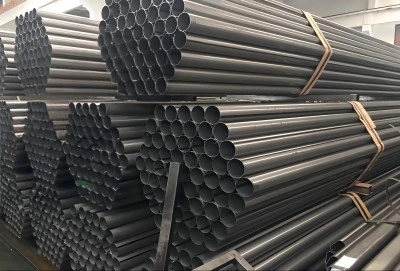
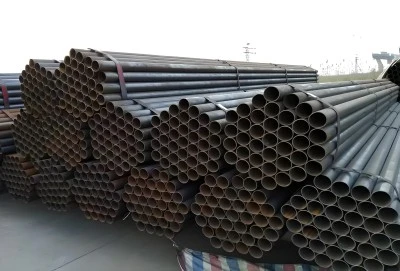
Because it welds quickly and has a zinc layer that keeps the steel dry, ERW galvanized pipe is good for water applications. If the surface is scratched, the zinc breaks down first because it acts as a barrier. This protects the steel below. When the wall thickness and diameter are all the same, it's easier to cut, thread, and weld on-site. Pipe that doesn't have a seam usually costs more than pipe that is welded. How long the system lasts is still affected by the soil, water chemistry, and coating thickness. Also, the local government has to agree to it being used for drinking water. In this guide, I talk about how the pipe is made, how it compares to other options, and how to buy it with confidence.
|
|
|
What Is ERW Galvanized Pipe?
How Electric Resistance Welding Forms the Pipe?
Steel coils are taken out and their ends are cut off. The steel strip is then cold-formed into a circle by running it through rollers of different shapes. High-frequency current warms the edges of the strip and presses them together in a longitudinal weld. Before cutting the tube to length and straightening it, the mill cleans up the outside diameter of the weld, tests the weld, and runs it through sizing rolls. The seams of modern lines are also heat-treated to make them as strong as the metal they are joined to. We don't have to worry as much about hard spots when we bend or thread the metal because of this. The wall thickness stays the same, which engineers like, because the process starts with a coil whose thickness can be changed. This is important when they check the calculations for the structure and water flow.
Pre-Galvanized vs. Hot-Dip Galvanized Pipe
The zinc layer can reach the pipe in two ways. Pipe that has already been zinc-coated is called pre-galvanized pipe. The coating isn't as thick, but the finish is smooth. Zinc is also lost during welding, so the manufacturer has to fix the weld area by using something like an inline zinc spray. Hot-dip galvanized pipe is dipped in zinc after it has been welded. The zinc covers the weld and the surfaces. This makes a layer that is thicker and can handle rough use outside. Most zinc coatings have a mass of between 200 and 600 g/m². Most of the time, a heavier mass protects better. For each order, write down the method and the least amount of zinc that needs to be there.
Longma Group Product Range
Longma Group makes ERW galvanized pipe with walls that are between 6.02 mm and 50.8 mm thick and outside diameters that are between 60.3 mm and 1422 mm. Some of the rules for pipes are API 5L, ASTM A53, EN10210, and AS/NZS 1163. For coatings, we have rules like AWWA C210, C213, CSA Z245.20, EN10339, ISO 21809-1, and EN10339. Check them out. We make sure that each customer knows which standard applies to the galvanized scope, since some of them cover different types of coatings. More than 90 countries have bought from us since 2003. By the end of 2023, we'll have made more than 1,000,000 tons of goods every year.
Why ERW Galvanized Pipe Works for Water Applications?
Corrosion Protection from Zinc
Zinc keeps steel safe in two ways. Zinc is more electrochemically active than iron, so it breaks down faster where it is scratched or cut. The coating keeps water and oxygen out. Because of this kind act, small flaws don't turn into rust spots right away. The thickness, pH, chlorides, temperature, humidity, soil exposure, and pH of the coating all still have an impact on how well it works. That's not all—the zinc layer also keeps rust scale from building up on fire sprinkler heads. Before you decide how much zinc to use, I think you should look at the soil and water data for lines that are buried or near the coast.
Cost and Production Efficiency
The process of welding starts with a steel coil and never stops, so it can handle both small and large orders. ERW galvanized pipe is often used for standard-pressure water service and structural supports because it costs 20% to 30% less than pipe made without a weld seam. A lower unit cost is most important for long runs where the budget is set by the number of tons. Still, don't just look at the price. Find out how much it costs over its whole life. A thicker wall or zinc layer may cost more up front, but it can save you money in the long run on repairs, replacements, and downtime. I tell people who want to compare prices that they should ask for quotes based on the same zinc and wall needs.
Dimensional Consistency and Installation
When the outside diameter and wall thickness are always the same, crews can quickly join pipes in the field. You can weld, thread, groove, flange, or flange ERW galvanized pipe, depending on the project's size and needs. We can also do things like expand, perforate, and weld on the ends of mating connections. Be careful when you're out in the field because cutting and welding can burn off zinc near the joint. Follow a method like ASTM A780 to fix damaged galvanized surfaces. Crews should clean the area and use a zinc-rich product to fix the coating. If you and your QA/QC team agree on this way to fix things before they are shipped, there won't be any arguments about whether the field joints and coatings will work together.
ERW Galvanized Pipe vs. Other Water Pipe Options
ERW vs. Seam-Free (SMLS) Pipe
Seam-free pipe, which is also called SMLS, doesn't have any welds going through it. An engineer will often choose it for places with a lot of pressure, high temperatures, or important tasks. ERW pipe can be used for both standard-pressure water lines and building projects as long as the standard allows it. In this case, ASTM A53 includes both hot-dip zinc-coated pipe and pipe that has not been welded or has seams. Mills make sure the weld seam in ERW pipe is good by testing it and heating it. When the specification calls for it, they also do non-destructive and hydrostatic tests. First, read the guide for your project. Most of the time, ERW gives the best price for pipes that can be welded without changing the zinc protection.
Hot-Dip, Pre-Galvanized, and Black Steel
You can coat the pipe with hot-dip galvanizing, and you can make the pipe with ERW. One pipe can do both. Black steel rusts when it gets wet because it doesn't have zinc. It needs a different coating or paint. Pipe that has already been galvanized can be used inside for service that is kept safe, and a smooth finish and thinner zinc are fine. Hot-dip galvanized pipe covers more area, even the area where the weld is, and it works better outside and when it's wet. Find out where the pipe will go, how wet the area gets, and how much damage you can expect from handling it before you fill it in. Don't just go with your first choice.
Galvanizing vs. FBE, 3LPE, and 3PE Coatings
Galvanizing isn't the only way to go for water and heating lines. FBE, or fusion-bonded epoxy, is used in many buried steel water pipes. For steel water pipelines, AWWA C213 talks about FBE. For oil, gas, and long-distance projects, 3LPE or 3PE that meets standards like ISO 21809-1 or DIN 30670 is often used. Yes, you can get quotes from the same company for both the pipe and the coating. We offer hot-dip galvanizing, FBE, 2PP, 3LPE, and 3PE. In this way, the pipe mill and coating yard can't work together, and the coating records can only be kept by one party. Just look at the price; think about what the project needs, the soil, and the temperature where it will be used as well.
How Long Does ERW Galvanized Pipe Last?
Factors That Set Service Life
Name doesn't tell you anything about how long something will last. Most of the time, ranges are given between 20 and 25 years in harsh industrial or coastal air and more than 50 years in mild rural air. The zinc coating mass makes a big difference in that. How things turn out depends on the type of water, its pH, chloride level, temperature, flow rate, the soil's condition, damage from handling, and how well it was installed. In most homes, utility rooms are not too hot. There may be times when a site needs a thicker zinc layer, more coating, or a different material because it is near the coast, buried, industrial, or chemically harsh. Any number for how long something will last should only be used as a rough guide. Before you decide, compare it to information from your own site.
Inspection and Care Before and After Installation
Many times, damage starts before the pipe even gets to the trench. Copper can get scratched or wet between bundles if it is stored wet or moved around a lot. This can also happen on long sea trips. Pipe should not be put on the ground; it should be kept dry and stored off the ground. Use straps and end caps to protect. After installation, keep an eye out for damage to the coating, rust stains, problems with the threaded joints, leaks, and loss of pressure. Glacial corrosion can start where two or more metals touch each other. Pay attention to these areas. If the zinc is broken, you need to fix it right away because even a small scratch lets water get under the coating. After asking the supplier, write down in the purchase order how the goods should be packed to be sent abroad.
Matching Pipe to the Application
People use the pipe for many things, such as providing water to buildings, watering plants, putting out fires, providing industrial utility water, and setting up HVAC systems. Find out how Schedule 40 and Schedule 80 are different in terms of their weight, pressure, flow area, wall thickness, and how they are connected. Our walls start at 6.02 mm thick, so check your plans and size against that range. The standard should list the number of parts, their outside diameter, wall thickness, length, end finish, thread type, zinc requirement, and how thick the walls should be. Make sure that the local rules are followed when it comes to drinking water. In the US, NSF/ANSI 61 rules say that most things that touch drinking water must be safe. The last word on this is with your local government.
ERW Galvanized Pipe Quality Control and Buying Guide
Quality Control from Coil to Coating
The coil is the first place to look for quality. Inspectors look at the grade of steel, its chemical make-up, the width and thickness of the strip, and then they check how well it was formed, welded, and how strong the seam is. Depending on the needs, checks can include measuring the size, looking at the weld, non-destructive testing, hydrostatic testing, and mechanical testing. When checking for galvanizing, the thickness of the zinc, how well it covers and sticks, how even the surface is, and how good the weld area and cut ends are are all things that are looked at. Shamang, TISCO, Shougang, HBIS, and Bao Steel are the mills that send us coil. We keep track of every pipe from the time it is scrap metal until it is sold. We have certificates for the API 5L, ISO 9001, ISO 14001, and ISO 18001 systems.
Documents Your QA/QC Team Needs
A lot of paper work and steel are used in EPC projects. The Material Test Certificate (MTC), the Manufacturing Procedure Specification (MPS), and the Inspection and Test Plan (ITP) are all included. So, your QA/QC manager can check the method before it's used and the results afterward. Make sure the coating thickness and adhesion records meet your needs before you start the job. Also, agree on what needs to be checked by a third party in the ITP. Most of the time, samples and a visit to the mill are seen before you sign the contract. When documents are clear, reviewers can see what they need on the first read through. This speeds up the approval process.
Writing the RFQ and Avoiding Common Mistakes
You need to include information about the steel grade, quantity, length, coating method, zinc requirement, end finish, certificates, inspection needs, destination, Incoterm, and delivery date in a full RFQ. Many mistakes are made because of things that aren't on that list. For example, people buy based on price without checking for zinc, mix up ERW pipe with pre-galvanized or hot-dip pipe, use nominal size without checking the real dimensions, and don't get approvals for potable water. Things that go wrong with logistics and raise the risk of damage include storing things that are wet, thread damage, deformed bundles, and using the wrong shipping marks. Each error can cause the work to be rejected, take longer, or be held up. Make sure that the purchase order has clear instructions on how to package the goods and how to get approval before it starts being made.
Conclusion
ERW galvanized pipe is good for many water projects because zinc protects in two ways: as a barrier and as a substitute. For standard sizes, welding keeps costs low, and consistent sizes make installation easier. As long as the standard allows welding, it fits standard-pressure service better than SMLS pipe, and hot-dip galvanizing covers more than pre-galvanized strip, especially where the weld is. Zinc mass, water chemistry, soil, handling, and installation all affect how long something will last. The given lifespans are just guesses, and the local government has to agree to the water being used for drinking. So that the zinc layer stays safe on its way to the job site, it is checked for quality from the coil to the coating and packed carefully with clear. A full specification and RFQ fill in most of the gaps that lead to bids being turned down or work having to be redone.
FAQ
Is ERW galvanized pipe safe for drinking water?
It is possible, but the rules in the area must be followed for approval. Know what NSF/ANSI 61 says, how the water works, and what the project needs before you speak.
What zinc coating mass should I specify?
The mass of the coating is usually between 200 and 600 g/m². Pick a bigger mass and write that on your purchase order if the site is rough or wet.
How is the weld seam protected?
When someone makes pre-galvanized pipe, they use something like an inline zinc spray to fix the weld zone. Hot-dip galvanizing is used to cover the weld after it has been welded.
Does ERW galvanized pipe cost less than SMLS pipe?
A lot of the time, yes, by around 20% to 30%, because welding is lighter and faster. Check out the prices of walls that need zinc and are all the same thickness.
What size range do you supply?
We have outside diameters ranging from 60.3 mm to 1422 mm and wall thicknesses ranging from 6.02 mm to 50.8 mm.
Request an ERW Galvanized Pipe Quotation from Longma Group
Need to find ERW galvanized pipe suppliers for a water project? For pipe, hot-dip galvanizing, FBE, 3LPE, and paperwork, Longma Group is the only place you need to go. Get in touch with info@longma-group.com with your size, wall thickness, standard, zinc needs, quantity, and where the product is going. Our team will look over your details and give you a quote for the job. Visit longma-group.com to learn more.