
PE coated steel pipe is good for water systems because it is strong and can handle high pressures. It also has a polyethylene layer that keeps water, salts, chemicals, and normal wear and tear out. The coating keeps water, oxygen, and rough soil from getting on the steel. Lines that are buried, near water, or in places with a lot of humidity won't rust. There are still thick walls and large diameters made of steel because it can carry weight. The specification is just as important as the material because it determines how the surface is prepared, how thick the coating is, how well it sticks, how well it tests for holidays, and how well it protects joints. How does the pipe work? What should you look for? How do you really buy it?
|
|
|
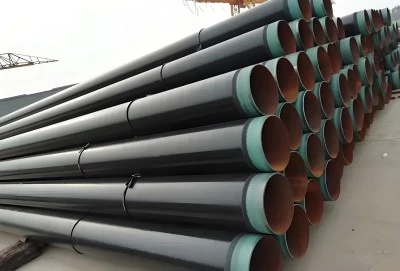
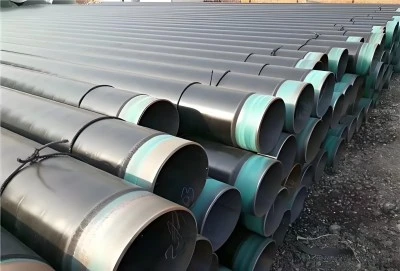
What Makes PE Coated Steel Pipe a Fit for Water Systems?
How a Polyethylene Coating System Is Built?
A PE coated steel pipe joins a carbon steel pipe to a layer of polyethylene that is glued to the steel pipe. The steel can handle stress from inside, weight from the ground, and bending. You can keep water, chemicals, and normal wear and tear out of the polyethylene. There are two main types of structures. The two-layer system is made up of a polyethylene layer and an epoxy or primer layer. It's also called 3LPE or 3PE. There is a copolymer adhesive layer between the epoxy and the polyethylene in a three-layer system. The layers will stick together like a puzzle. When the structure is moved or filled back in, the coating doesn't get damaged. This is important for long buried runs where the line has to be dug up to be fixed. We use 3LPE and 3PE coatings as part of our services to stop corrosion.
Why Coating Quality Drives Pipeline Life?
It costs a lot to have corrosion. Another study from 2016 called NACE IMPACT says that corrosion costs the world about US$2.5 trillion, which is about 3.4% of the world's GDP. Some ways that are already used to stop corrosion could save fifteen to thirty-five percent of that cost. Outside, chlorides, water, and wet soil can damage bare steel. Some polyethylene on the outside stops that attack. The coating will protect the steel as long as it stays in place. How often an owner has to fix things, shut them down, and coat them again depends a lot on the quality of the coating. A design life goal of many decades can only be met if the coating, joints, and installation all meet the standards.
Where PE Coated Steel Pipe Performs Best?
With this pipe, you can put in buried power lines, raw water lines, irrigation systems, fire protection loops, and industrial water supplies. It works best in wet, salty, or tough ground. For coastal routes and places with a lot of humidity, the moisture barrier is useful. The tough layer on the outside can handle being touched better than thin coatings. There are bounds. Parts above ground that get direct sunlight, crossings that are submerged, parts that come into contact with potable water, sewage, and high-temperature service all need their own review. If the media is chemically harsh or if the project needs a different way to stop corrosion, you may need a different solution. Before you pick a coating, you should write down the temperature, pressure, and conditions of the burial, as well as the soil and groundwater. Then, talk to your engineer to make sure you made the right choice.
PE Coated Steel Pipe Specifications Buyers Should Review
Pipe Standards, Sizes, and Steel Grades
The steel body is what sets the pressure, so that's where you should begin. Pick from ASTM A53, AS/NZS 1163, API 5L, or EN 10210 PE coated steel pipe. From 60.3 mm to 1422 mm across the outside, and from 6.02 mm to 50.8 mm thick, these pipes have walls. For PSL1 and PSL2, we have API 5L grades B through X80, and for ASTM A53, we have Grade B. We keep track of everything, from the raw materials to the finished goods, when we make ERW and LSAW pipe. Before getting a quote, make sure that the project drawings and the diameter, wall thickness, steel grade, length, and end preparation all match.
Coating Standards and Their Scope
Coating standards include the required materials, thickness, and testing procedures. Here at AWWA C210 and AWWA C213 we base our coating work on DIN 30670, DIN 30678, CSA Z245.20, EN 10339, ISO 21809-1, and other models. There is a distinct focus in each of the documents. Polyethylene coatings are discussed in the DIN 30670 standard for steel pipes and fittings. Submerged or buried pipes with polyolefin coatings are discussed in the ISO 21809-1 standard. Many American water pipe standards rely on AWWA C210 and C213. Make sure you know the specifics of the project's standards, edition, and coating class before submitting an RFQ. Because the scopes were different, this is the outcome. When you offer vendors names, it's much easy to compare their pricing.
Coating Thickness, Tolerances, and Temperature Limits
The thickness measurements could be deceiving if you aren't familiar with their meaning. As soon as you can understand the specification's use of terms like "nominal," "average," and "minimum local thickness," you can demonstrate how to quantify it. A minimum value is defined by the regulating standard for each pipe size and service class. A heavier covering may be necessary to protect your item from backfill pebbles or hard handling. When exposed to hot or cold temperatures, polyethylene softens and changes its adhesion properties. Determine the resin's kind and its maximum allowable temperature. Make sure to get data on cathodic disbondment and peel strength at both room temperature and the temperature where the design will be used. The QA/QC group and your corrosion engineer may utilize them to evaluate potential vendors.
How Quality Is Controlled in PE Coated Steel Pipe Production?
Steel Sourcing and Surface Preparation
To make a good coating, you must start with steel. To get our raw materials, we go to mills in China like TISCO, BX Steel, Shougang, HBIS, and Bao Steel. Our plants use heat treatment methods and inspection tools to check the welds. First, the pipe surface needs to be free of things like oil, rust, scale, and more. The coating then sticks to a surface that has been cleaned with abrasive blasting or another approved method. A lot of the time, bad preparation is what makes adhesion problems happen. Ask the supplier how the inspection and test plan will check for profile and cleanliness. You can fully trace each length of steel that has been coated back to where it came from.
Coating Application and Final Inspection
First, the pipe is heated up in a 3-layer line. Then, the epoxy, adhesive, and polyethylene layers are added one after the other at a steady temperature. The pipe is cooled down between layers. When the finish is done, the inspector checks it out and uses magnetic gages to find out how thick it is. A holiday detector can see any hole in the coating because it works at a voltage that is set by the thickness and the standard that is used. Then, tests are done in the lab to see how strong the peel is, how well it stands up to impact, and how well it doesn't separate at the cathode. Fixes are made and written down before the items are packed. People who buy things are most worried about failures like pinholes that are hard to see, poor adhesion, and coating separation when cathodic protection is used.
Documents and Third-Party Verification
EPC teams need paperwork too, just like pipes do. We give you an Inspection and Test Plan (ITP), a Manufacturing Procedure Specification (MPS), and a Material Test Certificate (MTC). We have certificates for API 5L, ISO 9001, ISO 14001, 18001, and FPC. People who buy the ITP can add third-party witness points to it. Checks for thickness, holiday tests, and peel tests are some examples. Plan to test coating samples and look around the factory before you award the contract. This way, your QA/QC team can check the process itself. There should be batch reports and records of how the coating was made so that inspectors and field crews can link each pipe to its test data.
Comparing Coating Options and Choosing the Right System
PE Versus Epoxy, Galvanized, and Other Coatings
When you compare coatings, don't just look at price; also see how well they work. It is hard for impacts and wear to damage polyethylene, which makes it a good material for long buried pipes. FBE, or fusion-bonded epoxy, can be used as a thinner coat and might work well in warmer weather or for some internal approvals. We also provide FBE. We also do hot-dip galvanizing, which works well for smaller systems that are out in the open but not so well for large underground mains. Poythene systems, such as 2PP, can handle other temperature needs. Not all coatings can be used everyplace. This is because each one has its own temperature range, flexibility, adhesion, and chemical resistance. People often need to protect the inside of their water lines too. Tell us what you need, and we'll tell you which service fits your needs.
2LPE Versus 3LPE
Under polyethylene, an epoxy or primer layer is put on top. This makes a two-layer system. The bond between the epoxy and the polyethylene is made stronger by adding a fourth layer of glue on top of the three. Based on the risk of the project, choose one. When there is rocky backfill, long hauls, trenchless installation, wet soil, and strict rules, 3LPE is the best choice. A few routes with low risk and gentle handling might be able to use 2LPE if the rules allow it. It can cost a lot more to fix things or coat them again after the first coat, but the costs are different. It is important to write down the structure because a quote that only says "PE coated" could hold a different layer system.
Steps to Select a System for Your Water Project
First, choose what the water will be used for: fire safety, irrigation, drinking water, raw water, wastewater, or business. Mark whether the line is buried, raised, flooded, or put in without digging a trench. Find out about the UV, temperature, pressure, soil, groundwater, and the chemistry of the water. Then write down the standards, the steel grade, the coating system, the way the joints will be protected, and the certifications. Next, look at each supplier's processing tools, lab tests, ability to be tracked, past exports, and project references. Lastly, don't just look at the price you paid for something; also look at how much it costs to own it all the time. This is because costs like repairs, shutting down, and painting can change the real cost. Now is also the time to check the field joint coating to make sure it matches the coating that came from the factory.
Buying PE Coated Steel Pipe: Cost, Risk, and Supplier Choice
Pricing, Customization, and Delivery
The price depends on the type of steel, its diameter, wall thickness, length, coating structure and thickness, quantity, final treatment, testing, packaging, and the location where the steel is going. Make it clear whether you want a price per meter or per ton and whether the terms are FOB, CFR, CIF, or delivered so that quotes are fair. There is information about the size, standards, coating needs, inspection area, certificates, destination port, schedule, and more in a full RFQ. The ends of mating connections can be welded, perforated, expanded, and other things can be done to them to make things. Make sure you know about the shipping marks, loading protection, and packaging for ocean freight before you place your order. This is because to keep the coating safe, large batches need to be held up with padded supports and spacers.
Common Risks and How to Reduce Them
Not being clear about what is needed is where most problems begin. When someone chooses a coating because it is thin or cheap, it can hide problems like holes or problems with sticking. Ask for a field joint coating that works with the factory coating and a way to fix damage from transport. The weak spots after installation are the joints and areas that were fixed. If the water is going to be fed to people, make sure that each certificate covers the right product, coating, and market. Check the costs of the same things, like the type of steel, the size, the coating layers, the tests, the paperwork, shipping, and delivery. With a clear RFQ, there is less technical confusion, and there are no disagreements later on. When you send pipe by sea, make sure you ask the supplier how they will keep it safe while it's being loaded and shipped.
Working With a Qualified Manufacturer
It has been making ERW and LSAW steel pipe since 2003. The size of our factory is 230,000 toes. Over 1,000,000 tons of goods will have been made and sold every year by the end of 2023. These goods will be sent to more than 90 countries. We work with engineers, stockists, and import traders, among other people. Your project manager doesn't have to coordinate as many people when you use types of pipe and anti-corrosion that work together, such as FBE, 2PP, 3LPE, 3PE, and hot-dip galvanizing. They will also help you confirm the structure of the coating, its thickness, the grade of the steel, joint protection, the range of tests that will be done, and the packaging. Then they give your team quotes, drawings, and samples that they can use to compare right away.
Conclusion
PE coated steel pipes work best when they are buried, wet, near the coast, or in water systems that are hard to work with. Steel can handle the stress, and polyethylene keeps water, salts, and wear from getting through. Which type and size of steel it is, the coating standard and class, the thickness, how the surface is prepared, how well it sticks, how long it lasts, and whether the joints are protected are all things that affect performance. Three layers are best for routes that are more dangerous. Other systems, such as epoxy, galvanizing, and others, can meet certain needs for chemical, temperature, or size. Around the world, corrosion is very expensive, so having testing that can be tracked and recorded is more important than getting the cheapest price. If you want to make a good choice, you should match the service conditions to a coating system that has been tested and look at certificates for that product and market.
FAQ
What water applications use PE coated steel pipe?
Most of the time, it is used underground for things like fire protection, irrigation, raw water lines, and transmission mains for cities. You need to get certification for your whole product and your market in order to use potable water. Before you place your order, make sure you know this.
What is the difference between 2LPE and 3LPE?
There is an epoxy or primer layer first, and then a polyethylene layer. For a three-layer system, there is an extra layer of glue in the middle. Most of the time, 3LPE is chosen for tough soil, handling, and specification conditions because the extra layer makes bonding better.
What should I send for an accurate quotation?
Send the size of the pipe, the type of steel it is made of, the coating system and thickness, the amount, the standards that apply, the inspection requirements, the temperature at which it will be used, where it will be sent, and when it will be delivered. So that we can be sure we have the right structure, please tell us how the coating will be put on, such as whether it will be buried, exposed, or without a trench.
Which documents should I request?
Ask for the Manufacturing Procedure Specification, the Material Test Certificate, the Coating Test Reports, and the Inspection and Test Plan. These are the things that show how the product was made. The MTC, ITP, and MPS are all things we offer.
Request a PE Coated Steel Pipe Quotation From Longma Group
As a manufacturer of PE coated steel pipes, Longma Group offers ERW and LSAW production, 3LPE and 3PE coating services, and ITP, MPS, and MTC documentation. Send info@longma-group.com your diameter, wall thickness, steel grade, coating standard, quantity, and the address where the product will be sent. We'll get back to you with a quote and coating idea that works for you. Check out our products and certificates at longma-group.com before you call us.