
ASTM A672 pipe is an electric-fusion-welded (EFW) steel pipe specifically designed for high-pressure service at moderate temperatures. What sets it apart from standard welded pipe is its base material: pressure-vessel-quality (PVQ) plate. Because PVQ plate undergoes tighter chemical composition controls, finer grain structure requirements, and mandatory through-thickness testing, it delivers the wall integrity and weld soundness that critical process piping demands. For EPC contractors specifying large-diameter pipe in petrochemical, power generation, or LNG service, this material foundation is not optional—it is the engineering reason the specification exists.
|
|
|
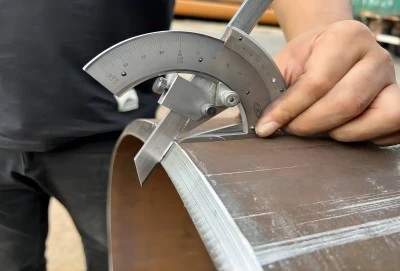
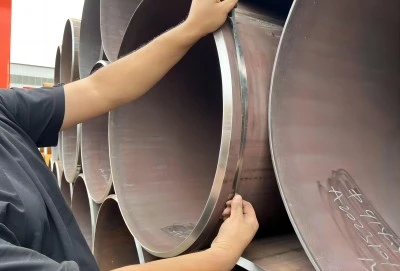
ASTM A672 Pipe Pressure-Vessel-Quality Plate
What Is ASTM A672 Pipe?
ASTM A672 covers EFW steel pipe with an outside diameter of 16 inches (406.4 mm) or more, made with filler metal added during welding. It is designed to move fluids at moderate temperatures and high pressures, usually in petrochemical process lines, boiler feed systems, and power plant headers. Longma Group makes A672 pipe in grades C55, C60, C65, and C70. The outside sizes range from 457.2 mm to 1,422 mm, and the wall thicknesses range from 7.92 mm to 75 mm.
What Is Pressure-Vessel-Quality Plate?
PVQ plate is made according to ASTM A20, which is the standard for pressure-vessel steel plate in general. PVQ plate has stricter limits on carbon equivalent, sulfur, and phosphorus content than structural plate. It also needs to be tested for Charpy impact at certain temperatures and have the plate body scanned with ultrasound. These settings have direct effect on the metal that is used to make the pipe wall.
How the Two Connect
The plate specification used is shown by the grade number in ASTM A672 pipe. For example, C60 refers to A516 Grade 60 plate. As a PVQ plate standard, A516 makes sure that all lengths of A672 pipe have the same tighter chemical and mechanical properties. For Class 1 and Class 2 pressure boundaries, project pipe material specifications (PMS) call for this kind of traceability, from the plate heat number to the finished pipe.
Why a Pressure-Vessel-Quality Plate Is Essential for A672 EFW Pipe
Structural Integrity Under Cyclic Pressure
The carbon equivalent of PVQ plate is smaller than that of normal carbon steel plate. This makes the heat-affected zone (HAZ) harder after welding. Cracking caused by hydrogen is more likely to happen in a harder HAZ. This is a known way for high-pressure gas service to fail. The manufacturer can control the HAZ properties by starting with PVQ plate before the first weld pass is made.
Corrosion and Temperature Performance
A516 Grade 60 and Grade 65 plates are normalized to get a fine, uniform ferrite-pearlite grain structure. These plates are used in A672 C60 and C65 pipes. This grain refinement makes the material tougher at temperatures as low as -20°F (-29°C) and stops rusting along grain boundaries in sour gas and wet CO₂ conditions. For pipes in LNG plants, Grade C70 (which is the same as A516 Grade 70) has a minimum yield strength of 38 ksi when tested with an impact plate.
Heat Treatment and Weld Quality Classes
Class designations in ASTM A672 pipe spell out the needs for post-weld heat treatment (PWHT) and x-ray examinations. For example, Class 12 needs a stress-relieving heat treatment and a full x-ray of the longitudinal seam. Stress easing and full-seam x-rays are added in Class 22. These class requirements only make sense if the base plate already meets PVQ standards. A lower-grade plate wouldn't react consistently to PWHT cycles.
Comparing A672 Pipe to Alternative Pipe Standards
Purchasing engineers often compare A672 to a number of other specifications. Knowing where each standard fits helps you make sure you don't choose the wrong pipe for a given service situation.
To give you an idea of how the most popular options stack up,
- ASTM A53 / A106: These cover seamless and ERW pipe up to 26 inches, typically in wall schedules below 50 mm. Neither references PVQ plate, and neither mandates radiographic examination as a standard requirement. They are suitable for utility water and steam lines but are not accepted under ASME B31.3 Category M fluid service without supplementary testing.
- ASTM A333 Grade 6: This specification targets low-temperature service down to −50°F (−46°C) and requires Charpy impact testing. It overlaps with A672 in LNG applications, but A333 is produced as seamless or welded pipe without the large-diameter range that A672 covers.
- API 5L PSL2: Widely used in transmission pipelines, PSL2 adds CVN toughness and fracture requirements. However, it does not reference pressure-vessel plate, and its chemical limits differ from A516. Projects under ASME B31.3 process piping codes typically specify A672 rather than API 5L for in-plant pressure boundaries.
- Stainless Steel Pipe (ASTM A312): Austenitic stainless offers superior corrosion resistance but at two to four times the material cost. For carbon steel-compatible services below 400°F (204°C), A672 in a Class 22 designation provides equivalent safety margins at significantly lower procurement cost.
When a project's PMS assigns a pipe class to a fluid service, these differences are taken into account. If you choose the wrong standard, you might get non-conformance reports during third-party inspection, which is expensive during the fabrication stage.
Procurement Considerations for ASTM A672 Pipe
Price Drivers and Lead Times
The price of materials for ASTM A672 pipe mostly rests on the plate grade (C60 vs. C70), the thickness of the wall, and the class name. Because of the time and money needed for the PWHT furnace and 100% RT, Class 22 pipe costs more than Class 10 pipe. With a stock of 50–100 tons of standard grades and diameters, Longma Group can deliver your order as quickly as 7 days for sizes that are in stock.
Supplier Qualification and Documentation
EPC contractors working for SABIC, ADNOC, or similar owners must have EN 10204 Type 3.1 or 3.2 material test certificates (MTCs), full heat and lot traceability, WPS/PQR records, and hydrostatic test reports in order to be qualified as a supplier. Plate for Longma Group comes from qualified Chinese mills like Shagang, HBIS, and Bao Steel. These mills all provide certified A516 PVQ plate with full heat number paperwork.
Third-Party Inspection Support
A lot of EPC projects need third-party inspectors (TPI) to stay at the pipe mill while the work is being done. TPI can access Longma Group's building at any point in the manufacturing process, from checking the receipt of the plates to doing the final measurement and radiographic inspection. One real reason why procurement teams in the Middle East and Southeast Asia include Longma Group on their lists of approved vendors is that they allow open-door inspections.
Best Practices and Application Scenarios
Power Generation and Boiler Feed Headers
Large-bore EFW pipe in main steam and feedwater systems has to be able to handle constant pressure changes without starting to crack from wear and tear. The ASME B31.1 standards are met by A672 C65 and C70 in Class 22. When normalized A516 plate, full-penetration submerged arc welding, and post-weld stress relief are used together, they make a pipe that works well for 30 years.
Petrochemical Process Piping
Pipes used in hydrocarbon processing units need to be able to handle both internal pressure and rust from process fluids. With 100% UT on the plate body and 100% RT on the weld seam, A672 C60 pipe has two separate quality limits. Longma Group's production records show that measurement errors are always within the limits set by ASME B36.10 for diameters between 457 and 1,422 mm.
LNG and Low-Temperature Service
For LNG plants where pipes may be exposed to temperatures below -20°F, A672 C60 or C65 pipe made from A516 plate that has been impact-tested gives a known level of toughness. The MTC package comes with Charpy V-notch test results at -20°F. This gives QA/QC engineers the tracking data they need to qualify the product for cryogenic service.
Conclusion
In short, the reason why ASTM A672 pipe needs pressure-vessel-quality plate is because the weld is only as strong as the metal it joins. PVQ plate offers controlled chemistry, proven toughness, and predictable heat treatment response, which are all things that structural plate can't promise. The A672 standard backed by the A516 PVQ plate is a well-established technical choice for EPC procurement teams requiring large-diameter pipe in high-pressure, high-consequence service. It is not a cautious over-specification.
FAQ
Is ASTM A672 pipe suitable for low-temperature LNG service?
Yes. A672 pipe can be used in temperatures as low as -20°F (29°C) if it is made from A516 Grade 60 or Grade 65 plate that has been checked for impact. The MTC has a record of the Charpy V-notch test findings. For colder service, project engineers should compare the test temperature to the minimum metal temperature specified in the piping specification.
How does PVQ plate affect welding procedure qualification?
The carbon equivalent of PVQ plate is lower, which means that the preheat and interpass temperature requirements in the WPS are based on metals that have been tested and are known to work. This makes PQR approval easier and lowers the chance that HAZ will crack while being welded in production. As part of the standard documentation package, buyers should ask for the WPS and PQR documents.
What certifications should an A672 pipe supplier provide?
As a minimum, providers should give EN 10204 3.1 MTCs, results on hydrostatic tests, x-rays, dimensional inspection records, and PWHT charts (if Class 12 or 22). For projects following the rules set by SABIC or ADNOC, 3.2 MTC may be needed, along with witnessing by a third party that has been approved. All of these things are covered in full reference packages from Longma Group.
Partner with Longma Group for Your Next A672 Pipe Order
Since 2003, Longma Group has been making EFW and LSAW steel pipe for ASTM A672 pipe suppliers and EPC contractors in more than 90 countries. We keep 50–100 tons of grades C55–C70 in stock, with diameters ranging from 457.2 mm to 1,422 mm. Delivery starts in 7 days. You can email our technical team at info@longma-group.com or go to our website at longma-group.com to get a price, an MTC sample, or to set up a third-party review for your project.