
API 5L X56 PSL1 pipe strikes an optimal balance by delivering a minimum yield strength of approximately 56,000 psi—sufficient for medium-to-high pressure environments—while maintaining practical characteristics such as excellent weldability, manageable weight, and cost-effectiveness. This grade enables engineers to design efficient pipelines without the premium expenses associated with higher-grade alloys, making it a pragmatic choice for oil and gas transport, water supply systems, and industrial gas distribution where reliability and budget considerations intersect.
|
|
|
Introduction
Pipeline projects need materials that withstand pressure, temperature, and corrosion. For oil, gas, and water delivery, API 5L X56 PSL1 pipes are trusted globally. Procurement managers and pipeline engineers must finish projects on time, within budget, and safely. Pipe grade impacts project costs, safety, and maintenance.
Understanding why X56 PSL1 is mechanically strong and usable may help procurement professionals make better judgements. This grade provides structural integrity without the logistics or cost of ultra-high-strength. This article will explain why this standard dominates large-scale infrastructure projects worldwide by discussing technical requirements, performance advantages, comparative analysis with other grades, sourcing techniques, and real-world applications.
Understanding API 5L X56 PSL1 Pipe — Key Specifications and Properties
What Defines API 5L X56 PSL1?
API 5L X56 PSL1 pipe is a line pipe grade that meets the standards of the American Petroleum Institute and is used to move gas, water, and oil products. Product Specification Level 1, or PSL1, sets important quality standards for normal pipeline uses where excessive toughness testing is not required. The "X56" name means that the minimum yield strength is 56,000 psi, which is about 386 MPa. This grade is in the middle of those with lower strengths, like X42, and those with higher strengths, like X65 or X70.
Chemical Composition and Mechanical Properties
Chemicals make API 5L X56 PSL1 pipe strong and weldable. Manganese makes items stronger, while carbon is managed to minimise field welding weakness. Maximum phosphorus and sulphur levels are 0.030 percent, per PSL1. This keeps the weld flexible and crack-free. Tensile strength between 60,000 and 75,000 psi allows the material to flex and shape during installation while providing rupture safety margins.
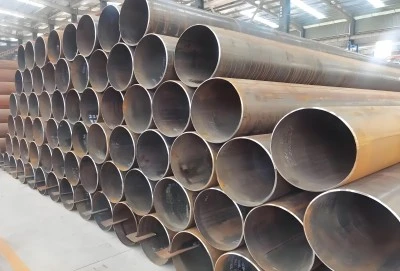
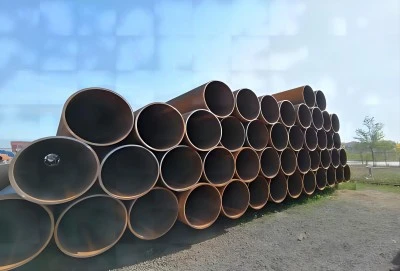
Smaller dimensions use seamless fabrication. For larger diameters, ERW, LSAW, and SSAW are used. Longma Group API 5L X56 PSL1 pipe includes 1/2-inch to 80-inch outside diameters and SCH10 to SCH160 wall thicknesses. This makes it appropriate for numerous pressure grades and uses.
Quality Control Protocols
Before it is shipped, every length goes through a lot of tests. Hydrostatic testing makes sure that pressure is contained by putting pipes under stress levels that are higher than what they would normally be under normal use. Analyzing the chemical parts makes sure that the limits are followed, and testing the mechanical properties makes sure that the yield strength, tensile strength, and stretch rates are correct. Ultrasonic and X-ray examination are examples of non-destructive testing methods that can find internal flaws or weld inconsistencies. These thorough quality controls give B2B clients who have to work with tight project plans and strict safety rules trust.
Strength Meets Practicality — Performance Advantages of API 5L X56 PSL1
Robust Mechanical Performance Without Excessive Weight
API 5L X56 PSL1 pipe may be used for medium-pressure gearbox lines without larger walls than lower-grade materials. This feature reduces material per linear metre, lowering shipping costs and simplifying construction site operations. Pipeline crews choose lighter, easier-to-install parts that satisfy design pressures for crude oil, natural gas, and water.
Strength and flexibility help while assembling items in the field. Welders can swiftly assemble parts without heating them for ultra-high-strength grades. Within normal bounds, cold bending enables you to adjust the path without harming structural strength. These qualities reduce project schedules and labour costs, which is crucial for large construction projects.
Corrosion Resistance and Service Life
Oil and gas pipelines usually have carbon dioxide and hydrogen sulphide issues. API 5L X56 PSL1 pipe wasn't designed for extreme sour service environments like NACE MR0175, but its regulated chemistry and good manufacturing quality make it reliable in slightly corrosive gearbox applications. By preventing corrosion from soil dampness and chemicals, Fusion Bonded Epoxy (FBE), 3-Layer Polyethylene (3LPE), and 3-Layer Polypropylene (3LPP) coatings extend service life.
Maintenance expenses decrease when pipes last decades instead of being rebuilt. With the correct surface protection and the material's inherent qualities, you may create a simple, practical solution. Project managers like this realistic strategy because it connects capital investment with genuine service demands rather than worst-case scenarios.
Installation Efficiency and Safety
Lifting large pipes is risky and requires specific equipment. API 5L X56 PSL1 pipe's optimised strength-to-weight ratio lets thinner walls match lower-grade pressure ratings. This helps installation personnel. Bevelled ends simplify field welding, whereas straight ends are excellent for threading or fitting. This versatility helps various building approaches suit diverse tasks.
Consistent dimensions throughout manufacturing enable a solid fit during assembly, eliminating alignment issues that hinder work. Longma Group, a registered manufacturer that follows ISO 9001 quality management systems, guarantees that every shipment meets outside diameter, wall thickness, and straightness specifications. Dependability simplifies project performance and reduces work site issues.
Comparing API 5L X56 PSL1 to Other Pipe Grades — Informed Decision-Making for Procurement
X56 Versus Lower Grades (X42, X52)
Lower-quality pipes like X42 (42,000 psi yield) and X52 (52,000 psi) require thicker walls to match pressure ratings. This makes pipeline sections heavier and raises material costs each mile. API 5L X56 PSL1 pipe yields 25% more than X42. Engineers may use thinner-walled pipe, which utilises less material and needs less installation. This is particularly true in long-distance transmission systems, where weight reductions affect cable movement and base strength.
Due to the lower tonnage required, X42 and API 5L X56 PSL1 pipe have a modest pricing difference. When lifetime expenditures are considered, API 5L X56 PSL1 pipe is cheaper. Although API 5L X56 PSL1 pipe has somewhat higher unit pricing, procurement managers know that it is quicker to install and costs less to transport, making it a better overall bargain when estimating project expenses.
X56 Versus Higher Grades (X60, X65, X70)
Stronger grades like X65 (65,000 psi yield) and X70 (70,000 psi yield) are preferable for ultra-high-pressure or harsh environments. These grades cost more because they are more precise, have stricter chemical limitations, and must pass PSL2 Charpy V-Notch impact testing. For deepwater offshore sites, Arctic pipelines, or poor service circumstances, the additional cost is worth it.
Most onshore oil and gas transmission, water supply, and industrial distribution systems use API 5L X56 PSL1 pipe, the middle ground. The grade offers appropriate safety margins without increasing costs or welding difficulty. Engineering teams like being able to adjust specifications depending on service requirements rather than over-specifying, which raises project costs without enhancing performance.
Carbon Steel Versus Stainless Steel Alternatives
Although stainless steel piping resists corrosion better than carbon steel grades like API 5L X56 PSL1 pipe, it costs about 300% more. In chemical processing, desalination, and acid-rich environments, stainless steel is the sole alternative. However, appropriately coated carbon steel works well in most oil and gas gearboxes, potable water, and industrial gas distribution systems.
The cost research recommends API 5L X56 PSL1 pipe carbon steel with the correct coatings for most pipeline projects. This material economy allows budget-conscious procurement strategies to invest in improved monitoring systems, corrosion control programs, and other operational enhancements instead of costly upgrades that offer nothing.
Practical Procurement Insights — How to Source API 5L X56 PSL1 Pipes Efficiently
Evaluating Manufacturer Credentials and Certifications
Unit cost, supplier dependability, quality consistency, and technical support are sourcing factors. Good producers have API 5L certifications, confirming they meet API standards. ISO 9001 accreditation means you organise and enhance manufacturing. The ISO 14001 environmental management and ISO 18001 workplace health and safety certifications show maturity and strictness.
Longma Group has produced API 5L, ISO 9001, ISO 14001, and ISO 18001 products since 2003. Production capacity of over 1,000,000 tonnes per year shows that large-scale operations can fulfil massive orders quickly. All API 5L X56 PSL1 pipe production lines have the same chemical composition and mechanical qualities thanks to raw materials from major Chinese mills as Shagang, Shangang, TISCO, BX Steel, Shougang, HBIS, and Bao Steel.
Understanding Regional Manufacturing Strengths
Advanced manufacturing technology, low-cost labour, and well-established supply lines have made China a steel pipe powerhouse. Chinese manufacturers export to over 90 nations. They excel at API, ASTM, EN, and AS/NZS standards. Industrial enterprises in Hebei Province are near raw material sources, and the area's transportation infrastructure makes exporting simpler.
American firms usually concentrate on high-end sectors that service their own customers and have quicker lead times but are pricier. European producers concentrate on specialised usage requiring reliable documentation. Understanding geographic variances helps procurement experts match sourcing tactics to project demands, including cost, delivery time, and documentation.
Pricing Factors and Volume Economics
Global steel market fluctuations affect raw material costs, especially hot-rolled coil steel, which affects pipe pricing. Various welding methods are tough. Due to production restrictions, seamless pipe costs more than ERW or SAW. Larger diameters and walls need more material and equipment, affecting cost.
Bulk buying cuts manufacturing costs and streamlines shipping. Complete vessel charters are cheaper for big companies, whereas buying containers by the load saves handling costs. Payment terms, order wait times, and shipping destinations impact price. Strategic bargaining and coordinated buying help experienced procurement teams achieve competitive total landed costs.
Longma Group can provide common needs in seven days, offering flexible project timelines. Good planning and communication with manufacturing partners may reduce wait times for special sizes, harder testing, and specific coating systems.
Documentation and Traceability Requirements
Engineering contractors need a lot of paperwork to show that the materials they use meet the requirements of the job and any relevant rules. Material Test Certificates (MTC) list the chemical make-up, mechanical test results, and records of heat treatment. Inspection and Test Plans (ITP) describe the steps that are taken to make sure that quality is maintained during production. The Manufacturing Procedure Specifications (MPS) list the steps for welding, heat treating, and finishing.
Full documentation packages make it easier for third parties to review and accept work, get governmental approvals, and finish the project. Critical infrastructure projects need suppliers who can show that their products can be tracked all the way from the certificates of raw materials to the identification of the finished product. Longma Group keeps up-to-date full traceability systems that support the specific paperwork needs of large energy companies and foreign engineering firms.
Real-World Applications and Case Studies — Demonstrating API 5L X56 PSL1's Strength and Practicality
Oil and Gas Transmission Pipelines
This is one of the main uses for API 5L X56 PSL1 pipe: moving crude oil from production fields to plants. When these pipelines are used at moderate pressures, the material's yield strength gives enough room for error in the design without using expensive ultra-high-grade materials. Coating systems keep the outside from rusting from dirt contact, and the inside stays strong against the mildly corrosive elements in crude oil.
The balanced qualities of API 5L X56 PSL1 pipe are also good for natural gas distribution and storage networks. The material can handle changes in pressure during operational cycles and can still be welded for branch connections and field joints. Millions of linear feet of API 5L X56 PSL1 pipe have been used in projects in the Middle East, Southeast Asia, and North America, both onshore and near-shore. These projects have built up decades of reliable service records.
Water Supply Infrastructure
Municipal water systems and industrial cooling water networks need large-diameter pipes to manage high flows at low pressures. API 5L X56 PSL1 pipe is strong enough for burial depths and soil loads, and its inexpensive cost makes it a viable option for public works projects on a budget. Outside rust-resistant coatings help potable water systems survive aeons instead of decades.
API 5L X56 PSL1 pipe is used for industrial water supply components in major infrastructure projects like MOBIL OIL AUSTRALIA. The availability in large diameters, proven corrosion control via coating technologies, and established manufacturing quality make this grade a default standard for consulting engineers developing water conveyance systems.
Industrial Gas Distribution
Chemical plants, power generation facilities, and manufacturing complexes require extensive piping networks distributing process gases, compressed air, and inert atmospheres. API 5L X56 PSL1 pipe handles these moderate-pressure applications reliably while offering fabrication flexibility. Facilities can cut, thread, weld, and modify sections during construction and subsequent plant expansions without specialized equipment or exotic welding procedures.
Offshore platform construction utilizes API 5L X56 PSL1 pipe for non-critical piping systems where weight considerations favor thinner-walled sections meeting structural requirements. While primary production risers and high-pressure systems demand premium grades, auxiliary systems—fire suppression, utility air, ballast water—benefit from API 5L X56 PSL1 pipe's cost-effectiveness and adequate performance characteristics.
Lessons from Field Performance
Decades of service records show that the API 5L X56 PSL1 pipe is reliable in a wide range of working conditions. When fully designed with the right coating systems and fitted according to best practices in the business, these pipelines can last more than 50 years. Failures caused by poor materials are still very rare. Most of the time, they are caused by problems with the installation, interference from a third party, or not enough cathodic protection, not problems with the quality of the steel itself.
Engineering firms evaluating material options appreciate this proven track record. Risk-averse procurement strategies favor specifications with extensive historical validation over newer alternatives lacking field performance data. API 5L X56 PSL1 pipe's widespread adoption and documented reliability provide confidence that supports project financing, regulatory approval processes, and stakeholder acceptance.
Conclusion
A realistic engineering option, API 5L X56 PSL1 pipe combines mechanical performance, cost, and installation. Medium-pressure gearbox systems may use its 56,000 psi yield strength without the high price of ultra-high-grade choices. Welding is safe with controlled chemical composition and diverse methods for small- to large-diameter collecting lines and main pipes. Procurement professionals enjoy that the grade is affordable, simple to locate, and has been used effectively worldwide for decades. API 5L X56 PSL1 pipe is the recommended choice for oil and gas transportation, water supply systems, and industrial distribution networks because of its strength and affordability.
FAQ
1. What distinguishes PSL1 from PSL2 in API 5L X56 pipe?
Compared to PSL1, PSL2 has tighter limits on chemical composition, requires Charpy V-Notch impact tests to check how tough something is to break, and makes it easier to track what was made. These extra quality checks are good for specific uses where better material properties are worth the extra cost, like in harsh service environments, very low temperatures, or very high pressures. When extreme conditions aren't expected, PSL1 is the best choice because it offers reliable performance for standard transmission applications at a lower cost for API 5L X56 PSL1 pipe.
2. Can API 5L X56 PSL1 pipe be used in offshore applications?
API 5L X56 PSL1 pipe works well in offshore settings for non-critical systems that only need middling protection from corrosion and structural strength. For primary output risers and high-pressure lines, you usually need PSL2 types that are tougher and can handle sour service better. Auxiliary systems, like water injection, fire suppression, and utility distribution, usually call for API 5L X56 PSL1 pipe with the right coatings, weighing the need for performance against the cost of the project.
3. How does chemical composition affect X56 PSL1 pipe performance?
Carbon content affects both strength and weldability, with controlled levels preventing excessive hardness that complicates field welding. Manganese enhances toughness and tensile strength. Phosphorus and sulfur limitations prevent brittleness and weld cracking. These balanced chemistry parameters ensure API 5L X56 PSL1 pipe achieves specified mechanical properties while maintaining practical fabrication characteristics valued by installation contractors.
Partner with Longma Group for Your API 5L X56 PSL1 Pipe Requirements
Longma Group stands as a trusted API 5L X56 PSL1 pipe manufacturer with over 20 years of production expertise serving clients across 90 countries. Our many certificates, including API 5L, ISO 9001, ISO 14001, and ISO 18001, show that we care about quality, the environment, and safety at work. The ability to make more than 1,000,000 tons of goods every year serves both large-scale projects and specific needs. We can deliver quickly—within seven days—for standard specifications, and we come with all the paperwork that engineering contractors need, such as MTC, ITP, and MPS packages.
Our facility produces API 5L X56 PSL1 pipe in diameters from 1/2-inch to 80-inch with wall thickness ranging from SCH10 through SCH160, utilizing ERW, LSAW, and SSAW welding methods. Value-added services—beveling, coating application (FBE, 3LPE, 3LPP), and custom fabrication—streamline your procurement process. Contact our team at info@longma-group.com to discuss project specifications, request quotations, and discover how our manufacturing capabilities can support your pipeline infrastructure needs.