
ISO 3183 L245 pipe represents an ideal cost-performance balance for pipeline projects where budget optimization meets quality assurance. This grade features a minimum yield strength of 245 MPa and tensile strength of 415 MPa, delivering adequate mechanical performance for low-to-medium pressure applications at the industry's lowest material cost. Unlike higher-grade alloys that incorporate expensive microalloying elements, L245 relies on plain low-carbon steel chemistry—typically containing maximum 0.28% carbon and 1.20% manganese—which significantly reduces raw material expenses. Its outstanding weldability eliminates the need for costly preheating procedures during field installation, while widespread global availability ensures shorter lead times and competitive pricing across diverse markets. When project specifications permit, choosing L245 over premium grades like L360 or L450 can reduce procurement costs by 15–25% without sacrificing reliability in appropriate service conditions
|
|
|
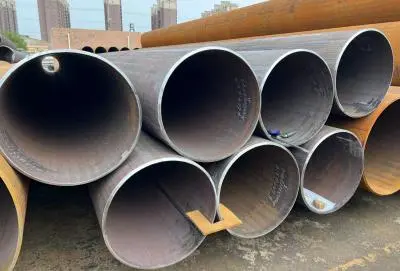
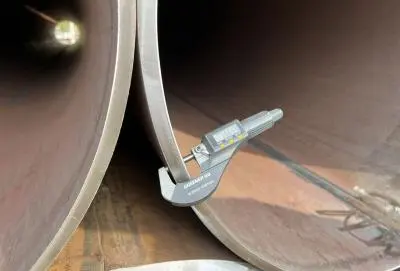
Understanding ISO 3183 L245 Pipe: Specifications and Properties
Fundamental Standards and Classification
ISO 3183 L245 pipe meets the international standard for pipeline transportation systems used in the natural gas and oil industries. The name "L245" immediately refers to the minimum yield strength of 245 megapascals, which is the same as API 5L Grade B in the American Petroleum Institute's set of standards. This grade was made to be used for line pipes, where consistent material reliability across foreign countries is very important. The standard sets out two levels of products: PSL 1 is the basic level and is good for most uses, while PSL 2 has stricter limits on chemical composition, requires impact testing, and requires tighter tolerances for dimensions in critical service settings.
Mechanical Performance Parameters
There are minimum requirements for L245 pipe in PSL 1. It needs to have a yield strength of 245 MPa, a tensile strength of 415 MPa, and an elongation of 22%. These features make sure that the material is flexible enough for field bending and strong enough for transporting hydrocarbons at low pressure. The control parameters in PSL 2 are even stricter: the yield strength is between 245 and 440 MPa, the tensile strength is between 415 and 655 MPa, and the yield-to-tensile ratio is limited to keep the material from breaking. Impact testing at low temperatures is required to make sure the material is tough at working temperatures. Hardness limits, usually ≤ 250 HV, make sure that the pipe body and heat-affected areas can all be welded together evenly.
Chemical Composition and Manufacturing Methods
The grade doesn't use any expensive niobium, vanadium, or titanium microalloys. Instead, it uses plain low-carbon steel. When paired with manganese up to 1.20% and a maximum carbon content of 0.28%, it offers cost-effective strengthening while still being easy to weld using standard methods such as submerged arc welding or gas metal arc welding. Both ERW (Electric Resistance Welded) and LSAW (Longitudinal Submerged Arc Welded) methods are used in manufacturing. Because they are more efficient and cost-effective, ERW methods are used for small to medium diameter production. On the other hand, LSAW methods are used for large diameter thick-wall needs. When controlled properly, both methods can fully meet ISO 3183 quality standards. This gives procurement managers the freedom to choose sourcing strategies based on the specific dimensional needs of each project.
Why ISO 3183 L245 Is a Cost-Effective Choice: A Rational Procurement Approach
Raw Material Economics and Production Efficiency
Because L245 has a simple chemical makeup, it doesn't need the expensive alloying elements that are needed for higher grades. This directly leads to lower material costs—usually 12–20% less per ton than L360 grades and 20–30% less than L450 grades. Steel mills can keep up continuous production without having to go through complicated heat treatment cycles. This lowers the costs of making steel and the amount of energy that is used. These saves get passed along the supply chain and help purchasing managers get better unit prices, especially for orders for a lot of items. Because the grade is so popular, mills all over the world keep large stockpiles of it, so they don't have to pay the extra fees that come with special-order materials.
Installation Cost Advantages Through Superior Weldability
In pipeline projects, field construction costs often go up more than material costs. The low carbon version of L245 allows welding without needing to be heated up first in most ambient situations. This cuts down on the time and money needed to move equipment. Welders can make joints that are strong using standard methods, without having to buy expensive tools or get special training. Because the material is very flexible, route changes can be made by cold bending instead of hot bending, which requires more tools and energy. Post-weld heat treatment isn't needed very often for L245 uses, which speeds up the building process even more. When compared to using higher-strength grades that need stricter welding controls, these installation efficiencies can cut the total cost of the project by 8–15%.
Lifecycle Value and Maintenance Considerations
Even though L245 isn't as strong as premium grades, it's a great value in situations where it can handle the same amount of pressure. Because the material is naturally tough and flexible, it doesn't crack easily when it's loaded and unloaded over and over again, which happens a lot in distribution networks and gathering systems. When properly protected with standard coatings like 3-layer polyethylene or fusion-bonded epoxy, the corrosion behavior is similar to that of higher carbon steels. When weather conditions are right for the design, maintenance schedules and methods stay the same across all grade levels. The key to getting the most out of a product's lifecycle value is choosing the right grade. Using L245 where it's sufficient prevents over-engineering that locks money into performance margins that aren't needed.
Supply Chain Reliability and Market Availability
L245 is the line pipe grade that is made the most of around the world. Major mills in Asia, Europe, and the Americas keep their approved production skills up to date. This gives procurement teams a wide range of suppliers, which lowers the risks that come with geographical and political supply issues. Because ISO 3183 L245 pipe is widely available, lead times are often shorter—4–8 weeks instead of 10–16 weeks for specialty high-strength grades. Having many options for sourcing creates competition, which is good for buyers during RFQ processes. Because there are so many stockists, there are fast delivery choices for urgent needs, which is very helpful when project schedules get tight or unexpected needs come up during building.
Comparing ISO 3183 L245 with Other Pipe Grades: Making Informed Decisions
L245 Versus Higher ISO Grades (L290, L360, L450)
At 290 MPa, L290 has a yield strength that is about 20% better than L290, but it costs 10–15% more. This grade works well in moderate-pressure situations where L245's wall thickness requirements are too strict. The yield strengths of L360 and L450, which are 360 MPa and 450 MPa respectively, are used for high-pressure trunk lines that send gas over long distances. Their 25–40% higher prices than L245 are only reasonable when the pressure ratings really need more strength. Procurement managers should compare the required wall thicknesses for each grade option. For example, when L245 needs slightly thicker walls than L360, the lower grade is usually the better option because the difference in material costs is greater than the extra steel quantity cost.
API 5L Grade B Equivalency
Both ISO 3183 L245 and API 5L Grade B can be used in place of each other, and their mechanical property requirements are very similar. The main difference is in the numbers used for measurements: ISO 3183 uses metric units, while API 5L uses British units. Specifications for projects often use either one or both standards, and suppliers who are certified to either one can usually meet the needs of both frameworks. Procurement teams should be aware of this similarity so they can find more suppliers and get better prices in areas that use different standard systems. Different standards have slightly different documentation needs. ISO standards stress EN 10204 material test certificates, while API projects ask for API-branded mill test results. However, trustworthy makers keep certifications that cover both sets of rules.
ASTM A106 Seamless Pipe Considerations
ASTM A106 Grade B seamless pipe is used for similar tasks, but it is made differently and isn't always available. Because it is harder to make, seamless production usually costs 30–50% more than welded pipe. Seamless construction doesn't have longitudinal weld seams, but when done right, modern ERW and LSAW welding technology makes joints that are as reliable as the base metal. L245 welded pipe goes through 100% nondestructive testing, like ultrasound or x-rays, that make sure the weld is strong enough to meet or beat the quality standards of seamless pipe. Unless the project requirements specifically call for seamless construction, welded L245 pipe gives the same performance at a much lower cost, making it the smart choice for projects that want to save money.
Conclusion
For low to medium pressure uses, ISO 3183 L245 pipe is a great option for EPC workers and project procurement managers who want to save money without sacrificing quality. Its simple chemical makeup keeps the cost of raw materials low, and its excellent weldability keeps the cost of installation in the field low. Widespread access around the world ensures competitive prices and a strong supply chain in a variety of project sites. If the project service conditions are right for L245—non-sour environments, moderate pressures, and room temperature—choosing this grade over more expensive options frees up capital that can be used elsewhere while still meeting all international standards and third-party audit requirements. A smart procurement strategy matches the exact needs of the operation with the material specifications. This keeps the project from being over-engineered, which hurts its ability to make money.
FAQ
What chemical elements comprise ISO 3183 L245 pipe?
Low-carbon plain carbon steel with up to 1.20% manganese and 0.28% carbon is used to make L245 pipes. It is cheaper than better grades because it doesn't have any expensive microalloying elements like niobium, vanadium, or titanium. This is a direct result of its low cost, and it still welds well for field building.
How does ISO 3183 L245 compare with API 5L Grade B?
The mechanical properties and performance characteristics of these grades are pretty much the same. ISO 3183 is the worldwide standard in metric units, and API 5L uses imperial units to follow the rules set by the American Petroleum Institute. Reliable suppliers who are certified under both specifications can meet the needs of both, which lets procurement teams choose from a larger pool of suppliers.
Can welding L245 pipe be performed without preheating?
Standard welding methods, such as gas metal arc welding or submerged arc welding, work very well with this type because it has a low carbon content. Preheating is usually not needed unless the temperature outside drops below 0°C or the wall thickness is more than 25 mm. This saves time and money on equipment in the field compared to higher-carbon grades that need to be heated first.
Partner with Experienced ISO 3183 L245 Pipe Manufacturers
Longma Group is ready to help you with your pipeline projects because they have been making ISO 3183 L245 pipes for more than 20 years and have a lot of experience. Our factories have full API 5L PSL1 and PSL2 certifications, which cover grades L245 through L555. The materials they use come from well-known domestic mills like Shagang and HBIS, and all of them can be tracked back to their original sources. A production capacity of more than 1,000,000 tons per year guaranties a steady supply for a wide range of projects. State-of-the-art ERW and LSAW production lines provide widths ranging from small distribution sizes to large trunk line specs. Our skilled technical team offers full documentation packages that make the third-party auditing and owner acceptance processes easier. These packages include Inspection and Test Plans, Manufacturing Procedure Specifications, and EN 10204 3.2 Material Test Certificates. We're happy for workplace checks to happen, and we can work with standards for witness tests that help people trust quality systems. Get in touch with our purchasing experts at info@longma-group.com to talk about your project's needs and get full technical quotes from a reliable ISO 3183 L245 pipe provider that works with over 90 countries around the world.