
Non-destructive testing (NDT) is absolutely essential for ASTM A53 ERW pipe. This is primarily because the electric resistance welding process creates potential vulnerabilities. Specifically, these risks appear along the weld seam. Therefore, this area requires thorough inspection. However, the inspection must happen without compromising the pipe's structural integrity.
Furthermore, A53 ERW pipe applications often include critical infrastructure. Additionally, industries use them in oil and gas transportation and water supply systems. Consequently, these sectors demand rigorous quality assurance. This diligence helps prevent catastrophic failures. Fortunately, NDT techniques enable manufacturers to identify weld defects. Moreover, procurement professionals can use these methods to spot material inconsistencies. Finally, they can detect surface imperfections. As a result, this preserves the pipe's usability. It also maintains structural soundness throughout its operational lifecycle.
|
|
|
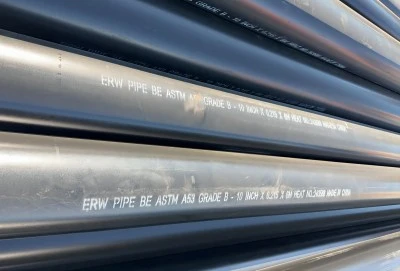
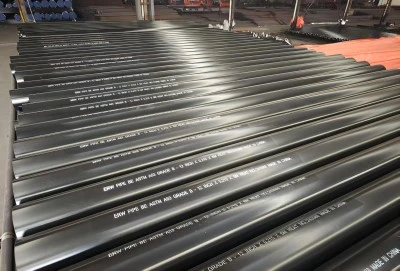
Understanding ASTM A53 ERW Steel Pipe and Its Importance
ASTM A53 Grade B ERW steel pipes represent a cornerstone in modern industrial infrastructure. Notably, they deliver exceptional performance across diverse applications. At the same time, they maintain cost-effective manufacturing processes. These pipes undergo electric resistance welding. This process creates a longitudinal seam. Manufacturers achieve this through controlled heat application and pressure. Consequently, the process results in pipes with consistent dimensional accuracy. Furthermore, they possess reliable mechanical properties.
Manufacturing Process and Specifications
The ERW manufacturing process begins with high-quality steel coils. Initially, these coils undergo forming operations. This step creates the pipe's cylindrical shape. Subsequently, during the welding stage, electrical current generates heat at the edges. This allows them to fuse together under pressure. As a result, this process produces pipes in a wide range of sizes. Specifically, they range from 1/8" NPS to 26" in outer diameter. Additionally, wall thickness options vary from SCH10 to SCHXXS. Thus, they accommodate various pressure requirements.
Moreover, ASTM A53 Grade B pipes meet stringent chemical composition requirements. For instance, these include carbon content limitations. They also include specific mechanical property thresholds. The standard strictly mandates a minimum yield strength of 35,000 psi. In addition, it requires a tensile strength of 60,000 psi. Therefore, this ensures consistent performance across different operating conditions. These specifications make ASTM A53 ERW pipe particularly suitable for structural applications. They are also ideal for water transmission systems. Finally, they serve well in moderate-pressure gas distribution networks.
Applications Across Industries
Pipeline engineers frequently specify ASTM A53 ERW pipe for water supply systems. They choose this largely due to the pipe's corrosion resistance. Furthermore, they value its long-term durability. In oil and gas transportation, these pipes serve effectively in gathering lines. Additionally, they function well in distribution networks. This is viable where operating pressures remain within the pipe's design parameters.
In the construction sector, projects utilize ERW pipes for structural applications. For example, builders use them for building frameworks. Also, they are common in bridge components. In these scenarios, reliable load-bearing capacity is essential. Moreover, the versatility of ERW pipe extends to offshore platform construction. Here, the combination of strength and weldability provides advantages. Specifically, it aids in fabrication and installation. Manufacturing facilities also employ these pipes. They use them in process piping systems and compressed air distribution. Furthermore, they appear in fire protection systems. These industries benefit from the pipe's consistent quality. They also value compliance with international standards.
The Critical Role of Non-Destructive Testing (NDT) in ASTM A53 ERW Pipes
Non-destructive testing serves as the primary quality assurance mechanism for ERW pipe manufacturing. Fundamentally, it addresses inherent vulnerabilities in the welding process. At the same time, it preserves material integrity. The electric resistance welding process is efficient. It is also cost-effective. However, it can introduce various defects. Unfortunately, these defects compromise pipe performance if they remain undetected.
Common Defects in ERW Pipe Manufacturing
The welding process creates several potential defect types. Therefore, these require systematic detection through NDT methods. First, incomplete fusion occurs. This happens when welding parameters fail to achieve proper bonding between the pipe edges. Consequently, this creates weak points. These points are susceptible to failure under pressure.
Secondly, cold lap defects develop. This occurs when molten metal fails to properly integrate with the base material. As a result, this forms discontinuities. These gaps can propagate under stress. Porosity represents another significant concern. This happens because trapped gases create voids within the weld metal during the welding process. Unfortunately, these voids reduce the effective load-bearing area. Furthermore, they can serve as stress concentration points. Additionally, inclusions of foreign materials can occur. For example, oxides or slag can become embedded in the weld zone. This compromises structural integrity. It also negatively affects corrosion resistance.
NDT Methods and Their Applications
Ultrasonic Testing (UT)
Ultrasonic testing emerges as the most widely employed NDT method for ASTM A53 ERW pipe inspection. Specifically, it utilizes high-frequency sound waves. These waves detect internal discontinuities. This technique effectively identifies weld defects. It also spots wall thickness variations and laminations. These issues could affect pipe performance. Moreover, the method provides real-time results. Ideally, manufacturers can automate it for continuous inspection.
Magnetic Particle Testing (MT)
Magnetic particle testing specifically targets surface defects. It also finds near-surface defects in ferromagnetic materials like carbon steel pipes. This method proves particularly effective. For instance, it detects surface cracks. It also identifies grinding marks and other discontinuities. Often, these might not be visible to visual inspection. The technique involves magnetizing the pipe section. Then, operators apply ferromagnetic particles. These particles accumulate at defect locations.
Radiographic Testing (RT)
Radiographic testing employs X-rays or gamma rays. This process creates images of the internal pipe structure. Consequently, it reveals defects such as porosity. It also highlights inclusions and incomplete penetration. While this method provides excellent defect characterization capabilities, it has drawbacks. For example, it requires careful safety protocols. Additionally, it typically involves longer inspection times compared to other NDT techniques.
Eddy Current Testing (ET)
Eddy current testing utilizes electromagnetic induction. It detects surface defects and measures wall thickness. This method proves especially valuable. Specifically, it detects stress corrosion cracking. It also finds other service-induced defects during periodic inspections. Furthermore, the technique offers rapid scanning capabilities. As a result, engineers can adapt it for manufacturing quality control. They can also use it for in-service inspection.
Procurement Considerations: Ensuring Quality Through Proper Testing
Procurement professionals must evaluate ASTM A53 ERW pipe suppliers carefully. Therefore, they must establish comprehensive testing requirements. These requirements should align with project specifications. They must also match risk management objectives. The supplier's testing capabilities directly impact product reliability. Furthermore, their certification credentials matter. Finally, their quality management systems influence project success.
Supplier Evaluation Criteria
A qualified ASTM A53 ERW pipe supplier demonstrates compliance with ASTM A53 requirements. They do this through comprehensive testing documentation. Additionally, they provide third-party certifications. The supplier should maintain testing equipment. Moreover, they must calibrate this equipment to recognized standards. Also, they should employ certified NDT personnel. These personnel must hold documented qualifications. Quality management system certifications are also vital. For example, ISO 9001 indicates systematic approaches to quality control. It also shows a commitment to continuous improvement.
Testing documentation should include detailed test procedures. It must also list acceptance criteria. Furthermore, it should include statistical process control data. This demonstrates consistent quality performance. Material test certificates must provide chemical analysis results. They should also provide mechanical property verification. Additionally, NDT results for each pipe lot or heat number are necessary. Consequently, this documentation enables traceability throughout the supply chain. It also supports warranty claims if quality issues arise.
Balancing Cost, Quality, and Delivery Requirements
Procurement decisions must balance testing requirements with budget constraints. They must also consider project schedules. However, maintaining acceptable quality levels is paramount. Comprehensive NDT testing adds cost. It also adds time to the manufacturing process. Nevertheless, the investment prevents costly failures. It also avoids project delays caused by defective materials. Suppliers offering 200-300 tons of stock inventory provide significant advantages. Specifically, those with 7-day delivery capabilities help projects with tight schedules.
Minimum order quantities vary significantly among suppliers. Pricing structures also differ. Therefore, this requires careful evaluation of total project costs. Buyers should look beyond unit prices alone. Suppliers with efficient testing processes often provide competitive pricing. Furthermore, those with automated inspection systems maintain superior quality standards. Long-term supplier relationships are beneficial. Typically, relationships built on consistent quality performance yield better pricing. They also result in priority delivery scheduling.
Ensuring Long-Term Performance: Industry Best Practices and Quality Assurance
Integrating NDT protocols into comprehensive quality management systems is crucial. This enhances manufacturing quality control. It also boosts long-term asset performance. Modern quality assurance approaches combine traditional inspection methods. They merge these with advanced data analytics. Furthermore, they use predictive maintenance strategies. This combination optimizes pipe system reliability.
Quality Management System Integration
Effective quality management systems incorporate NDT results. They feed this data into statistical process control programs. These programs monitor manufacturing consistency. They also identify quality trends before they result in defective products. Real-time data collection enables immediate process adjustments. Operators can act quickly when testing results indicate deviation. This prevents issues from escalating.
Documentation management systems are also vital. They maintain complete traceability from raw material certification. This tracking continues through final product testing and delivery. Digital record-keeping enhances data accessibility. This is useful for warranty investigations. It also aids in regulatory compliance. Additionally, it supports periodic quality audits. Advanced systems integrate with enterprise resource planning software. This streamlines procurement. It also improves quality control and inventory management processes.
Emerging Technologies and Future Trends
Advanced inspection technologies continue to improve. They enhance defect detection capabilities. Simultaneously, they reduce inspection time and cost. For example, phased array ultrasonic testing provides enhanced resolution. It also offers better coverage compared to conventional ultrasonic methods. This enables more precise defect characterization and sizing. Automated inspection systems reduce human error. Consequently, they provide consistent inspection quality across all production lots.
Digital radiography offers significant advantages over film-based systems. These benefits include immediate image availability. They also include enhanced image quality and digital archival capabilities. These systems enable remote inspection review. They also allow consultation with technical experts. This improves defect interpretation accuracy. It also reduces inspection delays.
Machine learning algorithms are transforming the field. Engineers apply these to NDT data. They can identify subtle patterns indicative of potential quality issues. This happens before they manifest as actual defects. These predictive quality systems enable proactive process adjustments. They also allow for preventive maintenance scheduling. Ultimately, this optimizes both manufacturing efficiency and product reliability.
Longma Group: Your Trusted ASTM A53 ERW Pipe Manufacturer
Longma Group stands as a leading manufacturer. We specialize in high-quality ASTM A53 ERW pipe. We combine advanced manufacturing capabilities with rigorous testing protocols. Our goal is to deliver superior products for global infrastructure projects. Our comprehensive approach ensures every pipe meets international standards. In fact, they often exceed them. Meanwhile, we provide competitive pricing. We also ensure reliable delivery performance.
Advanced Manufacturing and Testing Capabilities
Our state-of-the-art manufacturing facilities employ automated NDT systems. We use these throughout the production process. This ensures 100% inspection coverage. It also guarantees consistent quality standards. We utilize ultrasonic testing. Additionally, we use magnetic particle inspection. We also perform hydrostatic testing. These tests verify structural integrity. They also confirm compliance with ASTM A53 Grade B specifications. Furthermore, our testing equipment undergoes regular calibration. Our NDT personnel also maintain current certifications. They receive these from recognized qualification bodies.
The company's annual production capacity exceeds 1,000,000 tons. This output is supported by 230,000 square meters of manufacturing facilities. We also use strategic raw material sourcing. We buy from premium domestic steel mills. These include Shagang, TISCO, and Bao Steel. This integrated approach ensures consistent material quality. At the same time, it maintains competitive pricing for our global customer base.
Comprehensive Service and Support
Beyond manufacturing excellence, Longma Group provides comprehensive support services. These include fabrication operations. For instance, we offer welding, perforating, and end treatment applications. Our anti-corrosion services are also extensive. They encompass hot-dip galvanizing. We also offer FBE and various polymer coating systems. These coatings enhance pipe durability in challenging environments.
Complete documentation packages accompany every shipment. These include Inspection and Test Plans. They also include Manufacturing Procedure Specifications. Furthermore, we provide Material Test Certificates. These documents facilitate project approval. They also ensure regulatory compliance. Our experienced technical team provides application support. Additionally, they assist with specification development. This helps optimize pipe selection for specific project requirements.
Conclusion
In conclusion, non-destructive testing represents a fundamental requirement. It is vital for ASTM A53 ERW pipe applications. It ensures structural integrity. Simultaneously, it preserves material usability throughout the manufacturing and service lifecycle. The electric resistance welding process is cost-effective and efficient. However, it creates potential vulnerabilities. Therefore, it demands systematic inspection through proven NDT methodologies.
Procurement professionals must carefully evaluate supplier testing capabilities. They must also check certification credentials. Furthermore, they should review quality management systems. This ensures consistent product reliability. The integration of advanced NDT technologies is key. Combining this with comprehensive quality assurance programs creates a strong foundation. This leads to successful project execution. It also ensures long-term asset performance. Finally, understanding the distinctions between ERW pipe testing requirements and other pipe types is crucial. This knowledge enables informed specification development. It also aids in risk management.
Partner with Longma Group for Superior ASTM A53 ERW Pipe Solutions
Longma Group delivers exceptional value. We do this through our comprehensive ASTM A53 ERW pipe manufacturing capabilities. We also excel in testing capabilities. This ensures your projects benefit from superior quality. You also gain reliable performance. Our commitment to rigorous NDT protocols positions us well. Combined with competitive pricing, we are a top choice. Furthermore, our rapid delivery from our 200-300 ton inventory is a major advantage. Consequently, we are your preferred supplier for demanding global applications.
Contact our technical experts at info@longma-group.com. You can discuss your specific requirements. We will provide detailed quotations tailored to your project specifications.
FAQ
What specific defects can NDT detect in ASTM A53 ERW pipes?NDT methods effectively identify weld-related defects. Specifically, these include incomplete fusion, cold lap, porosity, and slag inclusions. Ultrasonic testing detects internal discontinuities. It also finds wall thickness variations. Meanwhile, magnetic particle testing reveals surface cracks and grinding marks. Radiographic testing provides detailed imaging. It shows internal defects such as porosity and incomplete penetration. Thus, these comprehensive inspection capabilities ensure thorough defect detection.
How often should NDT be performed during the pipe lifecycle?
Manufacturing NDT occurs during production. It involves 100% inspection of critical weld areas. Additionally, statistical sampling verifies overall quality. In-service inspection intervals depend on operating conditions. They also depend on risk assessment results. Typically, these range from annual inspections for critical applications. Conversely, they can extend to five-year intervals for general service conditions. However, emergency inspections may be required. This usually happens following significant operational events. It is also necessary when monitoring systems indicate potential integrity concerns.
Can NDT completely replace destructive testing for quality assurance?
NDT provides comprehensive defect detection capabilities. Importantly, it does this without material damage. However, destructive testing remains necessary. It is required for mechanical property verification. It is also needed for material characterization. For example, tensile testing and impact testing are vital. Bend testing is also crucial. These tests validate material strength and ductility properties. Unfortunately, these properties cannot be measured through non-destructive methods. Therefore, the optimal quality assurance program combines both methods. Using NDT and selective destructive testing ensures complete material qualification. It also guarantees ongoing quality verification.