
Why should gas systems use epoxy coated steel gas pipe? Because it has the strength of carbon steel and a hard barrier that sticks to itself and keeps water, salts, and chemicals from the soil from getting to the metal. Gas lines that are buried are prone to leaks and expensive repairs because of corrosion. This barrier protects both safety and budget. A good coating can help a pipeline last longer than 50 years if it is installed correctly and has cathodic protection. This guide was written for engineers, EPC contractors, and buyers who want to know the facts about benefits, uses, standards, testing, and choosing a supplier before they ask for a quote.
|
|
|
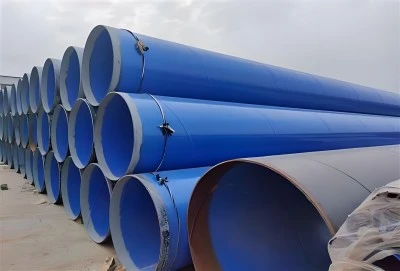
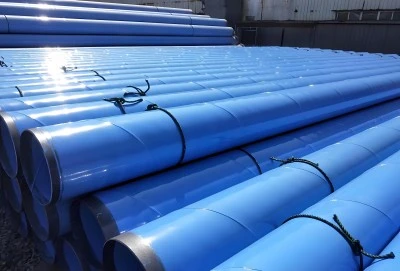
Why Gas System Designers Choose Epoxy Coated Steel Pipe?
Gas lines usually break from the outside in. This is why designers choose steel that has been coated.
The Corrosion Problem in Buried Gas Lines
There is always an attack on steel in the ground. Electrochemical corrosion is caused by water in the soil, salts, acids, and stray currents from grounded electrical systems nearby, like subways and utilities. A small flaw can turn into a leak, and a gas leak is not only expensive to fix but also dangerous to people and the environment. To keep buried steel pipelines safe, 49 CFR Part 192 of the U.S. Pipeline Safety Rules says they need to have external corrosion control, such as a protective coating and cathodic protection. You don't have much room with bare steel. It has been shown that a bonded epoxy layer is a good first line of defense.
How Epoxy Coating Protects the Steel?
Fusion bonded epoxy (FBE) is the most common type of system. The plant uses a blast cleaner to clean the steel to a depth of 40 to 100 microns, heats it, and then puts epoxy powder on it. The powder melts, flows, and hardens into a film that chemically sticks to the metal. The thickness is usually between 300 and 500 microns (12 and 20 mils), but it depends on how rough the soil is. Because the film is very dielectric, it stops corrosion currents and doesn't let soil acids, alkalis, or salts damage it. Most FBE formulas can be used from -30°C to 80°C. Then, cathodic protection fills in any small holes in the coating.
Main Benefits for Gas Systems
I tell project teams about these main benefits:.
- Corrosion resistance: The coating isolates steel from soil moisture, salts, and chemicals, and its high dielectric strength blocks corrosion currents. Paired with cathodic protection, it gives a buried gas line two layers of defense, which matters on long pipeline runs through wet, salty, or acidic ground, where one weak point can shut down a line.
- Mechanical toughness: Cured FBE typically reaches a Shore D hardness above 80, so it resists abrasion and gouging during handling and backfilling. That toughness also helps coated pipe survive pulls through rocky boreholes in horizontal directional drilling. The steel itself supplies strength, and grade and wall thickness set the pressure rating.
- Lower lifecycle cost: Fewer coating failures mean fewer excavations, repairs, and shutdowns. A pipe that costs a little more at purchase can cost less over decades once you add inspection, repair, installation, freight, and downtime. I always suggest buyers compare total lifecycle cost, not only the price per ton.
All of these benefits take care of the risks that most gas system owners are worried about: leaks, repairs, and shutting down.
Where Epoxy Coated Steel Gas Pipe Is Used?
Epoxy-coated pipe can be used anywhere that steel meets rough ground. Most of the time, these three settings are used.
Municipal Gas Distribution Networks
In crowded cities, gas pipes are buried under asphalt and concrete, making it hard to get to them and costing a lot of money to do so. Road salt runoff, subways, and grounded utilities all send out stray currents and salty moisture that damage bare steel. The pipe is protected from both by an epoxy coating. Our range starts at an outer diameter of 60.3 mm, which is small enough for branch lines and service connections. Fixing a pipe under a busy street costs more than the pipe itself, so a coating that lasts longer is a good idea. Since the coating doesn't change the pressure rating, I also think that the wall thickness should be matched to the design pressure from the start.
Trenchless and HDD Crossings
This type of drilling lets workers go over rivers, highways, and protected land without having to dig a trench. The pipe is pulled through a hole that has been drilled. This is often done over gravel and rocks. Because FBE is very resistant to wear, the coating can come out of the hole without any damage. That is important because when the coating is scraped off, the steel is left bare below, where no one can easily get to it. When the ground is very rough and rocky, designers sometimes choose 3LPE, which has an extra layer of polyethylene on the outside and an adhesive layer on the inside. Longma Group also does 3LPE and 3PE coating, so you can get more than one quote and compare them.
Cross-Country Transmission and Industrial Lines
Lines that go for a long way go through swamps, deserts, and salty coastal soils. Cathodic protection and epoxy coating work together to give two layers of defense against corrosion from the outside. Our epoxy coated steel gas pipe is suitable for transmission mains and plant fuel-gas networks. It has outside diameters ranging from 60.3 mm to 1422 mm and wall thicknesses ranging from 6.02 mm to 50.8 mm. For runs above ground, you need a different plan. Since FBE fades in the sun, parts that will be exposed usually need a topcoat that can stand up to the weather, like polyurethane. It was made to be used in buried or submerged service. The coating data sheet should always be used to check the gas composition and operating temperature.
Epoxy Coated Steel Compared with Other Pipe Materials
When choosing what to use, you should look past the first bill. This is how the main choices stack up.
Versus Galvanized and Black Steel
Since black steel doesn't have a built-in defense, it gets damaged quickly by damp air and soil. Hot-dip galvanizing adds a zinc layer that protects the steel below it and rusts first. It works well for a lot of open uses, and we sell it too. But buried gas lines usually need a bonded barrier plus cathodic protection. This is what 49 CFR Part 192 talks about. With epoxy, designers can also choose a coating thickness that works with the ground. With either system, you have to be very careful when you cut ends, welds, and make repairs. What to choose depends on the level of exposure, the approval of the code, and the service-life goals.
Versus Polyethylene and Stainless Steel
Polyethylene is used a lot in buried distribution systems because it is light and flexible and doesn't rust. Steel is usually stronger and can handle higher temperatures, which makes it good for large diameters and high-pressure transmission. Even though stainless steel doesn't rust, it costs a lot more, so it's not usually a good choice for long buried runs. Epoxy-coated carbon steel is in the middle of these two choices. As long as the coating stays on, it gives strength at a fair price. The choice should be based on pressure, temperature, joining method, and availability. Before you choose a material, check the gas codes in your area.
Limitations to Manage
Epoxy coating makes the pipe less likely to rust, but it doesn't raise the pressure rating. That is still controlled by the grade, wall thickness, quality of the weld, and design calculations. Holidays (tiny holes in the film), scratches, bad adhesion, and field joints that aren't protected can all cause corrosion to start in one area. There isn't a single epoxy formula that works with all types of gasses, temperatures, or UV light, and local laws may limit the materials and methods of joining that can be used. Before you make a decision, I think you should ask for the coating data sheet, the repair procedure, and the test records. It doesn't matter how cheap something is if the coating breaks down quickly.
Technical Specifications, Standards, and Quality Control
Clear specifications keep most disagreements about coated pipe orders from happening. Here are some things to test and define.
Pipe and Coating Standards
API 5L, ASTM A53, EN 10210, and AS/NZS 1163 are some of the pipe standards we offer. In PSL1 and PSL2, API 5L grades range from Grade B to X80. We follow DIN 30670, DIN 30678, CSA Z245.20, EN 10339, ISO 21809-1, AWWA C210, and AWWA C213 for coatings. Fusion-bonded epoxy is talked about in both CSA Z245.20 and AWWA C213. The outside diameter is between 60.3 mm and 1422 mm, and the wall thickness is between 6.02 mm and 50.8 mm. You should be clear about the exact standard and edition when you ask for pipe that is "API or ASTM certified" in your RFQ. You can choose between the pipe standard and the coating standard.
Coating Properties and Test Methods
Good test results can tell you if a coating will last in the ground. Magnetic gages check the thickness. ASTM D4541 pull-off tests are used to measure adhesion. In the cathodic disbondment test, which is based on ASTM G8 or CSA Z245.20, a hole is drilled in the coating of epoxy coated steel gas pipe and electrical stress is applied to see how far it peels. This is meant to simulate long-term exposure to the ground. Impact tests, like ASTM G14, check to see if backfill hits break the film. A high-voltage detector used for a 100% holiday scan finds pinholes. Ask for the exact numbers from your production lot, not the values that are usually given.
Inspection Records and Documentation
Paper trails are as necessary to pipe companies as pipes. If you choose, we may provide you more project documents together with Inspection and Test Plan (ITP), Manufacturing Procedure Specification (MPS) and Material Test Certificate (MTC). We have certifications such API 5L certificate, ISO 9001 for quality management, ISO 14001 for environmental management and 18001 for health and safety at work. We trace the raw ingredients all the way through to the final pipe. We use steel from Shagang, Shangang, TISCO, BX Steel, Shougang, HBIS, Baosteel factories. Request holiday reports and information on the coating thickness for each lot. And when you submit your order, ask about third-party inspection possibilities as well.
Manufacturing, Installation, and Supplier Selection
Quality starts in the factory and keeps going in the trench. These steps link them both.
How the Pipe Is Made and Coated?
It begins with a steel coil or plate that has been inspected and has heat numbers and mill certificates on it. We ERW or LSAW form and weld the pipe, heat treat the welds for strength, and inspect the dimensions. The surface is then cleaned from oil, rust, mill scale & salts. Abrasive blasting is required for the epoxy anchor pattern. The epoxy is then applied and cured under controlled temperature and time conditions. Final checks involve verifying thickness of the coating, finding holidays, adherence, appearance and sizes. Then there is the end protection and the export packing. Traceability is vital as each stage keeps its own records .
Field Joints, Handling, and Storage
The coating was removed back at the pipe ends to allow for welding. They seal the junction using heat shrinkable sleeves or liquid epoxy kits that bond to the factory epoxy and create a barrier that will not fail. Use padded slings, do not drag the pipe, and repair any scratches or steel that is showing properly. If you store pipe outside for over six months, protect it with tarps or apply a topcoat of acrylic that will not fade in UV radiation. “Ensure the coating teams and joint-coating teams are compatible before the pipe ships.
Choosing a Supplier and Preparing Your RFQ
Locate a company that manufactures the pipe and provides the coating. Longma Group has been producing ERW steel pipe and LSAW steel pipe since 2003. The factory will measure 230,000 square meters and will manufacture more than 1,000,000 tons of steel per year by the end of 2023. We are hired by people in over 90 countries. There’s a lot more to us than FBE. We also offer hot dip galvanizing, 2PP, 3LPE, 3PE, welding, perforating, expanding and other end treatment. A good RFQ should contain information on gas type, installation environment, size, wall thickness, steel grade, pipe and coating standards, coating thickness, quantity, destination, delivery date, Incoterms and inspection demands.
Conclusion
Epoxy coated steel gas pipe is as strong as carbon steel, but it has a barrier that sticks together and doesn’t allow water, salts, soil chemicals or stray current to penetrate. It may be used for subterranean distribution, trenchless crossings and lengthy transmission lines for many years if installed and maintained appropriately. Black steel can't tolerate wet and buried situations as well. It can also withstand higher temperatures and greater forces than polyethylene. The coating does not modify the pressure rating and the design is still based on grade, wall thickness and welds. The quality of the coating is evaluated by testing for thickness, adherence, cathodic disbondment and holiday. Good repair of field joints, storage and complete documentation protect the quality in service. The ideal decision depends on how the specs and total cost of ownership stack up.
FAQ
How long does epoxy coated steel gas pipe last underground?
Service life can be more than 50 years if it is made, installed, and cathode protected correctly. The result depends on the soil, the quality of the coating, and any damage from handling. Check the pipe for damage and fix it before you backfill.
How do crews protect welded field joints?
The coating is cut back so that it can be welded, and then heat-shrinkable sleeves or liquid epoxy kits are put on. These stick to the epoxy that was put on at the factory and make the weld's corrosion barrier continuous again.
Can I store coated pipe outdoors?
Yes, but UV light makes FBE chalky. If you're storing pipe for more than six months, cover it with tarps or protect the film with a UV-resistant acrylic topcoat.
How does FBE differ from 3LPE?
FBE is a single hard layer that sticks well to steel and doesn't easily separate. 3LPE adds an adhesive and a polyethylene layer on the outside to make it stronger for rough, rocky terrain. FBE is often chosen because it is cost-effective and doesn't change much with temperature.
Request a Quote for Epoxy Coated Steel Gas Pipe from Longma Group
Searching for a manufacturer of epoxy coated steel gas pipe. Since 2003, Longma Group has sold ERW and LSAW pipe with outside diameters ranging from 60.3 mm to 1422 mm. They offer FBE and other coating options, as well as ITP, MPS, and MTC documents. Send your diameter, wall thickness, grade, coating standard, quantity, and where you want the product to go to info@longma-group.com, and our team will put together a quote that fits your needs. To find out more, go to longma-group.com.