
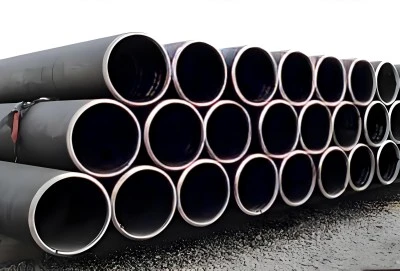
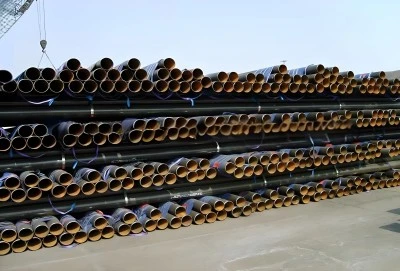
When selecting line pipe for gas transmission projects, the choice between API 5L X42 pipe and X52 grades often determines both safety margins and budget outcomes. For low-to-medium pressure applications, X42 delivers adequate strength at 290 MPa minimum yield, balancing structural reliability with cost efficiency. X52, rated at 360 MPa, suits higher-pressure scenarios requiring enhanced mechanical performance. The optimal decision depends on operating conditions, regulatory mandates, and total lifecycle value—not merely upfront pricing.
|
|
|
Introduction
The infrastructure for gas transmission needs materials that are made to last for decades under changing pressures, environmental stresses, and strict inspection standards. These systems are based on API 5L pipe grades, and X42 and X52 are two standards that are widely used in oil and gas projects around the world. It's always hard for procurement workers to make sure that technical needs are met within the limits of their budgets and that API, ISO, and regional rules are followed.
This guide looks at the functional differences between these grades, as well as their mechanical properties and where they can be used. We talk about how chemical makeup affects the ability to weld, what pressure ratings mean for designing pipelines, and how to choose suppliers based on their certifications and shipping options. Knowing these differences can help you make better buying choices that protect both project timelines and profit margins, whether you're in charge of EPC contracts in the Middle East or multi-phase projects in Southeast Asia.
Understanding API 5L X42 and X52 Pipes – Specifications and Performance
Core Mechanical Properties
Under API 5L, designations are made up of numbers that show the minimum yield strength in pounds per square inch. The X42 can reach 42,000 psi, which is about 290 MPa, and the X52 can reach 52,000 psi, which is 360 MPa. This difference in strength of 24% directly turns into the ability to hold pressure. Tensile strength goes up in a similar way. For example, X42 needs at least 60,200 psi, and X52 needs at least 66,700 psi. When hydraulic testing or running for a long time under repeated pressure conditions, these limits are important.
PSL1 versus PSL2 Distinctions
Under Product Specification Level 1 and Level 2, you can find both grades. PSL1 includes basic chemistry testing and tensile testing, as well as standard quality guidelines for general-use pipes. PSL2 has stricter rules, including Charpy V-notch impact testing at certain temperatures, lower carbon equivalent limits to make welding easier, and maximum yield-to-tensile ratios to keep materials from becoming too hard. To lower the risk of brittle fracture, projects that need to work in low-temperature settings or with sour service usually need PSL2 approval.
Chemical Composition Impact
As a metal gets stronger, it also becomes easier to weld. API 5L X42 pipe usually has between 0.26 and 0.28% carbon for PSL1, but it drops to no more than 0.24% for PSL2 when limited carbon equivalent formulas are used. Manganese, silicon, and microalloying elements like vanadium or niobium help to smooth out the grains and make the metal harder. Lower levels of sulfur and phosphorus—especially important in PSL2—make it less likely that hydrogen will cause cracks in sour gas applications. Suppliers who follow EN 10204 Type 3.1 or 3.2 material test certificates give a traceable chemical analysis for each heat lot. This makes sure that the results are the same for all large orders.
Performance Analysis and Application Suitability for Gas Transmission
Pressure Rating Calculations
Barlow's formula, which takes into account pipe diameter, wall thickness, and material yield strength, gives us the maximum operating pressure. Because it has better yield characteristics, X52 can handle about 24% more pressure than X42 at the same size. A 24-inch X42 pipe with a wall thickness of 0.375 inches can safely handle about 1,000 psi, while an X52 pipe of the same size can handle 1,240 psi. This difference lets engineers either raise the pressure limit or lower the wall thickness. Lowering the wall thickness saves money on materials and makes it easier to place things with a large diameter.
Real-World Application Scenarios
X42 is the most common type of gas distribution network in cities, low-pressure gathering systems, and onshore transmission lines where the operating pressure stays below 900 psi. It's not very strong, but it's good enough for country distribution projects and feeder lines that lead to processing plants. X52 works best in trunk lines that go over long distances, offshore flowlines that are stressed by waves, and high-capacity routes that connect industrial areas. Midstream companies like X52 when changes in terrain elevation require higher design factors or when future capacity growth may require increasing pressure.
Manufacturing and Quality Assurance
Electric Resistance Welding (ERW), Longitudinal Submerged Arc Welding (LSAW), and Spiral Submerged Arc Welding (SSAW) are all modern techniques used in production. ERW works well for smaller diameters up to 24 inches and can turn around quickly. LSAW, on the other hand, is better for large diameters and thick walls that are common in transmission backbones. For moderate-pressure jobs, SSAW is cheaper than other options. No matter what method is used, 100% ultrasonic testing finds problems with the weld, hydrostatic testing makes sure the pressure integrity is correct, and X-ray checking makes sure the structure is solid. Reliable manufacturers get plate from certified mills like HBIS, Bao Steel, or Shagang. This way, the process can be tracked from the melt batch to the finished product.
Decision-Making Framework: How to Choose Between X42 and X52 for Gas Pipelines?
Evaluating Technical Requirements
Start with the design pressure and temperature limits that are given in the project specifications. Use relevant rules, such as ASME B31.8 or ISO 13623, to figure out the minimum wall thickness for both grades. If X42 needs walls that are too thick, which raises the cost of mass and welds, X52 may be cheaper, even though it costs more per ton. On the other hand, selecting X52 too much for low-pressure service loses money and doesn't improve performance. Material choice is affected by things like earthquakes, corrosive soil, and extreme weather. PSL2 grades, which are tougher, work better in hard conditions than PSL1 grades.
Cost-Benefit Analysis
Lifecycle economics are often overlooked by procurement teams as they only look at unit pricing. X42 usually costs 8–12% less per ton than X52, but X52 with a thinner wall can cut total tonnage by 15–20% for the same pressure ratings. The cost of transportation, assembly work, and coating goes down as the pipe weight goes up, which saves even more money. Cost of ownership also includes how often maintenance needs to be done and how much corrosion is allowed. For projects with design lives of 25 years, you should not only look at the initial capital outlay, but also replacement and downtime costs that take inflation into account.
Regulatory and Certification Compliance
Pipeline workers have to follow the owner's instructions, local laws, and checks by a third party. Make sure that the sources you're looking at have valid API 5L monogram rights that cover the grades and manufacturing methods you need. ISO 9001 certification shows that you are serious about quality management, and ISO 14001 and ISO 45001 certifications show that you care about the environment and safety. Make sure that packages come with NACE MR0175/ISO 15156 compliance paperwork for API 5L X42 pipe sour service or cold uses. A third-party check by SGS, Bureau Veritas, or TÜV gives you independent proof, which is very important when owner engineers do pre-shipment audits or watch plant acceptance tests.
Procurement Guide: Where and How to Buy High-Quality API 5L X42 and X52 Pipes?
Finding line pipe means figuring out how to get it through global supply chains, checking out technical credentials, and negotiating good business terms. Competitive pricing and reliability must be balanced for procurement to go well, which is a calculation that rewards careful research and supplier screening. When you know about manufacturing lead times, minimum order quantities, and how to coordinate logistics, you can avoid project delays that cut into your EPC margins.
Identifying Credible Manufacturers
Established manufacturers run fully integrated businesses that buy plates, shape them, weld them, heat treat them, and test them. Longma Group is a good example of this vertical integration because it has been in business since 2003 and can handle more than a million tons of goods every year. Our factories in Hebei Province use high-tech LSAW and ERW lines to make pipes with sizes ranging from 0.5 inches to 80 inches and wall thicknesses up to Schedule 160. We are certified by API 5L PSL1 and PSL2 for grades X42, X52, X56, X60, and higher. We are also certified by ISO 9001, ISO 14001, and CE for European markets. Before they are used in production, raw materials from Shagang, TISCO, and Bao Steel are inspected to make sure the quality of the base metal meets chemical and mechanical requirements.
Navigating Bulk Ordering Logistics
For big pipeline projects to go smoothly, deliveries must be coordinated to fit the schedules for construction. During the RFQ stage, make sure you understand the wait times. Standard specs like 24-inch X42 PSL1 ERW may ship within seven days from stock, but custom LSAW configurations take 30–45 days, which includes mill scheduling and testing by a third party. Talk about setting up different transport times to avoid traffic on the site and high storage costs. Make sure you understand the Incoterms. FOB pricing puts the risk of shipping on the buyer, while CIF or DDP terms include freight and insurance, which makes logistics easier but raises unit costs. A 30% deposit is usually required against a pro forma invoice, and the rest is due against the bill of lading or after a review of the installation. For first-time sellers, secure terms through standby lines of credit.
Leveraging Value-Added Services
Comprehensive makers do more than just supply pipes; they also do construction work, which cuts down on field labor. Beveled ends make it easier to prepare for welding, and threading or grooving makes mechanical joining systems possible. Anticorrosion coatings like FBE (Fusion Bonded Epoxy), 3LPE (three-layer polyethylene), or galvanizing that are put on at the factory are more uniform and last longer than alternatives that are put on in the field. Longma Group offers full paperwork packages that include Inspection and Test Plans, Manufacturing Procedure Specifications, and EN 10204 Type 3.2 Material Test Certificates. These packages make the process of ensuring project quality and getting owner approval easier.
Conclusion
The choice between X42 and X52 depends on how well the mechanical performance meets practical needs while also minimizing costs over the life of the product. For low- to medium-pressure gas distribution, API 5L X42 pipe is a cost-effective and reliable option, while X52 offers more space for high-pressure transmission corridors. To make sure the procurement process goes well, suppliers must be carefully checked out using certifications and audits, and prices, deliveries, and value-added services must be negotiated in a strategic way. Project managers protect both the integrity of the pipeline and its ability to make money in tough global environments by understanding these factors and working with well-known manufacturers that have strict quality control systems.
FAQ
What defines the core difference between X42 and X52 grades?
The main difference is the lowest yield strength: X42 can reach 290 MPa, while X52 can reach 360 MPa. This 24% increase in strength means that X52 can handle higher internal pressures or let designers choose thinner walls for the same pressure levels. This lowers the weight and cost of the material in high-capacity uses.
Can X42 pipe serve in sour gas environments?
For bad service, Standard X42 needs extra specs. When placing an order, buyers must make clear whether they need to comply with NACE MR0175/ISO 15156 or API 5L Annex H. These rules manage the amount of sulfur, the forms of the inclusions, and the limits on hardness to stop hydrogen from causing cracks. This makes sure that work in streams with H2S is safe.
How do PSL1 and PSL2 impact project suitability?
PSL2 has tighter rules about chemicals, requires impact tests, and sets maximum yield-to-tensile ratios. For better fracture toughness and weldability, PSL2 is usually required for projects that will be working in harsh conditions like low temperatures or strict government oversight. PSL1 is good enough for normal coastal uses in average service situations. It saves money without lowering basic safety standards.
Partner with Longma Group for Reliable API 5L X42 Pipe Supply
When looking for a good API 5L X42 pipe maker, you need to carefully look at their production skills, approval portfolios, and customer service after the sale. Longma Group has been in the business for 20 years and has strict quality control systems in place at every stage, from finding raw materials to doing the final inspection. We have API 5L certification for grades X42 to X80 in ERW, LSAW, and SSAW configurations. This is backed up by ISO 9001 quality control and CE compliance for European jobs. We can meet tight EPC plans without sacrificing traceability because we can deliver standard specs quickly (seven days) and make changes easily for large-diameter thick-wall needs. You can email our team at info@longma-group.com to talk about the details of your gas transmission project, get detailed datasheets, or set up factory audits. Our engineers will come up with solutions that fit your pressure ratings, coating preferences, and third-party inspection processes.








