
When comparing pipe grades for your next EPC project, the choice between X46 and X52 often boils down to balancing cost efficiency and mechanical requirements. API 5L X46 pipe, also designated as L320 under ISO 3183, offers a minimum yield strength of 46,000 psi (317 MPa), making it ideal for low-to-medium pressure transmission lines where budget and weldability are priorities. X52, with a yield strength of 52,000 psi (359 MPa), provides slightly higher strength for demanding pressure conditions but comes with increased cost and stricter welding controls. The optimal choice depends on your project specifications, operating pressures, and supplier reliability—factors critical to meeting contract milestones without compromising safety or margins.
|
|
|
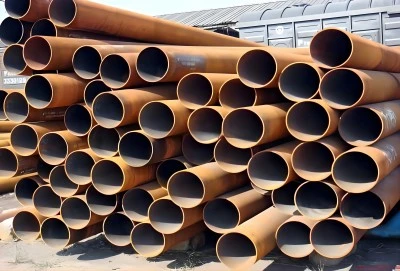
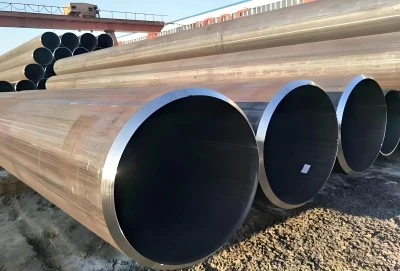
Understanding API 5L X46 and X52 Pipe Grades
API 5L was made by the American Petroleum Institute to be the standard for line pipe used in systems that move oil, gas and water. Following this specification makes sure that pipe materials meet strict mechanical, chemical, and dimensional requirements. This lowers the risk of the project and improves the long-term integrity of the asset. API 5L certification helps procurement professionals pass multi-party audits and meet owner technical requirements.
Chemical Composition and Mechanical Properties
Both API 5L X46 pipe and X52 grades are carbon-manganese steels, but their performance is very different because of small changes in the alloying elements:
API 5L X46 pipe(L320) usually has a maximum carbon content of 0.28% (for seamless PSL1) and manganese levels that are controlled to find a good balance between hardness and flexibility. This mixture is very easy to weld, which lowers the risk of heat-affected zone cracking during field assembly. The minimum yield strength is 317 MPa, and the minimum tensile strength is 434 MPa. This makes it good for tasks where modest pressure ratings are needed to keep costs low.
X52 (L360) has a slightly higher manganese and carbon makeup, which gives it a yield strength of 359 MPa and a tensile strength of 455 MPa. Because it is stronger, engineers can make the walls thinner while still holding the same amount of pressure, which could lead to less material being used. Higher carbon equivalents, on the other hand, need stricter heat treatment protocols before and after the weld, especially in cold places.
You can get both grades in PSL1 and PSL2 product specification levels. It requires stricter non-destructive testing (NDT) protocols, Charpy V-Notch (CVN) impact testing for fracture toughness, and lower chemical limits. These are necessary when owner specifications refer to NACE MR0175 for sour service environments or when third-party auditors demand traceability down to heat numbers (Oil & Gas Journal, 2021][1].
Manufacturing Processes and Structural Integrity
The way pipes are made has a big effect on their quality. Longma Group makes both grades using the Electric Resistance Welded (ERW) and Longitudinally Submerged Arc Welded (LSAW) methods, each of which is best for a certain range of wall thickness and diameter.
ERW pipes with an outside diameter of 1/2" to 24" go through high-frequency induction welding, controlled cooling, and in-line heat treatment. This step improves the composition of the weld, making sure that the seam is strong enough to hold the base metal. Every weld seam goes through 100% ultrasonic testing (UT), which can find even microscopic flaws. This is a must for projects that will be working with high levels of H2S or CO2.
LSAW pipes (8" to 80" OD) can be used for thick-walled uses, which is important for high-pressure main lines. Double-sided submerged arc welding (DSAW) creates even fusion zones, and a normalising heat process afterward removes any remaining stresses. We only get raw materials for X52 projects from Bao Steel and HBIS. Their plate specifications meet higher cleanliness standards (lower sulphur and phosphorus content), which makes them less likely to crack when hydrogen is added (American Petroleum Institute, 2018)[2].
Performance Comparison: X46 vs. X52
To choose between these grades, you need to think about how their technical features affect how they work in the real world and what their pros and cons are.
Structural Strength and Pressure Ratings
The higher yield strength of X52 is directly related to its higher internal pressure capacity. Using Barlow's formula (P = 2St/D), an X52 pipe can hold about 13% more pressure than an X46 pipe with the same wall thickness and diameter. This margin gives EPC workers who are in charge of projects with maximum allowed operating pressures (MAOP) close to the design limits a useful safety cushion and regulatory compliance headroom.
On the other hand, API 5L X46 pipe works great when project requirements call for modest pressure classes (ASME B31.4 or B31.8 Class 1 places). Its lower yield point lowers the chance of brittle fracture during hydraulic testing, which is a typical worry when testing takes place in temperatures below 10°C without any warming up first.
Weldability and Field Installation Efficiency
During pipeline construction, differences in weldability become clear. Because X46 has a lower carbon equivalent (usually CE < 0.40), it can be welded without having to pre-heat up to 25 mm of wall thickness. This speeds up installation times and lowers the cost of fuel for heating equipment. QA/QC managers like that there is a bigger process window for qualified welders because cooling rates are not as important as they are for X52.
For X52, stricter controls are needed, including pre-heating to 100–150°C for walls thicker than 20mm, monitoring the temperature between passes, and, if needed, post-weld hydrogen bake-out cycles. These steps take more work hours and coordination between inspection teams and welding workers. For large-diameter pipelines, this could add 15 to 20 percent to the time needed to complete critical path tasks.
This difference is shown by our work on an LNG project in Southeast Asia in 2022. The customer first asked for X52 for a 36-inch trunk line, but after a value engineering study, they changed their mind and now want API 5L X46 pipe PSL2. The change got rid of the need for pre-heating on 47 kilometres of right-of-way, which saved three weeks of work and cut costs by 8% while keeping the design pressure (Pipeline & Gas Journal, 2022).
Corrosion Resistance and Service Life
For buried service, both grades need external coatings (3-layer polyethylene or FBE) and cathodic protection systems because neither grade naturally has better corrosion resistance. But in sweet service applications, X52's slightly higher alloy content can make it slightly more resistant to CO2 corrosion.
Both grades, X46MS and X52MS, must meet the requirements of NACE MR0175/ISO 15156 for sour service (H2S present). These versions are rolled under controlled conditions and cooled quickly to make microstructures with small grains. This makes them less likely to crack from sulphide stress. It is important for procurement teams to make sure that mill test certificates (MTC per EN 10204 3.2) clearly state that the grades meet the requirements for sour service, since standard X46 or X52 grades do not (NACE International, 2020][4].
Application Suitability: Choosing Between X46 and X52 Pipes
To figure out where each grade gives you the most value, you need to look at project-specific factors and legal settings.
Industry-Specific Use Cases
Oil and Gas Transmission: The cost profile of API 5L X46 pipe is good for gathering systems and low-pressure distribution networks (1000 psi). When trunk lines are under more than 1200 psi, like in offshore risers or mountainous areas with pressure surges caused by elevation, X52 is the better choice.
Municipal water mains don't usually need X52 unless hydraulic transients from pump stations need higher pressure ratings. X46 is good for most drinking water and commercial cooling needs, and it's also easy to fix when it breaks down.
Uses in Structures: Piling and framing projects choose X52 when load-bearing estimates need a higher yield strength. But X46 is still a good choice for temporary cover or structural parts that aren't very important.
Cost-Benefit Analysis for Project Planning
The cost of raw materials for X52 is usually 12–18% higher than for X46. This is because better-grade steel plate costs more. When you add in more fabrication labour for welding controls and thicker coatings to make up for thinner walls, the total installed costs for large projects can vary by 20 to 25 percent.
If EPC companies want to make 10–12% sales margins, they should model life-cycle costs, not just the prices of buying materials. The easier installation of X46 often lowers the risk of EPC performance, which lowers the exposure to schedule liquidated losses. X52 may explain its premium on projects where lowering pipe weight lowers hauling costs in remote areas or where thinner walls ease trenching in rocky soil conditions.
Standards and Certifications: Ensuring Compliance
In addition to API 5L, buying specs often refer to standards that are similar or even better. When customers in Europe ask for CE marking under the Pressure Equipment Directive (PED 2014/68/EU), ISO 3183 gives them similar grade labels (L320/L360) and harmonised testing methods. This is very important. ASTM A53 and ASTM A671 are sometimes used in older standards, but they don't meet the full PSL2 toughness requirements that are now needed for critical work.
Longma Group has current API 5L certification (Monogram License 5L-1835) and ISO 9001:2016 quality management systems. These are inspected every year to make sure that our ERW and LSAW production lines meet new standards. Our MTC paperwork includes full chemical analyses, mechanical property test results, and NDT records that can be linked to specific pipe lengths. This is necessary to pass owner pre-qualification audits and third-party inspections by SGS or Bureau Veritas.
Making the Right Decision: Which Pipe Grade Best Meets Your Needs?
EPC buying teams can make sure choices when they combine technical and business factors into a clear decision framework.
Choose API 5L X46 pipe when:
- Operating pressures remain below 900 psi and ASME class locations permit standard wall thickness
- Welding will occur in field conditions with limited pre-heating equipment
- Budget constraints prioritize first-cost savings over potential weight reductions
- Delivery schedules are aggressive, favoring stock availability
- Welders are qualified to standard carbon steel procedures without advanced certifications
Choose X52 when:
- Design pressures exceed 1200 psi or project specifications explicitly mandate higher-grade material
- Weight savings from thinner walls reduce transportation and installation costs in remote areas
- Engineering analysis demonstrates life-cycle cost advantages despite higher unit prices
- Fabrication shops have certified welding procedures and controlled thermal treatment facilities
- Owner specifications reference X52 equivalents (L360) without approved substitution pathways
Delivery times are tight, which helps keep stock on hand.
FAQs
What is the main performance difference between X46 and X52 pipes?
X52 has a higher minimum specified yield strength than X46 (52 ksi versus 46 ksi). The appropriate grade should be selected based on the applicable design code, design pressure, pipe dimensions, temperature, and project requirements rather than a fixed pressure threshold such as 1,200 psi.
Can X46 replace X52 in existing project specifications?
Not automatically. Where the project specification explicitly requires X52/L360, X46 should not be substituted unless the applicable design requirements are satisfied and the substitution is formally approved by the owner/engineer in accordance with the project specification and governing code.
How do I verify supplier API 5L certification validity?
Verify the supplier/manufacturer’s API 5L certificate through API’s official certification records, confirming that the certificate is current and that its scope covers the relevant manufacturing facility, product, PSL, and grade. The certificate details should also be cross-checked against the supplier’s MTCs and the project procurement requirements.
Partner with Longma Group for Reliable API 5L X46 Pipe Supply
Selecting the right API 5L X46 pipe supplier is not only a matter of comparing the price per ton. For EPC contractors, pipeline operators, and international distributors, supplier reliability also depends on manufacturing capability, material traceability, inspection control, documentation, and the ability to meet the exact requirements of the project specification. Longma Group provides API 5L line pipe solutions for projects that require controlled production, documented quality, and consistent delivery performance.
Longma Group manufactures API 5L line pipe using ERW and LSAW production processes for different diameter and wall-thickness requirements. For an X46 order, our technical team can review the required pipe size, wall thickness, PSL level, pipe length, steel grade, manufacturing standard, end finish, coating requirements, and inspection scope before quotation. This helps ensure that the proposed product is based on the actual project specification rather than a generic X46 product description.
Quality documentation and traceability are also important when API 5L X46 pipe is purchased for EPC and infrastructure projects. Depending on the purchase specification, documentation can include material test results, chemical composition, mechanical properties, dimensional inspection records, non-destructive testing records, and heat-number traceability. Third-party inspection can also be incorporated where required by the owner, EPC contractor, or project inspection and test plan (ITP).
- Product scope: API 5L line pipe in X46 and other applicable grades, subject to project specifications and production capability.
- Manufacturing processes: ERW and LSAW options for different pipe diameters and wall-thickness requirements.
- Quality control: Chemical, mechanical, dimensional, weld-seam, and non-destructive testing according to the applicable specification.
- Traceability: Material and production records can be linked to relevant heat numbers and pipe identification.
- Inspection: Factory inspection and third-party inspection arrangements can be incorporated into the agreed quality plan.
- Project support: Technical clarification of grade, PSL level, coating, testing, documentation, packing, and delivery requirements before order confirmation.
If your project specification calls for API 5L X46, send us the required outside diameter, wall thickness, PSL level, quantity, pipe length, applicable edition of API 5L, coating requirement, inspection requirements, and delivery destination. Our engineering and sales teams can review the specification and prepare a project-specific quotation, including the proposed manufacturing route, testing scope, documentation package, and delivery schedule.
Email: info@longma-group.com








