
When engineering contractors evaluate pipeline materials for high-pressure oil and gas transmission projects, the choice between X65 and X70 grade steel pipes directly impacts safety margins, project budgets, and long-term operational reliability. API 5L X70 pipe typically emerges as the superior option for demanding high-pressure applications due to its minimum yield strength of 485 MPa (70,000 psi) compared to X65's 450 MPa, enabling thinner wall designs and reduced material costs while maintaining equivalent pressure ratings and enhanced fracture resistance in critical service environments.
|
|
|
Understanding API 5L X65 and X70 Pipes: Specifications and Properties
Chemical Composition and Alloying Elements
High-strength low-alloy steels are used to make both X65 and X70 line pipe grades, but their micro-alloying methods are very different. X65 usually has small amounts of niobium and vanadium added to it to make it strong, while X70 has slightly higher amounts of these elements added along with titanium to make the grain structure even better. Carbon equivalent values are carefully controlled in both grades to keep the ability to weld, but manufacturing X70 requires tighter control windows. These differences in makeup make X70 pipe tougher, which is important when pipelines run through areas that are prone to earthquakes or experience big changes in temperature while they are working.
Mechanical Properties: Yield and Tensile Strength Comparison
The main difference is in the limits of motor efficiency. The minimum yield strength for X65 is 450 MPa, and the range for tensile strength is 535 to 760 MPa. For X70, these limits are raised to 485 MPa for yield and 570 to 760 MPa for tensile. Because of this 35 MPa yield advantage, pipeline builders can cut the wall thickness by about 7 to 8 percent while keeping the same MAO pressure. It becomes clear what this means for EPC contractors: on a large-diameter 48-inch transmission line that runs for 500 kilometers, choosing X70 over X65 can cut the amount of steel needed by several thousand metric tons, which saves a lot of money on buying materials, transporting them, and welding them in the field. The yield-to-tensile ratio in PSL2 specifications makes even more sure that there are enough ductility reserves, which is very important for stopping brittle fractures from spreading.
Manufacturing Methods and Dimensional Standards
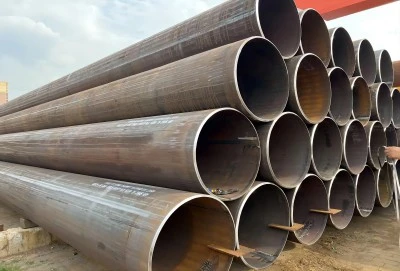
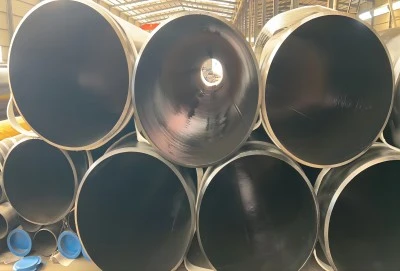
For larger widths than 20 inches, longitudinal submerged arc welding (LSAW) is used to make both grades. For smaller sizes, electric resistance welding (ERW) is used. Seamless production is still possible up to about 24-inch outer diameters. Different grades of steel need slightly different heat treatment methods. For example, X70 steel often needs thermomechanical controlled processing (TMCP) or accelerated cooling to reach its strength level without having too much carbon content. Our LSAW production lines at Longma Group can work with widths from 1/2 inch to 80 inches and wall thicknesses from SCH10 to SCH160. They can meet both standard and special requirements. The pipe body goes through 100% ultrasonic testing and hydrostatic pressure testing to make sure the structure is solid. There is full documentation from the steel mill source to the final inspection to show how the pipe was made.
Corrosion Resistance and Service Life Considerations
Although both grades of carbon steel can rust in harsh environments, X70's finer microstructure may provide slightly better resistance to stress corrosion cracking if it is manufactured correctly. When used in sour service situations with hydrogen sulfide, the real difference comes out. X70 pipe made according to Annex H standards goes through calcium treatment and inclusion shape control to stop hydrogen from cracking it. For projects in sour gas fields in the Middle East or in deep water offshore, it is necessary to define PSL2 X70 with extra standards SR15 (sour service). Protective coatings, like three-layer polyethylene (3LPE) or fusion-bonded epoxy (FBE), make both types last longer if they are put correctly and tested according to ISO 21809 standards.
Performance Comparison: X70 vs X65 in High-Pressure Applications
Pressure Rating Advantages and Safety Margins
Pipeline engineers use Barlow's formula to figure out MAOP. In this formula, hoop stress is directly related to yield strength. If you keep the design factor the same (which is usually 0.72 for gas transmission according to ASME B31.8), going from X65 to api 5l x70 pipe gives you 8% more allowed working pressure with the same wall thickness. On the other hand, keeping the original pressure grade lets the wall get thinner, which lowers the pipe's weight per meter and makes it easier to handle during building. This is especially helpful in rural areas where limited crane capability makes transportation difficult. During the procurement process, these figures are often checked by a third party like SGS or Bureau Veritas to make sure they are correct and in line with owner requirements and local rules.
Weldability and Field Fabrication Efficiency
Higher strength grades used to make welding harder, but today's low-hydrogen products and limited heat input methods have mostly taken care of these problems. X70 welding needs slightly higher warmup temperatures—usually 75–100°C instead of 50–75°C for X65—to keep the heat-affected zone from cracking when it gets cold. As per API 1104. qualified welding procedure specifications (WPS) and welder performance qualifications (WPQ) are still needed for both grades. Our fabrication team has seen that when the right steps are taken, X70 joints have about the same rate of defects as X65 joints when they are scanned with an x-ray machine. The extra preheat time adds about 5–10% to the time it takes to weld in the field, but that's not a big deal when you consider how much money you save by using less material.
Cost-Benefit Analysis: Initial Investment vs Lifecycle Value
Because of tighter production limits and higher quality control standards, the cost of raw materials for X70 is usually 5 to 8 percent higher than those for X65. The allowable wall reduction, on the other hand, often cancels out this difference. Imagine a 36-inch diameter pipeline that works at 12 MPa. For X65, the wall width might need to be 14.3 mm, but for X70, it only needs to be 13.2 mm. This 1.1 mm drop means about 2,800 metric tons less steel along a 300-kilometer route, which, at current market rates, saves about $1.4 million in material costs. Costs for transportation go down in the same way, and using fewer consumables and cutting down on the time needed to finish the project also help. Lifecycle cost analysis often leads procurement directors to choose X70 even though it costs a little more per unit. This is because it helps them balance EPC profit margins.
Factors Influencing the Choice Between X65 and X70 Pipes
Operating Conditions and Environmental Demands
Steel is put under different types of stress when pipelines go through different types of terrain. Charpy V-notch impact testing at temperatures as low as -60°C is used to prove that materials used in Arctic installations are tougher at low temperatures. Both types can meet this standard if they are made with the right normalizing heat treatment. Extreme changes in temperature during the day can happen in the deserts of Saudi Arabia and the United Arab Emirates. These changes create cycle thermal pressures that can be better handled by api 5l x70 pipe's high yield strength. In Indonesia and South America, areas that are prone to earthquakes need to have enough flexibility to allow the ground to move without breaking. In these cases, the yield-to-tensile ratio described in PSL2 is more important than total strength alone. Cathodic protection systems are needed no matter what grade is chosen for corrosive soil, but hydrogen embrittlement risks in sour service environments make material choice even more important.
Regulatory Compliance and Quality Assurance Protocols
International projects have to meet the standards of more than one country. In addition to API 5L PSL2 certification, ISO 3183 certification is needed for markets in Europe and AS/NZS 1163 certification is needed for markets in Australia and the Pacific. In addition to the code minimums, owner requirements often call for extra tests, such as drop-weight tear testing (DWTT) to make sure the crack arrestor works, four-point bend testing to make sure the girth weld is solid, or longer hydraulic hold times at 100% of the minimum yield stress. Our quality management system at Longma Group keeps up with ISO 9001:2016, ISO 14001, and ISO 18001 certifications. This makes sure that all of our products can be tracked back to their source with material test certificates (MTC) that meet EN 10204 3.1 or 3.2 standards. Radiographic testing of 100% weld seams and ultrasonic inspection of the whole pipe body with a third party present provides the level of verification that EPC contractors need when they are audited by the owner.
Supplier Evaluation and Sourcing Strategy
The success of a procurement depends on more than just the availability of grades. Meeting tight delivery times—our plant can speed shipments 7 days after an order is confirmed—depends on how much production capacity is available. Inventory depth across dimensional ranges stops specification changes that affect planning for construction. Value-added services like beveling, hydrotesting to customer-specified pressures, or applying temporary protective coats make it easier for everyone on the site to work together. When looking at Chinese manufacturers, you should check their API licensing status on the online registry of the American Petroleum Institute, make sure they use real manufacturing processes by auditing their facilities, and look at references from previous projects that had similar service conditions. Longma Group's partnerships with Shagang, HBIS, and Baosteel make sure that the quality of the raw materials comes from mills that follow strict statistical process controls.
Conclusion
Before choosing between X65 and X70 line pipe, you need to carefully think about the working pressures, the surroundings, the rules, and the cost. api 5l x70 pipe has clear benefits in high-pressure transmission applications, including higher yield strength that lets walls get thinner, better fracture resistance in tough service, and lower lifecycle costs even though it costs a little more per unit. X65 is still perfectly fine for moderate-pressure systems where its mechanical properties are better than what is needed for service and initial cost minimization is the main goal of the procurement budget. To choose the right materials, pipeline engineers, QA/QC managers, and procurement specialists must work together to find a balance between technical performance and cost-effectiveness. Project success is guarantyd by working with well-known manufacturers who have all the necessary certifications, have produced similar products before, and offer quick technical support.
FAQ
What mechanical differences distinguish X65 from X70 pipe?
The minimum yield strength for X65 pipe is 450 MPa (65,000 psi), and the minimum yield strength for X70 pipe is 485 MPa (70,000 psi). This 35 MPa difference lets X70 get the same pressure ratings with walls that are about 8% thinner. This lowers the weight of the materials and the cost of the project. Both grades have tensile strengths that are about the same (535–760 MPa), which means they are both flexible enough. The extra strength in X70 comes from better micro-alloying and thermomechanical processing when it is made.
Can X70 pipe be used in sour service environments?
Standard X70 needs extra manufacturing controls for bad service that has hydrogen sulfide in it. API 5L Annex H lists the requirements, such as calcium treatment to control the shape of inclusions, hardness limits to stop sulfide stress cracking, and HIC testing as required by NACE TM0284. When made according to these standards, X70 works consistently in sour gas uses on projects around the world.
How do I verify legitimate API 5L certification?
Use the American Petroleum Institute's online licensee search tool at api.org to check the status of a supplier's API monogram license. Real material test certificates list specific heat numbers, mill test reports, and records of witness inspections. Hire independent third-party inspection agencies to check the documents and products before they are shipped to make sure they are real before you finalize the payment.
Partner with a Trusted API 5L X70 Pipe Manufacturer
Longma Group provides approved Api 5l x70 pipe options that are made to fit the exact needs of EPC projects all over the world. With a production capacity of more than 1,000,000 tons per year, we keep sizes in stock ranging from 1/2 inch to 80 inches, with wall thicknesses from SCH10 to SCH160. This allows for fast 7-day delivery for urgent needs. Our API 5L, ISO 9001:2016, and other quality management certifications make sure that your projects meet the strict requirements for third-party audits. You can talk to our technical team at info@longma-group.com about your needs and get reasonable quotes from a well-known Api 5l x70 pipe provider that is dedicated to quality, dependability, and quick customer service.