
Carbon steel is protected in two ways by zinc coated pipe. Because it has zinc on it, steel doesn't get wet, rusty, or salty. It breaks down first if the surface is scratched. This slows down rust and lowers the need for repairs in two ways. This varies from place to place, but many sources say that hot-dip galvanized steel pipe can last fifty years or more. What happens depends on how thick the coating is, how the soil or air is, and how carefully it is handled. What does the covering do? How long does the service last? What kinds of rules are important? How do I know what I'm getting?
|
|
|
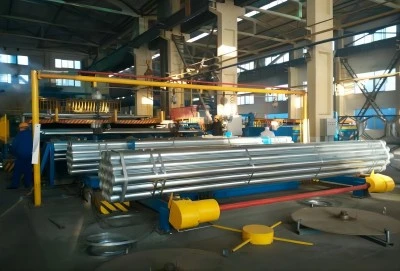
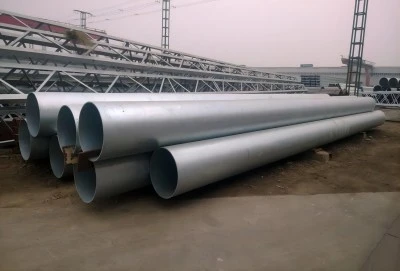
Understanding Zinc Coated Pipe and How It Is Made
I start by telling them what the item is and how the zinc gets on the steel.
What Zinc Coated Pipe Is?
It is made of carbon steel and has zinc added to it. This type of metal pipe is called zinc coated pipe. A lot of people who buy it also call it galvanized steel pipe. It can mean a few different ways to coat something, such as hot-dip, pre-galvanized, and electro-galvanized. Each one changes how the metal looks and how thick it is. The thickest layer is what engineers choose when they need to use something outside or in the ground. This coating isn't as thick, so it can be used inside. You can also call it electro-zinc or pre-galvanized. When you hot-dip coat steel with zinc, layers of zinc-iron alloy are formed that can withstand being moved around while being shipped and put in place. You should put the method in the order instead of just the product name because it changes how well it works.
How Hot-Dip Galvanizing Works?
To begin, a steel pipe that is already straight is used. It is cleaned with acid, and flux is added so the zinc can stick to it. After that, the pipe is put into a bath of 450°C hot molten zinc. The outside, the inside, and the weld seam are all coated at the same time by immersion. Checkers look at the coating as soon as it's cool. ASTM E376 says that a magnetic gage must be used to measure thickness. To make sure the coverage is even, a copper sulfate (Preece) test is run, and the surface is also looked at for dross or rough spots. Waxed pipe is also put through a hydrostatic test to make sure the seam can handle the force. Electric-zinc coating is faster and smoother, but it's not as thick.
Longma Product Range
No matter what the project calls for, Longma Group can weld steel pipe with either ERW or LSAW and then zinc coat it. Outside diameters range from 60.3 mm to 1422 mm, and wall thicknesses range from 6.02 mm to 50.8 mm for our zinc coated pipe. API 5L, ASTM A53, EN 10210, and AS/NZS 1163 are some of the rules that apply to pipes. There are also end treatments we do, like welding, perforating, and expanding, that help us make things that fit together. We buy steel from Baosteel, HBIS, TISCO, Shagang, and Shougang, all of which are based in China. From the time the steel is raw to the time it is finished, we can keep track of each pipe. For these prices, the same company can build the pipe and coat it.
How Zinc Protects Steel and How Long It Lasts?
After that, people want to know how the coating works and how long it can last.
Barrier and Sacrificial Protection
In two ways, the zinc layer keeps steel safe. At first, it's just a wall that keeps water, oxygen, and salts from getting to the steel. Second, sacrifices are made with zinc. If a scratch shows a small piece of steel, the zinc close by rusts first to protect the point that can be seen. A lot of galvanizing groups say that zinc rusts in air tenth to thirty-first of the speed at which steel rusts. There isn't too much safety here. Zinc can only fix a certain amount of damage at once. You still need to thread, weld, and cut the ends. Because of this, I think the damage to the coating is due to both the material and the way it was handled.
What Controls Service Life?
Everything around something tells you how long it will last, not just the coating. What does the ISO 9223 scale for corrosive air say? It goes from C1 (very low) to CX (extreme). The stronger types of zinc lose their thickness faster. It's important to think about the weather, weather damage, salt, pollution, humidity, and the chemistry of the soil. Written advice often says 20 to 50 years or more in mild places. Sites in the country can last more than 50 years, while sites near the coast can lose 15 to 25 years. People who want to buy something should get a corrosion report that is tailored to their project because one number can be off. Corrosion costs the world about US$2.5 trillion a year, or 3.4% of the world's GDP, according to the NACE IMPACT study. There is a lot at stake.
Inspection, Storage, and Repair
If you are careful with the coating after it comes off the plant, it will stay safe. Pipes should be stored on racks that are dry, let air flow well, and have spacers between the pipes. White rust can form on pipes that are stacked too close together in damp air. This stain is made of zinc hydroxide. Look for flaking, peeling, steel that you can see, and coating loss at cuts and threads when you check it. Get the damage clean and dry, and then follow the repair maker's instructions for putting a zinc-rich coating on it. It burns off zinc and gives off fumes when you weld. Make sure there is enough air flow, and then clean up the area. Before you load to send something over the ocean, you should talk to the supplier about bundling, end caps, and protective separators.
Standards, Sizes, and Documentation for Zinc Coated Pipe
The specs are the first thing I look at because they let me know if a shipment can go through inspection.
Pipe Standards and Dimensions
In accordance with the requirements of the project, our zinc coated pipe meets API 5L, ASTM A53, EN 10210, and AS/NZS 1163. Astm A53 says that galvanized pipe needs to have a certain amount of zinc coating. It doesn't cover pipe that is black or zinc-coated in a hot dip. You should buy the thinnest wall possible while also making sure it fits the pressure, load, span, corrosion allowance, and how the pieces are joined. You should know that the weight per meter depends on the diameter, wall thickness, steel density, and bulk of the coating before you plan your freight. Compare the stress and temperature limits with the type of steel, the design code, and the way it will be joined. We have API 5L grades PSL1 and PSL2 from Grade B to X80.
Coating Standards
There are standards for some coatings that give you even more ways to check them. The rules we follow are AWWA C210, AWWA C213, CSA Z245.20, EN 10339, ISO 21809-1, and DIN 30670 and 30678. They need to be very clear about the exact standard and coating type that their spec calls for, as these papers talk about different coating systems. We can cover things with FBE, 2PP, 3LPE, and 3PE when a project needs more than zinc. The rules for thickness, adhesion, and impact should be in the order, along with the test method and values that are acceptable. People can't argue at the receiving dock because the numbers are easy to see.
Documents and Verification
There's proof of what you bought. You will get an Inspection and Test Plan (ITP), a Material Test Certificate (MTC), and a Manufacturing Procedure Specification (MPS). Because we care about quality, we have API 5L, ISO 9001, ISO 14001, 18001, and Factory Production Control cards. You need to do four things to check your papers. See what the standard edition and the scope are all about. The MTC's heat and batch numbers should match the pipes' numbers. Read the pieces of paper next to the packing list and order form. Before you start work, figure out where to check things and how to keep track of them. It's also possible to have a third party watch tests of the coating's sticks and thickness.
Applications and Material Comparison
You should know where the pipe fits and where something else fits better to save money.
Typical Applications
Anywhere steel needs to be robust and exposed to moisture, zinc coated pipe can be found. It's used for outside tubes and clamps on scaffolding that need to be strong enough to handle bumps and rain. Plants grow best in air that is more than 80% humid and close to fertilizers. There are also a lot of fences, handrails, guardrails, fire sprinkler and HVAC lines, as well as industrial water lines. Things that are used for general purposes are kept separate from things that the code lets me do. People who work with gas, fire safety, potable water, or both need to get permission from the local code. This includes ratings for pressure, ways to join, and a check of the water's chemistry. Zinc pipes aren't as good for drinking water systems as they used to be because minerals can stick to them. Before you say it, check.
Comparison with Black Steel, Stainless Steel, and PVC
For a small additional cost, zinc coated pipe provides significantly better protection against corrosion in the air than black steel. More places should use zinc-coated steel instead of stainless steel because stainless steel doesn't rust as well and costs a lot more. Stronger, able to handle higher temperatures, and less likely to break when hit, steel is better when it comes to chemicals. PVC isn't heavy. The only things that make hot-dip galvanized pipe different from zinc coated pipe are the thickness and the way it is applied. I look at how much the materials are, how much it costs to build, install, maintain, and work over time, how much it costs to meet the code, and how much it costs to deliver everything.
Benefits and Limitations
They are better at resisting corrosion, don't need to be maintained as often, come in a wide range of sizes, and are simple to work with when using standard fabrication methods. It's also easy to see the lines. If you cut, thread, weld, or otherwise rough-handle the coating, you could damage it. If the service is rough and includes acidic, chemical, abrasive, or high temperatures, we might need to add extra protection, like paint over galvanizing. The name for this is a duplex system. When buried, bituminous tape or polyethylene sleeves protect the lines from soil electrolytes that could damage them. Corrosion inside can still happen, but it depends on the fluid. Without the necessary approval, zinc coated pipe does not automatically meet gas, fire safety, or potable water standards.
Choosing and Buying Zinc Coated Pipe
Since the tech issues have been fixed, it's now easier to buy things.
Selection Steps
This world has water, salt, chemicals, soil, and normal wear and tear. I then describe the kind of service, how long it should last, and how often it needs to be fixed. I made the rules, too. The pipe's size, the type of steel it was made of, its diameter, its wall thickness, its coating method, its minimum coating mass, how it was finished, tested, marked, and packed were all listed. They have to match the pressure, load, temperature, amount of corrosion that is allowed, and way that they are connected. Last but not least, look at the whole price. This should include the cost of shipping, the lead time, the minimum order quantity, the expected upkeep, coating repair, inspection, and any parts that need to be bought. Something that costs less per unit might not be as good if it needs to be fixed or replaced right away.
Preparing a Request for Quotation
It takes longer to set prices without a full request for quotation, but it also keeps you from making mistakes. Write down the length, width, number, the need for zinc coating, the end treatment, the destination port, the Incoterm, the inspection needs, and how it will be packed. Please make a list of any field joints or repair coatings you know of. The cost and life of the pipe will be different if the plants that coat it and fix it in the field don't work well together. Find out about the tolerances, batch certificates, different ways to measure the coating, and the exact steps for loading. Find out if the pipe body and coating can be shipped together if you need to finish an EPC project quickly. You will not have to change providers as often.
Why Buyers Work with Longma Group
It has been making ERW and LSAW steel pipe since 2003. By the end of 2023, we'll have made over 1,000,000 tons of goods every year. The size of our land is 230,000 square meters. People from more than 90 countries buy from us. Some of these people are engineers, stockists, and import traders. We use checkers to find issues and high-tech heat treatment to make welds stronger. We hot-dip galvanize pipes and cover them with FBE, 2PP, 3LPE, and 3PE. You can get all of your pipe and safety gear in one place. We can help with audits and project files for ITP to MTC. You can find out more at longma-group.com.
Conclusion
Through a physical zinc barrier and a sacrificial action, zinc coated pipe protects carbon steel by slowing corrosion where small amounts of steel are exposed. How thick it is, where it is, and how it is handled will all affect how long it lasts. ranges from 15 to more than 50 years should help you plan, not promise that something will happen. A hot-dip galvanizing finish is the thickest. This kind of paint works best when used outside or buried. The coatings that are thinner are better for use inside. Clear coating specifications and batch records for API 5L, ASTM A53, EN 10210, and AS/NZS 1163 help project managers decide if the pipe meets their needs. When you compare zinc-coated steel to black steel, stainless steel, and PVC, it is a good middle ground between cost, strength, and protection. That protection will stay in place if you carefully store, check, and fix it. You will still need to get permission before you use water, gas, or fire.
FAQ
What is the difference between hot-dip and pre-galvanized pipe?
After it has been made, hot-dip pipe is put into molten zinc. The coating is now thicker and can be used outside. Zinc-coated strip is used to make this kind of pipe. After a while, the weld seam gets another coat, but this time the layer is thinner, so it can be used inside.
Can zinc coated pipe be welded?
Yes. When you weld, the fumes and zinc are burned off. Make sure there is enough air flow and that you wear safety gear. Then, use a zinc-rich coating to fix the weld area.
Is zinc coated pipe suitable for underground use?
The difference is in how acidic and wet the soil is. Bituminous tape or polyethylene sleeves are often used to protect buried lines even more. This is because zinc can be worn away quickly by acidic soil.
How long does zinc coated pipe last?
It doesn't matter how thick the environment is or how much damage it does; it does matter how well it is taken care of. Ask for more than one number; you need to find the right one for your project.
Request a Zinc Coated Pipe Quote from Longma Group
Buyers who need zinc coated pipe that won't rust for their projects are welcome to contact Longma Group. Just email info@longma-group.com with what the product is used for, the range of sizes it comes in, how much you need, what coating you need, and where it needs to go. Soon after, someone from our team will send you information about the product, along with a quote, certificates, and the lead time. Visit longma-group.com to see what we can do with hot-dip galvanizing, FBE, 2PP, 3LPE, and 3PE coating, as well as ERW and LSAW.