
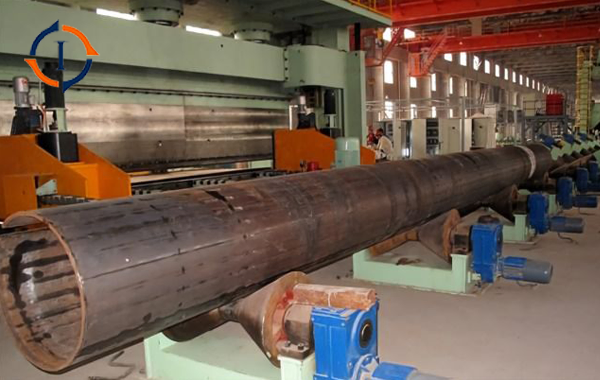
ISO 3183 L390 Pipe







ISO 3183 L390 Pipe – High-Strength Steel Pipe for Oil & Gas Transmission Projects
Hebei Longma Group manufactures ISO 3183 L390 Pipe with exceptional strength and reliability for medium- and high-pressure pipeline applications. The L390 pipe has a minimum yield strength of 390 MPa and is manufactured to stringent international standards, allowing it to service challenging oil, gas and water transmission projects in over 90 countries. Our manufacturing base spans an area of 230,000 square metres, with an annual output of more than 1,000,000 tons, assuring consistent supply and speedy delivery within 7 days for urgent orders. Every pipe is subject to strict quality control, and has full certification (API 5L, ISO 9001, etc.) and comprehensive material traceability paperwork.
What Makes L390 Pipe Ideal for Your Pipeline Project
The highest strength steel pipe provides the best performance in situations where safety and efficiency are most important. L390 grade has a minimum yield strength of 390 MPa, similar to API 5L X56, ideal for medium to high pressure settings.
This in certain configurations reduces wall thickness requirements and improves your pipeline project. This results in reduced material prices, lower transportation costs and shorter installation times. Strength-to-weight ratio allows contractors to maximise project budgets without sacrificing structural integrity.
The pipe maintains excellent weldability and toughness. Field fabrication becomes more straightforward, and the steel performs reliably across varying temperature conditions when properly specified with impact testing requirements.
Technical Specifications & Manufacturing Standards of ISO 3183 L390 Pipe
| Parameter | Details |
|---|---|
| Grade | L390 (ISO 3183) / X56 (API 5L equivalent) |
| Outer Diameter | 60.3mm – 2032mm (2" – 80") |
| Wall Thickness | 4mm – 100mm |
| Yield Strength | Minimum 390 MPa |
| Tensile Strength | 490 – 760 MPa |
| Manufacturing Process | SMLS (Seamless), ERW, LSAW, SSAW |
| Delivery Condition | N (Normalized), Q (Quenched & Tempered), M (Thermomechanical Rolled) |
| Length | 6m – 12m, or customized |
| PSL Level | PSL1 / PSL2 (with enhanced testing) |
| Coating Options | FBE, 2PP, 3LPE, 3LPP, Hot-Dip Galvanizing |
We control chemical composition to ensure superior weldability. Carbon content stays within 0.22% for PSL2 specifications, while Manganese levels are carefully balanced around 1.40%. The controlled Carbon Equivalent supports field welding operations and reduces the risk of hydrogen-induced cracking in sour service environments.
Key Applications in Industrial Pipeline Systems
Your energy infrastructure requires steel pipe that performs under pressure and environmental stress. L390 pipe serves critical applications across multiple sectors.
Long-Distance Oil & Gas Transmission: Midstream operators choose L390 for trunk lines where the higher strength enables optimized wall thickness design. Projects spanning hundreds of kilometers benefit from material savings and improved economics.
High-Pressure Natural Gas Networks: The mechanical qualities of L390 are of paramount importance for the safe and reliable operation of distribution networks running at high pressures. The pipe stands up to internal pressure pressures and provides structural integrity for decades of operation.
Offshore Gathering Lines : PSL2 options fulfil the toughest requirements of subsea applications. The improved toughness and anti-corrosion properties provide protection against hydrostatic pressure and severe maritime conditions.
Sour Service Environments: L390 pipe securely carries fluids containing hydrogen sulphide when ordered with HIC and SSC testing to NACE MR0175/ISO 15156 standards. This avoids brittle failure in corrosive atmospheres that would destroy lower grade materials.
Manufacturing Excellence & Quality Assurance
Our production process for ISO 3183 L390 Pipe begins with premium raw materials sourced from leading Chinese steel mills including HBIS, Bao Steel, and Shougang. Each heat receives full chemical analysis and mechanical testing before entering production.
Advanced manufacturing equipment produces pipes in seamless, ERW, and LSAW configurations. Heat treatment processes optimize strength and toughness characteristics. Normalizing, quenching and tempering, or thermomechanical rolling deliver the specific properties your project requires.
Every pipe undergoes comprehensive inspection protocols. Hydrostatic testing verifies pressure integrity. Non-destructive testing methods including ultrasonic and radiographic examination detect any subsurface defects. Dimensional verification ensures compliance with specified tolerances.
You receive complete documentation with each shipment. Mill Test Certificates include heat number traceability, chemical composition results, mechanical property data, and inspection records. PSL2 orders include Charpy impact test results, hardness measurements, and enhanced weld examination reports.
Third party inspection services from BV, TUV or Intertek are offered for extra verification when required. Our quality management systems are certified with API 5L, ISO 9001, ISO 14001 and ISO 18001.
Value-Added Services & Customization Options
Along with our conventional pipe manufacturing, we also provide fabrication services to meet your project demands. Our factory does welding, perforating, expansion processing and customised end treatments according to connection requirements.
Anti-corrosion coating increases service life in harsh conditions. Hot-dip galvanising is a cost-effective method of protection under moderate exposure situations. FBE coating is very adhesive and chemically resistant. Multi-layer systems like 2PP, 3LPE and 3LPP give better long-term performance for buried or submerged installations.
Custom specifications accommodate unique project requirements. We produce non-standard sizes, special heat treatments, and enhanced testing protocols based on your engineering specifications.
FAQ
Q:What distinguishes PSL1 from PSL2 for L390 pipe?
A:PSL2 specifications impose stricter quality requirements compared to PSL1. The enhanced level mandates Charpy impact testing to verify toughness at specified temperatures. Chemical composition tolerances tighten, particularly for Carbon Equivalent calculations. Maximum yield-to-tensile strength ratios prevent excessive hardness. Complete traceability documentation accompanies each piece. PSL1 provides standard quality suitable for general applications. It omits mandatory impact testing and relaxes some chemical controls. Your project specifications determine which level best balances performance requirements against budget considerations.
Q:Can your L390 pipe perform in cold climate installations?
A:Temperature performance depends on proper specification during ordering. Standard L390 exhibits good toughness, but extreme cold requires enhanced testing. We conduct low-temperature Charpy impact testing at -20°C, -40°C, or -45°C based on your operating environment. Thermomechanical rolling and controlled heat treatment improve low-temperature properties. PSL2 grades with fine-grain structure deliver optimal performance in arctic or high-altitude applications. Discuss your minimum design temperature with our technical team during specification development.
Q:How does your manufacturing capacity support large projects?
A:Our 230,000-square-meter facility produces over 1,000,000 tons annually. Multiple production lines handle simultaneous orders across different sizes and specifications. Raw material inventory from major mills ensures continuous operation without supply interruptions. For urgent requirements, we maintain stock of common sizes in L290, L360, and the product grades. Our fastest delivery time reaches 7 days for available specifications. Large-volume contracts receive dedicated production scheduling and phased delivery coordination.
Q:What documentation supports international project approvals?
A:Engineering projects require comprehensive technical files for procurement approval and quality verification. We provide complete Inspection and Test Plans outlining all verification activities. Manufacturing Procedure Specifications detail our production methods and control points. Material Test Certificates contain full chemical and mechanical data with heat traceability. Dimensional inspection reports confirm compliance with specified tolerances. Coating test results verify thickness and adhesion properties. All documentation meets international standards for project submission and regulatory compliance.
Q:How do you ensure consistent quality across different production runs?
A:Our quality system maintains strict control from raw material receipt through final shipment. Each steel coil or plate receives incoming inspection with chemical verification. Production parameters undergo continuous monitoring with automatic recording. Heat treatment equipment features calibrated temperature controls and time tracking. Ultrasonic testing systems scan 100% of weld seams. Statistical process control identifies trends before they affect product quality. Regular equipment calibration and operator training maintain measurement accuracy. Full traceability links finished pipes to source materials and production records. If questions arise during installation, we rapidly retrieve complete manufacturing history for any heat number.
Contact Us
Ready to source reliable ISO 3183 L390 Pipe for your infrastructure development? Contact us today at info@longma-group.com to discuss your requirements.








