
When engineers and procurement professionals search for structural steel that holds up under real pressure — including freezing temperatures — the EN10219-1 S355J0H pipe consistently rises to the top of the shortlist. This cold-formed welded hollow section is manufactured under EN 10219-1, where "S355" confirms a minimum yield strength of 355 MPa, "J0" guarantees at least 27 Joules of impact energy at 0°C, and "H" designates a hollow section profile. Whether you are building cold-storage facilities in Scandinavia, energy pipelines in northern Canada, or heavy industrial platforms in Northeast China, this grade delivers the toughness and dimensional reliability your project demands.
|
|
|
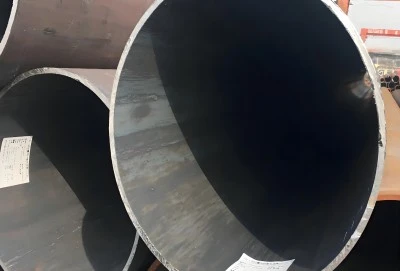
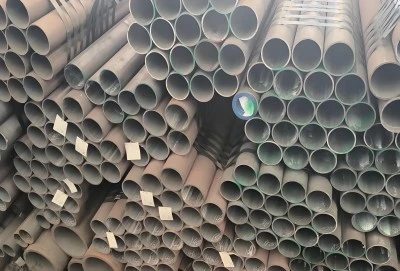
EN 10219 S355J0H Steel Pipe Standards and Specifications
The technical delivery conditions for cold-formed welded structural hollow sections made from fine-grain and non-alloy steels are set by EN10219-1. When looking at this framework, S355J0H fits a clear niche: it combines high structural strength with proven low-temperature toughness, which grades like S355JR can't do.
Chemical and Mechanical Property Benchmarks
The Carbon Equivalent Value (CEV) is tightly controlled by the chemical makeup, with no more than 0.22% carbon and 1.60% manganese, which directly supports reliable field weldability. Mechanically, the EN10219-1 S355J0H pipe has a minimum yield strength of 355 MPa (lower theoretical values apply for thicker walls), a tensile strength range of 470–630 MPa, and a Charpy V-notch impact value of ≥27J at 0°C that must be met. Tolerances for dimensions are based on EN10219-2, and they cover things like straightness, cross-sectional shape accuracy, and outside diameter. An EN 10204 Type 3.1 Mill Test Certificate should be sent with every batch to make sure that the whole material can be tracked, from the heat number to the finished pipe.
How S355J0H Compares to S355JR and S355J2H
Since S355JR doesn't have a set temperature for impact tests, it can't be used for projects where the temperature regularly drops below room temperature. That hole is filled by S355J0H, which can withstand impacts up to 0°C. For projects that will be exposed to temperatures as low as -20°C, like Arctic logistics hubs or pipeline corridors in Siberia, S355J2H is the best upgrade. It has been tested at -20°C. When buying materials for places that are close to being cold, procurement teams should use S355J0H as the normal base and S355J2H as the safest upgrade. They should always check the contract documents to make sure they include the needed test temperature.
Performance Characteristics and Applications of EN 10219 S355J0H Circular Hollow Sections
S355J0H's circular hollow section (CHS) geometry is very good for its structure because it makes it resistant to bending and twisting in all directions. This makes it the best shape for constructions like columns, trusses, and lattices where side loads are hard to predict.
When it comes to structural strength, impact toughness, and weld compatibility, EN10219-1 S355J0H pipe pieces are great for a lot of different tough jobs. In the following situations, this grade always shows its worth:
- Bridge substructures and steel framing: The grade's high yield strength cuts down on the size of the section needed, which lowers the dead load without lowering the safety margins in both mild and cold areas.
- Primary load-bearing frames for industrial buildings: Cold-chain stores and processing plants that work near or below freezing need steel that won't break easily when hit with shock loads or changes in temperature. The J0 impact label is designed to protect against this kind of damage.
- Heavy equipment platforms and crane runways: Overhead handling systems create dynamic impact loads. The ≥27J toughness number at 0°C gives engineers a measurable safety margin that they can use in their structure calculations.
- Outdoor seasonal structures: For projects that will be exposed to big changes in temperature, like from mild summers to harsh winters, it's best to use a material that has been tested at the lower end of that temperature range.
Because of these factors, S355J0H CHS is better than options such as ASTM A500 Grade B (which doesn't have to go through an impact test) and S275 (which has a lower yield strength). The toughness rating alone makes up for the small price increase over base structural grades for buying teams that are comparing choices.
As part of testing and quality control, samples from each production heat are put through tensile testing, Charpy impact testing, and non-destructive weld study using eddy current or ultrasound waves. Third-party inspection at the mill adds an extra level of proof that importers and engineering clients want more and more of.
Comparison and Decision-Making: Choosing the Right Steel Grade for Your Project
The choice between S355J0H, S355J2H, and other options like ASTM A500 comes down to three practical factors: the structure's lowest service temperature, the project standard that applies, and the total cost of procurement over the supply cycle.
EN10219-1 S355J0H pipe meets the EN10219-1 compliance standards for all European and globally harmonized specs, which is very important for projects that need to get a CE mark. Even though ASTM A500 is easy to find in North American markets, it doesn't have the same low-temperature impact certification as EN standards and can't be used in place of those standards on projects. Standardizing on S355J0H makes paperwork easier, lowers the risk of material substitution disputes, and helps buyers keep the same suppliers over time when they are handling supply chains that span multiple regions. You should check with the manufacturer directly about minimum order quantities, lead times, and stock availability, since these things change based on the market.
Procurement Guide: Sourcing EN 10219 S355J0H Circular Hollow Sections
Finding this grade without doing the right research puts you at risk that you could have avoided. A trustworthy supplier should show that their production is certified under EN10219-1, that they have clear records of where they get their raw materials, and that they can keep up consistent output even when they have a lot of orders.
Before agreeing to a seller, you should ask for the following important paperwork:
- EN 10204 Type 3.1 Mill Test Certificate that has the heat number, chemical analysis, and mechanical test results.
- Charpy impact test report confirming that ≥27J at 0°C is true.
- Size inspection report based on EN10219-2.
- ISO 9001 approval for quality management.
- Proof of CE label or a Factory Production Control (FPC) certificate.
An independent agency (SGS, BV, or TÜV) check at the point of production is the best way to make sure that high-value orders are safe. To keep the project on schedule, logistics timelines, port-of-loading options, and export documentation compliance should all be checked early on.
Best Practices and Design Guidelines for Using EN 10219 S355J0H Pipes
Compared to hot-finished options, working with cold-formed hollow sections needs a little more care. The cold-forming process leaves behind some stresses, mostly at the corners of square and rectangular shapes. However, EN10219-1 makes sure that these stresses stay within acceptable limits for the structure. This isn't a big deal for circular sections.
Cracks caused by hydrogen are less likely to happen when EN10219-1 S355J0H pipe is heated before it is welded, especially when the wall thickness is more than 20 mm or the temperature outside is below 5°C. ISO 15614-1 says that Procedure Qualification Records (PQR) and Welding Procedure Specifications (WPS) should be made. Using hot-dip galvanizing, FBE coating, or 3LPE systems to protect against corrosion greatly increases the useful life of things used outside or underground. ISO 9223 says that the corrosivity classification of the operating environment should be taken into account when planning maintenance inspection intervals.
Conclusion
In conclusion, EN10219-1 S355J0H pipe offers a well-documented combination of structural strength, verified cold-temperature toughness, and broad application compatibility under EN10219-1. This grade is a good, standard-compliant material choice for buying teams working in cold places or on projects that need to pass strict impact tests. When you're looking for suppliers, give preference to those who can provide full mill paperwork, heat-traceable material, and expert help throughout the supply cycle. If the temperature is below -20°C, choose S355J2H as the safest upgrade.
FAQ
What is the difference between S355J0H and S355J2H?
According to EN10219-1, both grades are in the S355 high-strength structure family. S355J0H is tested at 0°C (minimum 27J), while S355J2H is tested at -20°C. The Charpy V-notch impact test temperature is the main difference. For projects in very cold places like northern Canada, Siberia, and the Arctic's logistics infrastructure, S355J2H provides a stronger guaranty of toughness. S355J0H is still good for cold places where temperatures don't get below -10°C very often.
How do I verify the quality of S355J0H pipe before purchase?
Ask for an EN 10204 Type 3.1 Mill Test Certificate that lists the chemical make-up, mechanical test results, and Charpy impact data. For full traceability, make sure that the heat number on the certificate fits the marks on the pipe. An independent third-party inspection of the EN10219-1 S355J0H pipe at the mill by a recognized organization gives big or important sales even more peace of mind.
Can S355J0H CHS be hot-dip galvanized?
Of course, but the steel's silicon and phosphorus levels should be compared to the Sandelin curve to make sure the zinc layer is even and sticks well. Before processing, ask for the chemical composition certificate and make sure it's acceptable with the galvanizing contractor.
Is EN 10219-1 S355J0H interchangeable with ASTM A500?
No, they are not the same. They are controlled by various norms that have various mechanical needs. Since ASTM A500 doesn't require impact testing, direct substitution isn't a good idea for projects that need to meet EN10219-1 standards.
Partner With Longma Group for Reliable EN 10219 S355J0H Supply
Since 2003, Longma Group has been making approved structural steel pipe. They sell S355J0H pipe that is backed by ISO 9001, CE, and third-party testing to customers in more than 90 countries. We are a reliable company that makes EN10219-1 S355J0H pipes. We offer WPS/PQR technical help, impact test results, and heat-traceable MTCs. To get a quote, email us at info@longma-group.com or go to longma-group.com.








