
If you're sourcing structural hollow sections for cold-climate infrastructure, the EN10219-1 S355J0H pipe deserves serious attention. This grade is a cold-formed welded structural hollow section built to EN 10219-1, designed specifically to maintain toughness at 0°C — a critical threshold for projects in northern Europe, Canada, Russia, and China's northeastern regions. This guide covers technical specifications, grade comparisons, manufacturing standards, procurement strategy, and real-world applications to help engineering teams make confident, well-documented purchasing decisions.
|
|
|
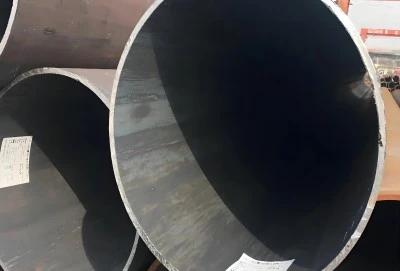
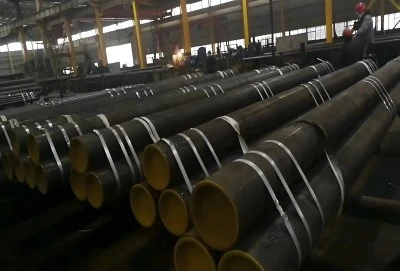
EN 10219-1 S355J0H Pipes: Specifications and Properties
What the Grade Designation Actually Means
By breaking down the name, everything becomes clear. "S" stands for steel used for building. "355" means that the minimum yield strength is 355 MPa. "J0" sets the lowest Charpy impact energy to 27 Joules at 0°C, and "H" confirms the shape of the hollow part. All of these details describe a pipe that is designed to withstand heavy loads and low temperatures in places where brittle cracking is not an option.
Key Mechanical and Chemical Properties
This grade is good for large-span structural work because of its mechanical profile. The yield strength starts at 355 MPa, but the standard says that thicker walls may have slightly lower minimums. Based on the thickness of the wall, the tensile strength is usually between 470 and 630 MPa. The Carbon Equivalent Value (CEV) stays low enough that reliable site welding can usually be done without preheating as long as the carbon content stays below 0.22% and the manganese content stays at 1.60%.
The tolerances for dimensions are based on EN 10219-2 and include the outside diameter, wall thickness, straightness, and mass per unit length. The cold-forming method makes square and rectangular profiles with tight corner radiuses, which is a trait that is valued in exposed ornamental steelwork. Sections come in hollow shapes that are round, square, and rectangular. This gives engineers a lot of design options for things like bridge decks, portal frames, and pipeline supports.
Comparing EN 10219-1 S355J0H with Alternative Steel Grades and Pipes
S355J0H vs. S355J2H and S235JRH
The most frequent question about buying is whether J0H or J2H is enough. The difference is the test temperature. At 0°C, EN10219-1 S355J0H pipe needs 27J, but at -20°C, S355J2H needs the same amount of energy. Moving to J2H gives projects in subarctic areas or where minimum design temperatures drop below -10°C a real safety cushion. S235JRH has a lower yield strength of 235 MPa and doesn't need to be tested for impact, so it should only be used for buildings that are lightly heavy and built in temperate climates.
Cold-formed welded sections like EN10219-1 S355J0H pipe have tighter size tolerances and lower unit costs at large diameters compared to seamless pipes. Stainless steel alternatives offer better corrosion resistance but cost a lot more. For structural hollow parts where coating systems protect against rust, EN10219-1 S355J0H pipe has the best mix of mechanical performance, weldability, and cost-effectiveness.
A comparison with ASTM A500 Grade C, which is a common North American equivalent, shows a similar yield strength (315 MPa at the very least), but it doesn't have the low-temperature impact requirement that EN 10219 does. So, specifying EN10219-1 S355J0H pipe gives a stronger performance guaranty for building projects in cold climates.
Manufacturing Process and Quality Assurance of EN 10219-1 S355J0H Pipes
From Raw Coil to Finished Hollow Section
Hot-rolled steel coil from approved mills is used to start the production process. The strip is rolled into the shape that is needed, and then it is joined together using constant high-frequency induction welding. Right after the weld, the seam is heated to stabilize the heat-affected area and recover its mechanical properties. Before they are released, finished sections go through ultrasonic weld inspection and hydrostatic or non-destructive testing.
Certifications That Matter in B2B Procurement
Real companies have third-party inspection reports from companies like BV, SGS, or TÜV, as well as CE marking under the Construction Products Regulation and ISO 9001 quality management certification. Each pipe has a heat number and a batch code that can be used to find its way back to the original coil. This makes it possible to track all of the materials from the raw steel to the finished product. Manufacturers should provide welding procedure documentation that is in line with EN ISO 15614-1 for projects that need WPS/PQR support.
Longma Group gets its raw materials from well-known Chinese steel mills like Bao Steel, HBIS, and Shagang. Every pipe that is made leaves the factory with a Material Test Certificate (MTC) that lists the chemical makeup, mechanical test results, and Charpy impact values of the pipe. This is the exact paperwork that cold-climate projects need when they accept the pipe.
Procurement Guidance: Sourcing EN 10219-1 S355J0H Large Diameter Pipes
It takes more than a low price to find the right EN10219-1 S355J0H pipe provider. When technical directors look at suppliers, they should make sure that the products are CE-certified, get current Charpy impact test reports at 0°C from a third party, and make sure that the maker keeps heat records that can be tracked. Before committing to a trial order, a video factory audit that includes the forming line, the weld inspection station, and the testing lab gives you a good look at the factory.
Prices depend on the market conditions for raw materials, the difficulty of the wall thickness, the number of orders, and the shipping routes. Lead times for normal large-diameter stock are 3–5 weeks, but they can be up to 6–10 weeks for special wall thicknesses or lengths. When you commit to a certain amount of work, you can get better prices and set times for production. This is especially important for building projects that are completed in stages, where supply consistency is just as important as unit cost.
Since 2003, Longma Group has sold structural hollow sections to customers in more than 90 countries, and each year they make more than a million tons. Our procurement cycle, which includes confirming specifications, video audit, sample testing, trial order, and long-term contract, usually ends in 4–10 weeks, which is the same amount of time that most engineering procurement teams work.
Applications and Benefits of EN 10219-1 S355J0H Large Diameter Pipes in Construction and Infrastructure
Where This Grade Performs Best
Large-diameter EN10219-1 S355J0H pipe is used in a lot of different tough structural situations. Because the grade is very strong for its weight, bridge chord members and lateral bracing can lower dead loads without lowering safety standards. It's used in industrial building main frames to span wide bays with fewer supports in the middle. It has been shown to be impact-resistant under dynamic loads, which makes it useful for crane booms, conveyor gantries, and heavy equipment platforms. In northern climates where temperatures regularly drop to or below 0°C, cold-chain logistics facilities make this grade clear to avoid brittle fractures during installation and service.
Lifecycle economics can be used to measure these success traits. For the same loads, thinner walls use less steel, which lowers the cost of both the materials and the work that goes into making them. The grade's ability to join cuts down on the need for preheating, which saves time and money. Long-term, well-coated EN10219-1 S355J0H pipe sections that are kept in controlled environments have service lives of more than 50 years with regular inspections.
Conclusion
In cold climates and high-load structure situations, the EN10219-1 S355J0H pipe plays a clear role. It has a 0°C impact guaranty, a controlled chemical makeup, and precise dimensions according to EN 10219-2. These features make it a reliable standard for engineers who can't afford for materials to fail in the field. When the temperature drops below -10°C, the S355J2H provides a step-by-step improvement path from the same product line. When experienced technical directors choose a supplier that has full material traceability, third-party certification, and documented welding procedure support, they get rid of the remaining procurement risk that they are entitled to look closely at.
FAQ
What is the difference between S355J0H and S355J2H?
When it comes to bending strength, both grades are 355 MPa and are in the same EN 10219-1 family. The difference is the temperature of the impact test. It is necessary for the EN10219-1 S355J0H pipe to have a minimum 27J Charpy impact energy at 0°C. For subarctic or deep-freeze applications, S355J2H needs the same 27J but is tested at -20°C, which gives it a bigger safety margin. It is important for procurement teams to check that the project plan includes the minimum design temperature before choosing between the two.
How do I verify a supplier's quality and certifications?
Ask for the CE Declaration of Performance, the ISO 9001 certificate, and Charpy impact test results from a reputable inspection body. Ask to see examples of MTCs that have heat numbers, chemistry analyzes, and mechanical test findings. For extra peace of mind, a video factory check that includes the weld inspection and testing units is available.
What factors affect pricing and lead time?
Market factors for raw materials, wall thickness, pipe diameter, order volume, and logistics at the location all affect the end price. Custom sizes take longer to ship than standard stock sizes. Most of the time, bigger orders get better unit prices and specialized production slots.
Can the supplier provide WPS/PQR documentation?
Manufacturers that are qualified can provide Welding Procedure Specifications and Procedure Qualification Records that are in line with EN ISO 15614-1. These can help the welding teams on-site meet the standards for project acceptance.
Partner With Longma Group for Your Next Cold-Climate Structural Project
Since 2003, Longma Group has been making certified structural hollow sections. They sell verified S355J0H pipe and J2H upgrade options to engineering contractors in over 90 countries. Each pipe comes with full MTC documentation, third-party impact test reports, and the ability to track heat. We are a reliable EN10219-1 S355J0H pipe seller that is certified by both CE and ISO 9001. We can help you with your entire buying process, from the specification stage to the long-term contract stage. To get a quote or talk about your project needs, email our expert team at info@longma-group.com or visit longma-group.com.








