
When procurement engineers ask about welding an EN10219-1 S355JRH pipe, the answers matter far more than most realize. This cold-formed welded structural hollow section carries a minimum yield strength of 355 MPa and meets EN 10219-1 mechanical requirements, making it a reliable choice for load-bearing steel frameworks. However, achieving a sound, inspection-ready weld on this grade demands deliberate attention to procedure qualification, heat input control, and post-weld verification. Getting these details right protects your project timeline, satisfies owner and supervisor sign-off, and eliminates costly rework.
|
|
|
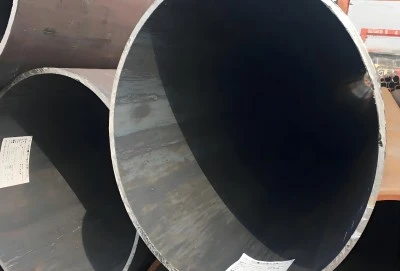
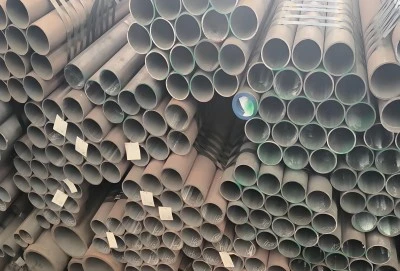
Understanding EN 10219 S355JRH Pipe and Its Welding Importance
Just the name itself tells a clear story. The letter "S355" proves that the minimum yield strength is 355 MPa, the letter "JR" says that the Charpy V-notch impact energy is 27 J at room temperature (+20°C), and the letter "H" says that it is a hollow piece. The tensile strength is between 470 and 630 MPa, and it changes based on the standard version and wall thickness. The steel's chemical make-up—Carbon ≤ 0.22%, Manganese ≤ 1.60%, Phosphorus ≤ 0.040%, and Sulfur ≤ 0.040%—maintains low carbon equivalent values. This makes it easier to weld without needing complicated preheating plans for most wall thicknesses.
When you cold-form something, you leave some force in the cross-section. Engineers who know about this know that the limits for concavity, convexity, and squareness set out in EN 10219-2 have a direct effect on how well the joints fit together. When a pipe is within tight tolerances, the root gaps stay the same. This means that weld penetration is reliable and there are fewer failed joints during NDT. This is why buying hollow parts from a company that strictly controls dimensions is not a nice-to-have, it's a structural must.
Welding Standards and Processes Relevant to EN 10219 S355JRH Pipes
Qualifying the Process and the Welder
The framework for welding at this grade is based on two standards. EN ISO 9606-1 covers worker qualification, while EN ISO 15614-1 covers welding process qualification (WPS/PQR). Before production welding can start on any CE-marked structural assembly, both of these papers must be in order. EN 1011-2 gives extra information on how to arc weld ferritic steels and talks about how to figure out the preheat using carbon equivalent (CE) methods that change based on the thickness of the wall and the amount of heat applied.
When the temperature outside is above 5°C and the wall thickness is less than 20 mm, warming is usually not needed. But building projects in Eastern Europe or the Middle East might have big changes in temperature, so checking the CE values on the Material Test Certificate (MTC) before writing the WPS keeps inspectors from being surprised.
Welding Technique Selection
Three methods work fairly well for making EN10219-1 S355JRH pipe. Here are the main methods that structure makers use:
- MIG/MAG (GMAW): This is the most common way to make rectangular and square hollow pieces in a workshop. The 355 MPa yield strength level is reached by wire electrodes that match ER70S-6 or a similar. It's easy to change the travel speed, and the process works well with robotic welding cells.
- TIG (GTAW): This type of welding is only used for root passes on important joints and thinner-walled circle parts where accuracy and surface quality are important. The low heat input makes it less likely that thin parts will bend.
- SMAW (Stick): With a SMAW (Stick), you can join and fix things on the job site. Standard choice is E7018 low-hydrogen electrodes. Drying them in an oven at 120°C before use stops hydrogen-induced breaking, which can happen with higher-strength ferritic steels.
Selecting the right process is only part of the equation. Pre-weld preparation includes beveling to the right included angle, wire-brushing mill scale off of joint faces, and degreasing with acetone. These steps get rid of the sources of contamination that cause porosity and lack-of-fusion defects that show up later in ultrasonic testing.
Common Welding Challenges and How to Overcome Them
Most of the time, makers don't think about how much heat they put in. Too high of temperatures between passes, above 250°C, soften the heat-affected zone, lower the impact properties, and cause distortions in the dimensions that make final assembly hard. Using contact thermometers to check on things between passes is a cheap and proven way to do it.
Cracks caused by hydrogen are the biggest danger for larger wall parts. The solution is easy: only use certified low-hydrogen consumables, store them properly, and heat them up to 150°C when the wall thickness is more than 25 mm or the temperature outside drops below 5°C. A Polish structural fabricator documented a case where they used a written preheat procedure for their EN10219-1 S355JRH pipe column splices. This cut the number of weld repair cases from 8% to less than 1% during a single production run, which saved them time and money on labor.
Distortion management in box columns and rectangular hollow sections benefits from balanced welding sequences. Thermal shrinkage is even when we alternate weld passes on opposite sides of a joint. A simple but often forgotten step before full-pass welding is to tack at controlled intervals.
Comparing EN 10219 S355JRH Pipe Welding to Other Pipe Types
Knowing where S355JRH stands in relation to grades next to it helps buying teams make smart decisions about important things. The main changes are shown in the table below:
| Grade / Standard | Forming | Min. Yield (MPa) | Impact Test Temp. | Typical Preheat Need |
|---|---|---|---|---|
| S235JRH / EN 10219 | Cold | 235 | +20°C | Rarely required |
| S355JRH / EN 10219 | Cold | 355 | +20°C | Thickness-dependent |
| S355NH / EN 10210 | Hot-finished | 355 | +20°C | Lower residual stress |
| ASTM A500 Grade B | Cold | 317 | Not specified | Project-specific |
When EN 10210 sections are hot-finished, they have lower internal residual stresses, which can be helpful when they are being loaded dynamically or over time. But the EN10219-1 S355JRH pipe is easier to make and has the same minimum static yield strength, so it is the best choice for most industrial building frames, equipment platforms, and transportation structures where wear loading is not the main design factor.
Procurement Insights and Supplier Guidance for EN 10219 S355JRH Pipes
When you buy structural steel, your choices have effects that last longer than the purchase order. Before making a deal with a seller, make sure you have these pieces of paperwork:
- CE marking and EN 10219-1 Declaration of Performance — for structural use in EU-regulated projects, you need to have both CE marking and an EN 10219-1 Declaration of Performance.
- Mill Test Certificate (MTC) / EN 10204 3.1 or 3.2 — checking the chemical make-up, mechanical test results, and the ability to track the heat number.
- Third-party inspection reports — like those from SGS, TÜV, or Bureau Veritas, at the mill add an extra layer of trust when you can't check out the facility yourself.
- Dimensional inspection records per EN 10219-2 — proving that the tolerances for wall thickness, outer diameter, and straightness are met.
These documents are not bureaucratic formalities. They are the evidence chain that allows your quality team, the project owner, and the local building authority to accept the material without dispute.
Beyond documentation, supplier delivery capability determines whether your project stays on schedule. If a seller has popular sizes in stock, they can ship within 15 to 30 days. For custom wall thicknesses or large tonnage, confirming production slot availability at the time of inquiry — not after signing the contract — prevents the schedule surprises that erode project margins.
Conclusion
To successfully weld EN10219-1 S355JRH pipe, you need three things: high-quality materials from a source that can be tracked, a qualified welding process that is matched to the wall thickness and site conditions, and NDT methods that check the weld after it's been made. Purchasing teams can get rid of the material uncertainty that leads to most weld defect claims when they prioritize CE-certified pipe with full MTC documentation. Working with a maker who has experience making things that conform to EN 10219-1 guaranties consistent sizes, which directly affects the quality of the fit-up on the manufacturing floor.
FAQ
What welding process works best for S355JRH hollow sections?
MIG/MAG is the most common way to make things in a workshop because it is fast and can be used on both square and rectangular shapes. TIG is good for making precise root passes on smaller circle pieces. SMAW with E7018 low-hydrogen electrodes works well for repair and welding on-site.
Does welding affect the corrosion resistance of S355JRH pipe?
The heat-affected zone can change the texture in that area. After welding, rust protection can be restored by hot-dip galvanizing or FBE treatment. For galvanizing, make sure that the amounts of Silicon and Phosphorus stay within the allowed ranges so that the zinc doesn't stick unevenly.
What certifications should a reliable S355JRH supplier hold?
Check for the EN 10219-1 CE mark, the ISO 9001 quality management certificate, and the EN 10204 3.1 MTC paperwork. Third-party testing help from SGS or TÜV adds a quality layer that can be checked.
Can S355JRH be used in places that are below zero?
Impact tests on S355JRH are done at +20°C. For projects that will be done in temperatures below zero, you should choose S355J0H (tested at 0°C) or S355J2H (tested at -20°C) to make sure the steel is tough enough.
How do tolerances under EN 10219-2 affect welding?
Tighter tolerances on dimensions mean that root gaps and joint fit-up are more consistent, which directly lowers porosity and flaws in partial fusion. Along with the MTC, you should always ask for dimensional inspection records.
Partner with Longma Group for Certified EN 10219 S355JRH Pipe
Since 2003, Longma Group has been making structure hollow parts that are CE-certified and have been sent to over 90 countries with proof of quality. We are a reliable provider of EN10219-1 S355JRH pipes, and we offer full MTC documentation, third-party inspection support, and low FOB prices with tiered volume discounts. Contact our technical team at info@longma-group.com or visit longma-group.com to request specifications, samples, or a project quotation. Reliable delivery within 15–30 days keeps your schedule intact.