
When picking EN10210 pipe for your structural engineering project, the choice between seamless and welded pipes is quite important. In particular, it affects how effectively they operate. It also has an effect on their price. Additionally, it has an effect on how long the job will take. Seamless pipes work well for high-pressure situations. They are also great for essential elements of a building. Welded pipes, on the other hand, are less expensive for large projects. So, you should base your choice on what the project needs. These contain ratings for pressure. They also need to be the right size. The budget is the last thing that matters. You can make better choices about materials if you know these basic differences. This is true for moving oil and gas. It also applies to manufacturing items in factories and establishing platforms in the ocean.
|
|
|
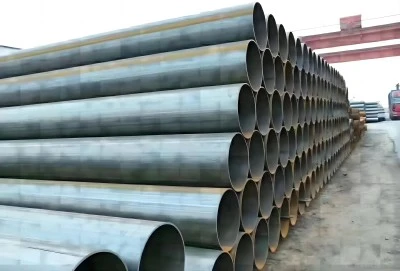
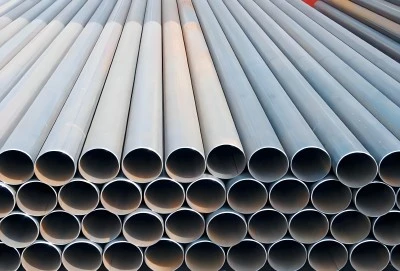
Understanding EN10210 Standard and Its Applications
The EN10210 standard tells you how to make hot-finished structural hollow parts. These are made by manufacturers out of fine-grain, non-alloy steels. Because of this, these structural steel products are particularly useful in many areas. For instance, builders use them to create platforms in the ocean. They also utilize them to build pipelines.
There are three primary kinds of steel in EN10210. S235, S275, and S355 are these. Each one has its unique set of mechanical properties. The standard encompasses both ways of making things that are seamless and those that are welded. The exterior diameter also changes a lot. It may be anything from three to eighty inches long. Also, the thickness of the wall might be anything from SCH10 to SCH160.
Key applications include:
- Oil and gas transportation systems.
- Water supply infrastructure.
- Bridge and building structural frameworks.
- Offshore platform construction.
- Industrial manufacturing equipment.
If you're in charge of projects that need structural pieces that can hold weight, take attention. You need to know how these apps function, especially if they have size constraints. You can pick the proper EN10210 pipe materials using this information.
Manufacturing Process: Seamless vs. Welded Construction
Seamless Pipe ProductionHot-finished manufacturing is used to make seamless hollow pieces. This method requires making holes in solid steel billets. So, this makes steel tubes that are always round and don't have any longitudinal welds. Because of this, this procedure makes the walls the same thickness all the way around. It also makes sure that the structure is stronger.
The manufacturing steps involve:
- Heating steel billets to rolling temperature (1200-1300°C).
- Piercing through rotary piercing mills.
- Hot rolling to achieve final dimensions.
- Heat treatment for enhanced mechanical properties.
- Quality inspection and dimensional verification.
This robust process eliminates the seam. Therefore, the pipe has equal strength at all points. This is vital for high-stress environments.
Welded Pipe Manufacturing
Steel strips or plates are used to make welded structural tubes. These are shaped into round or square profiles by manufacturers. Then, the lengthy seam is welded with high frequency. Or, it goes via submerged arc welding.
Production sequence includes:
- Steel plate or strip preparation.
- Forming through roll forming machines.
- Welding seam creation using advanced techniques.
- Heat treatment for stress relief.
- Dimensional calibration and testing.
If your project demands rapid delivery timelines with standard specifications, consider welded options. Welded construction typically offers shorter production cycles. This speed can be a project saver.
Performance Characteristics Comparison
Mechanical Properties AnalysisComparing the data reveals distinct differences.
Seamless Pipe Performance Data:
- Yield strength: 235-355 MPa (depending on grade).
- Tensile strength: 360-510 MPa.
- Elongation: 20-26%.
- Impact toughness: 27J at -20°C (S355 grade).
- Uniform wall thickness variation: ±5%.
Welded Pipe Performance Data:
- Yield strength: 235-355 MPa (equivalent to seamless).
- Tensile strength: 360-510 MPa.
- Elongation: 20-25%.
- Impact toughness: 27J at -20°C.
- Wall thickness tolerance: ±7.5%.
While yield strengths are similar, seamless pipes often offer better elongation. This suggests better ductility.
Pressure Rating Capabilities
Seamless hollow portions are better at withstanding pressure. This is because there are no longitudinal welds. Test data shows that seamless pipes can sustain higher internal pressures. They can hold 15 to 20 percent more than welded options with the same wall thickness.
Seamless alternatives give offshore platform building that needs high-pressure fluid systems a bigger safety margin. Also, they are reliable in terms of operations. This extra space can stop big problems from happening.
Cost Analysis and Budget Considerations
Initial Investment ComparisonSeamless EN10210 pipe products typically cost more. They are usually 20-35% more expensive than welded equivalents. This is due to complex manufacturing processes. However, lifecycle cost analysis reveals different perspectives.
Seamless Cost Factors:
- Higher raw material utilization efficiency.
- Extended service life in demanding applications.
- Reduced maintenance requirements.
- Lower failure risk in critical systems.
Welded Cost Benefits:
- Lower initial procurement costs.
- Faster delivery schedules.
- Standardized dimensions readily available.
- Suitable for large-volume projects.
If your project involves extensive structural frameworks with standard loading conditions, welded options deliver excellent value propositions. You save money upfront without sacrificing necessary strength.
Long-term Economic Impact
Projects in corrosive environments benefit from seamless pipe investments. High-stress applications also benefit. The absence of weld zones reduces corrosion vulnerability. Consequently, this extends operational lifespans by 25-40% in marine environments. Therefore, the higher initial cost pays off over time.
Dimensional Accuracy and Quality Standards
Tolerance SpecificationsSeamless manufacturing achieves tighter dimensional tolerances. This precision is often necessary for specialized equipment.
- Outer diameter tolerance: ±0.5%.
- Wall thickness variation: ±5%.
- Straightness: 0.2% of length.
- Ovality: <1% of nominal diameter.
Welded production maintains acceptable tolerances for general use.
- Outer diameter tolerance: ±0.75%.
- Wall thickness variation: ±7.5%.
- Straightness: 0.3% of length.
- Ovality: <1.5% of nominal diameter.
Surface Quality Assessment
Seamless pipes exhibit uniform surface conditions. They lack weld seam markings. This characteristic proves advantageous for architectural applications. It is also beneficial for precision machining operations.
If your specifications require exceptional surface finish, choose seamless. For aesthetic or functional purposes, seamless options align better with project requirements.
Application-Specific Recommendations
Oil and Gas Transportation ProjectsHigh-pressure pipeline systems benefit significantly from seamless construction. The continuous steel structure eliminates potential failure points. Specifically, it removes risks at weld zones. This is crucial for hydrocarbon transportation safety.
Seamless Advantages:
- Enhanced burst pressure ratings.
- Improved fatigue resistance.
- Superior corrosion performance.
- Reduced inspection requirements.
If your project involves critical pipeline infrastructure with pressures exceeding 1000 PSI, seamless EN10210 pipe provides optimal performance characteristics.
Structural Engineering Applications
Building frameworks and bridge construction typically utilize welded hollow sections effectively. The load-bearing requirements align well with welded pipe capabilities. Simultaneously, they maintain cost efficiency.
Welded Benefits:
- Cost-effective for large quantities.
- Standardized connection details.
- Adequate strength for design loads.
- Faster project completion.
Offshore Platform Construction
Marine environments demand superior corrosion resistance. They also require structural reliability. Seamless pipes excel in these challenging conditions. They achieve this through enhanced metallurgical properties. Furthermore, the absence of weld-affected zones prevents localized corrosion.
Delivery Times and Stock Availability
Standard Stock OptionsWelded EN10210 pipe maintains higher stock availability across global markets. Standard sizes typically ship within 7-14 days. Established manufacturers like Longma Group ensure this speed.
Seamless variants require longer lead times:
- Standard sizes: 14-21 days.
- Custom specifications: 28-45 days.
- Large diameter options: 35-60 days.
Project Timeline Considerations
Rush deliveries favor welded construction. This is due to streamlined manufacturing processes. However, seamless options justify extended timelines. They offer superior performance in critical applications.
If your project schedule allows flexibility, consider seamless. For enhanced performance characteristics, seamless pipes deliver long-term benefits. These benefits often exceed initial timeline investments.
Quality Control and Testing Requirements
Inspection Protocols
Both seamless and welded EN10210 pipe products undergo rigorous testing procedures. Manufacturers ensure compliance with safety standards.
Standard Tests Include:
- Chemical composition analysis.
- Mechanical property verification.
- Dimensional inspection.
- Non-destructive testing (NDT).
- Hydrostatic pressure testing.
Certification Documentation
Comprehensive documentation packages are essential. These include Material Test Certificates (MTC). They also include Manufacturing Procedure Specifications (MPS). Finally, Inspection Test Plans (ITP) are standard. These documents ensure compliance with international standards. They also verify adherence to project specifications.
Seamless pipes typically require additional ultrasonic testing. This verifies wall thickness. Conversely, welded variants undergo specific weld quality assessments.
Environmental Impact and Sustainability
Manufacturing Energy ConsumptionSeamless production requires more energy. Specifically, it uses approximately 15-20% more due to intensive heating and forming processes. However, extended service life often compensates for this. The initial energy investments pay off through reduced replacement cycles.
Welded manufacturing demonstrates lower immediate environmental impact. However, it may require more frequent replacements in demanding applications. This increases the long-term footprint.
Recycling and End-of-Life Considerations
Both seamless and welded EN10210 pipe products maintain excellent recyclability. Steel content exceeds 95% recyclability rates. This supports sustainable construction practices across all applications. Choosing steel is inherently a green choice.
Partner with Longma Group for Superior EN10210 Pipe Solutions
Longma Group stands as your trusted EN10210 pipe manufacturer. We deliver exceptional quality seamless and welded structural hollow sections. We have done so since 2003. Our comprehensive inventory includes S235, S275, and S355 grades. We offer dimensions ranging from 3" to 80" outer diameter. With over 50-150 tons in stock, we are ready. Furthermore, with delivery capabilities within 7 days, we support your project timelines effectively. Contact our technical specialists at info@longma-group.com. Discuss your specific requirements today. Receive detailed quotations for your upcoming projects.
Contact Longma
The choice between seamless and welded EN10210 pipe depends on specific project requirements. You must balance performance, cost, and timeline considerations. Seamless options excel in high-pressure, critical applications. In these cases, superior mechanical properties justify higher initial investments. Conversely, welded variants provide cost-effective solutions. They are ideal for standard structural applications with adequate performance characteristics. Both options meet EN10210 standards. They serve distinct project needs across oil and gas, construction, and industrial sectors. Successful material selection requires careful evaluation. You must assess application demands. You must also consider budget constraints. Finally, evaluate long-term performance expectations to optimize project outcomes.








