
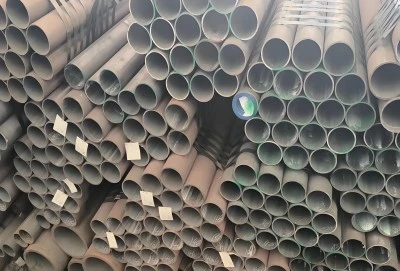
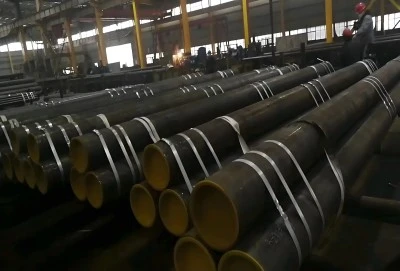
If you operate on steel buildings in cold climates – cold storage, energy pipelines or large industrial frames in the north – you already know the importance of the proper pipe grade. The EN10219-1 S355J0H pipe, a cold-formed welded structural hollow section, is specifically designed for these applications. It has a minimum yield strength of 355 MPa and confirmed impact toughness of at least 27 Joules at 0°C. This grade is a good choice when brittle fracture is a genuine issue. In this post, we cover its essential specs, welding procedures, fabrication tips, and procurement info to assist you in making confident sourcing decisions.
|
|
|
Understanding EN10219-1 S355J0H Pipe Specifications and Properties
Chemical Composition and Weldability
The low Carbon Equivalent Value (CEV) of S355J0H makes it possible to do effective field welding with minimum preheating. It contains maximum 0.22% carbon and maximum 1.60% manganese. This regulated chemistry reduces the tendency for hydrogen caused cracking. This is especially true for thick-walled elements utilised in structural frames and crane runways.
Mechanical Properties That Matter
The tensile strength of the pipe is between 470 and 630 MPa with a yield strength from 355 MPa. However, the standard does permit somewhat lower minimum strengths for thicker portions. It is different from S355JR in that it has a guarantyd 0°C Charpy impact value of ≥27J. S355JR has no guarantyd impact temperature. This need for toughness affects project acceptance in Sweden, Norway or Canada's northern territories directly.
Dimensional Tolerances Under EN 10219-2
According to EN 10219-2 permissible ranges are available for wall thickness, outside diameter, straightness and mass. The tight tolerances of square and rectangular hollow sections (SHS/RHS) make fit up predictable and reduce repair on assembled products. This stability is a huge time saver on the working site, especially for large frames or moveable cold storage structures with many joints that need to align.
Welding Challenges and Best Practices for S355J0H Hollow Sections
Choosing the Right Welding Process
MIG (GMAW) welding is the most common method used for welding S355J0H structural parts. It gives good deposition rates and uniform penetration on walls 3 mm and above. The preferred process for fine root passes on pipe junctions with heavier walls is TIG (GTAW). The flux-cored arc welding (FCAW) is improved when working outside in cold weather as it is not bothered by the wind and yet meets the filler metal specifications of EN ISO 14341 or AWS A5.18.
Pre-Weld Preparation and Joint Design
Surface cleanliness can't be negotiated. The quality of the weld of EN10219-1 S355J0H pipe is affected by mill scale, wetness, and cutting waste. Before you start welding, you should grind the weld area to make the metal shine and compare the joint shape to your approved WPS. When it gets below 5°C outside, which can happen in places like Novosibirsk or northern Alberta, the base material needs to be heated to at least 50–75°C for wall widths above 20 mm, according to EN ISO 13916 recommendations.
Post-Weld Quality Checks
Compliance checks Welds: ultrasonic testing (UT) or radiographic testing (RT) for crucial butt joints and visual inspection (VT) for all fillet welds according to EN ISO 17637 after welding. Include the weld inspection report with your project paperwork package. Before you place an order, be sure that your provider has the ability to provide WPS/PQR assistance if you have a project that requires PQR (Procedure Qualification Record) approval. This can cut weeks off project approval processes.
Fabrication Tips to Optimize Structural Integrity and Efficiency
Cutting and Edge Preparation
Both plasma cutting and laser cutting can make crisp lines on S355J0H hollow parts without adding too many heat affected zones. If you cut something manually, use a cold saw instead of an abrasive disc to prevent the cut face from hardening. After cutting the parts, use a grinder to smooth the edges and make sure they are square before fitting them together. In a tight joint a 1-2mm error in angle on a cut end is enough to make the root gap too large to weld.
Bending and Forming Considerations
Cold bending of S355J0H is possible at normal structural bend radii, which are typically ≥3× for CHS sections. But if the radii are reduced the wall may become thin and crack at the outer arc. For safety-critical bends in cold-chain support systems or pipe racks, use mandrel bending and inspect the wall thickness of the bend after it is made. For impact properties, do not flame straighten unless a heat treatment professional recommends it.
Surface Protection and Coating
Compared to normal construction steel, S355J0H does not provide any added corrosion protection. If the work is to be done outdoors or in the Arctic, consider a 3LPE (three-layer polyethylene) or an FBE (fusion-bonded epoxy) coating. Hot-dip galvanising can be used, however the silicon and phosphorus content must remain within the limits of the Sandelin curve to maintain a strong zinc bond. Give us coating needs with your order. Adding protection after the fact is more expensive and takes longer.
Comparing S355J0H with Alternative Structural Pipe Grades
S355J0H vs. S355J2H
The difference in real life is the impact test temperature: J0 certifies 27J at 0°C, J2H certifies 27J at -20°C. S355J2H is the safer choice for projects in regions where the plan temperatures go below -10°C, for example northern Canada or inland Russia. The project needs frequently dictate this choice. The use of J2H instead of J0H does not damage the construction as the yield and tensile strength limits are the same for both grades, and adds a little to the cost.
S355J0H vs. ASTM A500 Grade C
ASTM A500 grade C minimum yield 317 MPa but no Charpy influence. For projects in North America following AISC design rules and requiring toughness in cold regions, EN10219-1 S355J0H pipe S355J0H is a more directly related performance level. European engineering companies designing wind farm towers and modular LNG facilities in North America are increasingly specifying EN grades to match their design packages.
Welded vs. Seamless Hollow Sections
Welded and cold formed hollow sections complying with EN 10219-1 are suitable for most construction requirements and are competitively priced. EN 10210 Seamless pipes are more expensive and usually only needed if there is a high internal pressure or wear stress. Welded hollow sections are the norm for building frames, cold storage racks and pipe supports and are used in fabrication shops around the world all the time.
Procurement Insights and Supplier Selection
Certifications and Quality Traceability
Anyone that says they can supply reliable S355J0H pipes must have third-party inspection reports from respected organisations, CE marking according to EN 10219-1, and ISO 9001 quality management approval. In addition to licensing, you should also question if each pipe has its unique heat number and if it can be traced to a certain batch. This is critical for long term projects because supplies to the site happen across several months. Should a quality problem occur after installation, it is crucial to be able to rapidly trace it back to the initial mill heat.
Evaluating Production Capacity and Lead Times
Structural hollow section projects in the cold-chain and building sectors sometimes have tight deadlines. See if your vendor has a good inventory of the standard sizes (OD 100-500 mm, wall thickness 6-20 mm) or can commit to production slots that fit your project schedule. If a supplier can handle modifications to the project’s quantities in the middle of a project without any issues, then it handles more than a million tonnes a year, like Longma Group.
Documentation and Technical Support
Ask for the full documentation package before you place your first order: It is supplied with ITP, measurement inspection records, MTC according to EN 10204 3.1 and Charpy impact test results. Suppliers who can offer WPS/PQR guidance and professional support in two languages, for example English and Russian, make the project approval process simpler and accelerate the whole process from specification confirmation to first shipment.
Conclusion
The EN10219-1 S355J0H pipe provides an excellent balance of high structural strength and demonstrated cold temperature durability. This makes it a solid option for structural hollow section applications in tough situations. Whether the material performs as intended over its service life depends on the quality of its preparation for welding, the actual welding process, and the quality of the surface protection. When procurement teams are looking at suppliers, traceability, number of certifications and amount of expert advice is just as crucial as price. When all of these things come together, it’s easier to plan when a project will be completed, which is critical for both budgets and safety.
FAQ
What is the minimum impact energy for S355J0H at 0°C?
This number is for standard continuous test samples. For your specific heat and delivery conditions, you should always check the Material Test Certificate for the actual test results.
Can S355J0H pipe be used at temperatures below −10°C?
S355J0H is approved for use at 0°C. The right upgrade for design temperatures below -10°C is S355J2H, which is tested at -20°C. In northern Europe and Canada, many project specifications say that J2H is the minimum grade for exposed structural members that will be used in the winter.
Which welding process works best for S355J0H hollow sections?
Most jobs in the shop and on the job site can be done with MIG welding (GMAW). When there is a lot of wind outside, FCAW works better. For root passes on thicker wall joints, TIG is better. For safety-critical structural connections in particular, all procedures should refer to an approved WPS with a written PQR.
Does S355J0H require post-weld heat treatment (PWHT)?
In most cases, PWHT is not needed for S355J0H at normal wall thicknesses for structures. The project engineer may, however, order a stress-relief heat treatment at 580–620°C for walls thicker than 25 mm or joints that are under a lot of pressure. This is done to reduce any residual stresses.
What documentation should I request from an S355J0H pipe supplier?
Ask for an EN 10204 3.1 Material Test Certificate, a Charpy impact report, a record of the dimensions checked, a heat number that can be tracked, a CE declaration of performance, and an ISO 9001 certificate. For links that have been welded, also ask for any WPS/PQR paperwork that is available.
Partner with Longma Group for Your Next S355J0H Project
From 2003, Longma Group has been producing ERW and LSAW steel pipes. They produce more than a million tonnes of them every year, and export them to more than 90 nations. You may be assured that all deliveries are from a certified EN10219-1 S355J0H pipe supplier with full heat traceability, third party impact test reports, CE certification and ISO 9001 compliance. Our technical staff provides WPS/PQR assistance and documentation in English to keep your project moving forward. Send us an email at info@longma-group.com or visit longma-group.com now for a price or sample.