
One of the most common and most important decisions a procurement engineer has to make is the choosing of the right grade of cold-formed structural hollow sections for load-bearing applications. The two most commonly used are S355JRH and S355J2H. Both grades are covered by EN10219-1, both have minimum yield strength of 355 MPa, and both are supplied in circular, square and rectangular profiles. But they differ in one attribute that can influence whether your construction passes inspection in a cold-climate region or fails under impact stress. The post outlines those distinctions clearly so your next purchase decision is based on reality not speculation when selecting EN10219-1 S355JRH pipe.
|
|
|
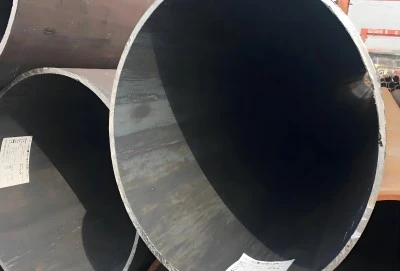
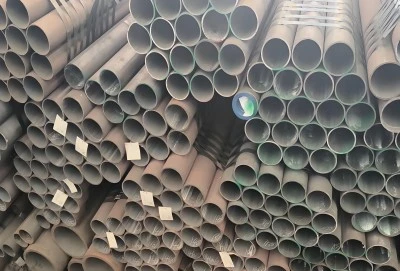
Overview of EN10219-1 S355JRH and S355J2H Pipes
EN10219-1 specifies regulations for cold formed welded structural hollow sections of fine grain and non-alloy steels. Most of these pipes are created by high-frequency resistance welding. They are utilised extensively for the construction of beams, equipment platforms, industrial frames and bridge railings.
What the Grade Designations Mean?
Each grade has a line of letters that has a defined meaning. "S355" indicates a minimum yield strength of 355 MPa. The middle letters "JR" or "J2" refer to the Charpy V-notch impact measuring temperature. The “H” following EN10219 means the object is a hollow part.
Mechanical Properties at a Glance
The minimum yield strength is 355 MPa for both classes and tensile strength is in the range of 470 to 630 MPa. Depending on wall thickness the grades can be stretched from 20 to 22%. The only difference mechanically is the temperature at which the impact test is done. S355JRH is tested at +20°C. This is normal temperature. S355J2H is tested at -20°C. This indicates it can be utilised for structures that are below zero degrees with EN10219-1 S355JRH pipe.
Dimensional Standards and Profiles
Dimensions for both grades are the same and governed by EN10219-2. This standard establishes the limits for outside diameter, wall thickness, length, straightness and mass. Profiles are available in three types: circular hollow sections (CHS), square hollow sections (SHS) and rectangular hollow sections (RHS). Both grades can be employed in the sense of geometry instead of each other.
Technical Differences Between S355JRH and S355J2H Pipes
The grades are different on two levels: the settings for checking impact toughness and the limits for chemical composition.
Impact Toughness and Temperature Rating
At +20°C, S355JRH needs a Charpy impact energy of at least 27 Joules. At −20°C, it needs the same 27 Joules. This 40-degree difference in test temperature shows a real difference in how tough steel is when it's cold outside. For projects in Eastern Europe, Scandinavia, or high places where it gets very cold in the winter, stating S355JRH when S355J2H is needed presents a risk for safety and compliance.
Chemical Composition Differences
The chemistry fingerprints are like each other, but not exactly the same. To get the toughness needed at -20°C, S355J2H has a tighter carbon equivalent limit. Here are the most important chemistry limits set by EN10219-1:
- Carbon (max): 0.22% for both grades, though S355J2H mill practice often targets lower carbon to control toughness.
- Manganese (max): 1.60% for both grades.
- Phosphorus (max): 0.040% for S355JRH; 0.030% for S355J2H — a tighter limit that reduces temper brittleness.
- Sulfur (max): 0.040% for S355JRH; 0.030% for S355J2H.
These stricter rules on phosphorus and sulfur in S355J2H are not just for looks. They directly support the material's ability to take in energy at temperatures below zero without breaking easily.
Manufacturing and Quality Control
Both grades are cold formed and welded and both have to meet the EN10219-2 specifications for size. For S355J2H the MTC should include more details about heat treatment and a more rigorous impact test. MTC should have impact test results for S355J2H at -20 degrees C. The test for S355JRH is performed at +20 °C.
Practical Implications for Structural and Construction Applications
When you know where each grade works best, you can avoid over-specification and the costs that come with it.
Where S355JRH Performs Well?
S355JRH is the perfect material to utilise in typical building jobs in mild climates. It can be utilised for industrial stores, equipment platforms, conveyor supports, general building frames and automobile structures in moderate weather zones. It has been shown to be easily weldable with 355 MPa filler metals by MIG, TIG or SAW processes. S355JRH gives you the structural performance you require at a reduced cost for projects in the Middle East, Southeast Asia or mild regions of Eastern Europe.
Where S355J2H Is the Right Specification?
S355J2H is used in projects such as cold storage facilities, bridges for winter climates and secondary offshore buildings in the northern latitudes, and pedestrian paths in places prone to frost. In the colder sections of the country the -20C impact certificate is not an optional addition, it is a legal requirement for safety reasons. Using S355JRH in such scenarios may pass dimensional inspection but will fail the impact toughness clause during 3rd party audits.
Comparison with ASTM A513 and API 5L
ASTM A513 covers electric-resistance-welded carbon steel mechanical tubing, however it does not need structural impact testing. However, EN10219-1 grades specify minimum impact energy at specified temperatures and these grades are the best choice for permitted structural hollow sections. This is because API 5L is all about pipes and nothing about structural column or frame applications. EN10219-1 is the standard for structural steel with the CE mark in European and EU-aligned markets.
Procurement Considerations for EN10219-1 S355JRH and S355J2H Pipes
The grade you choose has a direct effect on the price, wait time, and paperwork that needs to be done.
Pricing and Grade Premium
S355JRH is in most cases less expensive than S355J2H. The production of S355J2H is more expensive because of the more stringent chemical requirements and more low temperature impact tests. If you want to save money on projects in moderate conditions, picking S355JRH will ensure you don’t pay for a level of performance the environment doesn’t need. If a supplier has tiered pricing dependent on order amount, the cost per unit can be driven further lower for larger project orders using EN10219-1 S355JRH pipe.
Certification Requirements
Both classes require a full MTC as per EN10204 3.1 or 3.2. The Construction Products Regulation (CPR) states that the provider of CE marked items used in EU construction markets shall hold an FPC certificate. Third party verification such as SGS or TÜV demonstrates that the MTC data is in accordance with the test results. This is a vital check for buyers who may not be able to visit the mill personally.
Lead Time and Supplier Vetting
For project-based purchases, delivery must be made within 15 to 30 days after the order confirmation. Buyers should check the stock on the mill before placing an order, if it can start production on schedule and whether it can manage transportation. You can quickly obtain a recent MTC sample and compare the validity number of the supplier’s CE certificate against the registry of the granting body. This greatly reduces the chance of having non-compliant material.
How to Choose Between S355JRH and S355J2H for Your Project?
The decision framework is straightforward once you identify three project variables.
Step 1: Confirm the Operating Temperature
If your project site experiences ambient temperatures below 0°C during the service life of the structure, S355J2H is the correct specification. If the structure operates in a temperate or warm climate, S355JRH meets the standard.
Step 2: Check the Contract Documents
Review the structural engineer's specification and the project's applicable building code. Many contracts in Poland, Romania, and Gulf Cooperation Council countries explicitly name the required EN10219-1 sub-grade. Deviating from the specified grade without written approval from the engineer of record creates liability.
Step 3: Use a Procurement Checklist
Before issuing a purchase order, confirm the following points with your supplier:
- Grade designation matches project specification (S355JRH or S355J2H).
- MTC includes impact test results at the correct temperature.
- CE marking is current and traceable to a valid FPC certificate.
- Dimensional tolerances comply with EN10219-2.
- Packaging protects against transit damage, and insurance coverage is confirmed.
- Payment currency and terms are agreed to manage exchange-rate exposure.
Addressing these points before order placement—not after shipment—is where experienced procurement managers save time and money.
Conclusion
S355JRH and S355J2H cannot be used together at all times. The yield strength, tensile range and dimensional requirements are the same. The only differences are the impact test temperature and the limitations for phosphorus and sulphur. S355JRH is a cheaper steel which can be used for routine building projects in mild locations. S355J2H is used when the design or code requires sub-zero toughness. Here are three ways to protect your project and budget – match the grade to the environment, check the MTC, and engage with a supplier with valid CE and FPC certification for EN10219-1 S355JRH pipe.
FAQ
Are S355JRH and S355J2H pipes interchangeable?
Not in sub-zero areas. Both grades have identical yield and tensile properties. But S355J2H is tested for impact hardness at -20 degrees C and S355JRH is +20 degrees C. S355JRH is less expensive and interchangeable for constructing buildings in warm areas. Where the specification requires for S355J2H, formal approval from the structural engineer is required to utilise S355JRH.
Why does S355J2H cost more than S355JRH?
S355J2H requires charpy testing at low temperature and tighter phosphorus and sulphur limits (0.030% max each). These additional production controls result in greater costs for materials and testing than S355JRH.
How do I verify that an MTC is genuine?
3.2. Request an independent third party inspection certificate from a party such as SGS or TÜV. Look at the heat number on the MTC and compare it with the markings on the pipe. Compare the supplier's CE/FPC certificate number with the public registry of the awarding agency.
Can S355JRH be hot-dip galvanized?
Yes . The quantities of silicon and phosphorus must be controlled in an effort to avoid the Sandelin effect which leads to unequal adhesion of zinc. Before galvanising check the chemical composition of the pipes with the MTC.
What is the difference between EN10219 and EN10210 for S355 grades?
EN10219 describes cold formed welded hollow parts. EN10210 refers to hot-finished open sections. Hot-finished sections are more expensive, but have less residual stress and are more suited to dynamic or fatigue-loaded applications. For general construction frames the optimum solution still is cold formed EN10219 grades.
Get a Competitive Quote from Longma Group — Certified EN10219-1 S355JRH Pipe Supplier
Since 2003, Longma Group has been manufacturing ERW and LSAW steel pipes and exporting CE-certified, MTC-backed structural hollow sections to over 90 countries. If you require EN10219-1 S355JRH pipe for a warehouse structure in Vietnam or S355J2H pipe for a cold-weather bridge in Poland our team can help. We offer FOB pricing, tiered volume discounts, 15-30 day lead times and third-party inspections by SGS/TÜV. For a quotation on your project please contact our experienced team info@longma-group.com or visit our website longma-group.com.