
If you're sourcing line pipe for a high-pressure gas transmission or offshore project, the choice between PSL1 and PSL2 under ISO 3183 L485 pipe specifications can make or break your technical audit. This guide breaks down exactly what separates these two product specification levels, when each applies, and what procurement teams need to verify before signing a purchase order.
|
|
|
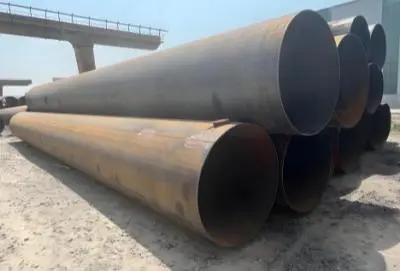
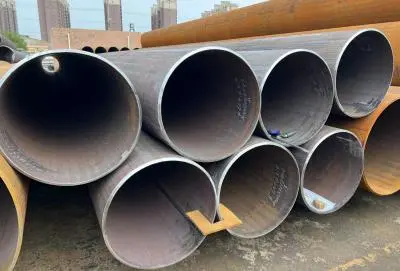
Understanding ISO 3183 L485 Pipe and PSL Grades
What Is ISO 3183 L485?
The international ISO 3183 standard for oil and gas pipeline systems sets the rules for ISO 3183 L485 pipe, a grade of high-strength carbon steel line pipe. The "485" means that it has a minimum yield strength of 485 MPa, which is the same in units as API 5L X70. It can stretch up to 20.5% and has a tensile strength between 570 and 760 MPa.
Material Composition and Microstructure
ISO 3183 L485 pipes are made of a combination Nb-V microalloyed steel that has a lot of manganese in it. The process creates an acicular ferrite microstructure with high strength and strong resistance to crack propagation by controlling the thermomechanical rolling and speeding up the cooling. This microstructure is a key part of how well ISO 3183 L485 pipe works in tough working situations.
PSL1 and PSL2 Defined
ISO 3183 sets out two types of product specifications. For moderate-risk uses, PSL1 is the usual baseline that meets basic chemical and mechanical needs. PSL2 includes tighter controls over chemicals, required impact tests, carbon equivalent limits, and testing standards that don't damage the material. PSL2 is usually the only choice for projects that need to be audited by a third party.
Key Specifications and Testing Differences Between PSL1 and PSL2
Chemical and Mechanical Property Controls
Compared to PSL1, PSL2 has stricter rules on the amounts of carbon equivalent (CE), sulfur, and phosphorus that can be present. This directly lowers the chance of cracking caused by hydrogen and cold cracking during field welding. The lowest yield strength for both levels is 485 MPa, but PSL2 also sets a maximum yield strength. This helps keep building problems from happening when the strength is too high.
Mandatory Testing Requirements
There is a big difference in the tests between PSL1 and PSL2. The requirements for each level of ISO 3183 L485 pipe are shown below:
- PSL1: Tensile testing, hydrostatic testing, and visual and measurement checking are all part of PSL1. It's not necessary to do Charpy impact testing.
- PSL2: As well as the PSL1 tests, the Drop Weight Tear Test (DWTT) for big pipes, full-body ultrasonic testing (UT), and radiographic testing (RT) of weld lines must also be done. Another test is the Charpy V-notch (CVN) impact test at certain temperatures. For bad service orders (L485MS), you also need to do HIC testing according to NACE TM0284 and SSC testing according to NACE TM0177.
These extra rules directly deal with the main reasons why pipelines break down in places with a lot of pressure and corrosion.
NDE and Certification Protocols
PSL2 requires a full, non-destructive check of the pipe body and weld seam. Mill test certificates (MTCs) need to be in line with either EN 10204 3.1 or 3.2, based on whether an owner witness check is needed. For EPC projects to be approved, they must have inspection reports from a third party, like SGS or Bureau Veritas.
Application and Suitability: When to Choose PSL1 or PSL2
Typical PSL1 Use Cases
PSL1 works well for lower-risk, onshore gathering systems that work in non-corrosive environments and don't need to be tougher or have full-body NDE. It is a good option for saving money when the project design pressure is low, and the fluid being moved doesn't contain hydrogen sulfide.
When PSL2 Is the Right Call
In three main high-stakes situations, PSL2 is the right choice. Its strength-to-weight ratio lets it be built with a larger diameter and thinner walls for high-pressure gas transmission across country. In offshore subsea pipelines, ISO 3183 L485 pipe in the "M" (thermomechanically rolled) condition has better sub-zero toughness. The acicular ferrite matrix gives it enough Charpy impact toughness at -40°C for use in cold regions. In sour service environments, the L485MS designation with HIC and SSCC resistance keeps hydrogen from weakening streams that contain H₂S.
As a whole, these three situations cover most trunk line and subsea projects where the asset owner specifies PSL2.
L485 vs. L555 and API 5L X65: Choosing the Right Grade
The best number is somewhere between L450 (X65) and L555 (X80), which is ISO 3183 L485 pipe. ISO 3183 L485 pipe has thinner walls than L450/X65 while keeping the same design pressure. This lowers the amount of steel needed and the total cost of the job. It has a bigger field welding window than L555/X80, which makes it easier to keep up with qualified welding processes on site. Most national cross-border gas transmission trunks and LNG export pipelines use ISO 3183 L485 pipe because it is the least expensive grade.
Procurement Considerations for ISO 3183 L485 Pipes
Verifying Supplier Certifications
Before sending out an RFQ, make sure the manufacturer has a valid API 5L license that covers both PSL1 and PSL2. Check the date that the certificate expires against the due date for your project. Ask the mill for ISO 9001 quality management certification and see if they have experience making thick-wall LSAW pipe with big diameters. This is because ISO 3183 L485 pipe has a small rolling temperature window that needs advanced mill equipment.
Pricing Factors and Lead Times
The final unit price is based on the cost of the plate steel feedstock, the order quantity, the wall thickness, and the type of anti-corrosion coating (3LPE, FBE, or bare). Volume pricing is usually unlocked by large orders, which directly improves the EPC project margins. If you need something quickly, ask the seller if they keep any pre-made items in stock. Some qualified mills offer fast delivery on standard measurements within 7-day windows.
Documentation Checklist
For third-party checks, you must have full paperwork. Before signing any deal, make sure the following things are available:
- Mill test certificate EN 10204 3.1 or 3.2
- Plan for Inspection and Testing
- Specification for the Manufacturing Process
- Inspection records from a third party (SGS, BV, or something similar)
- Test reports for sour service orders from HIC and SSC
- A copy of the API 5L license with dates of expiration
Brand and Supplier Selection: Building Trust in Your Pipeline Procurement
What to Look for in a Qualified Manufacturer
A trustworthy ISO 3183 L485 pipe maker should be able to show full traceability from raw materials to finished goods. Getting raw materials from trustworthy steel mills like HBIS, Baosteel, or Shagang is a good place to start. On-site advanced ultrasound and radiographic inspection tools make sure that the 100% NDE standard is met without having to hire outside help.
Factory Audit and Third-Party Inspection Support
Inspections by the owner are common on large EPC projects. A good supplier should be able to handle third-party inspectors who live in the area without affecting work schedules. Ask the supplier for examples from similar projects they've worked on in the Middle East, Southeast Asia, or South America, and make sure they know how to work with foreign inspection agencies on these kinds of projects.
Long-Term Supply Chain Value
Parallel supplier management is easier when there is only one qualified supplier for all project grades, from L245 to ISO 3183 L485 pipe and beyond. When a seller shows consistent quality across audits, EPC companies usually prefer to buy from them again. This cuts down on the time it takes to qualify for future projects and lowers the risk of sourcing during tight delivery windows.
Conclusion
Picking between PSL1 and PSL2 for ISO 3183 L485 pipeline pipe isn't just a matter of cost; it also depends on how risky your pipeline project is. PSL2 adds full-body NDE, stricter chemistry controls, and required impact testing that most owners of big assets need by law. The acicular ferrite microstructure, minimum yield strength of 485 MPa, and proven performance at -40°C make ISO 3183 L485 pipe the best grade for subsea and cross-border gas transmission. Finding the right PSL level for your project needs and making sure it has all the necessary certifications and paperwork is the fastest way to make sure the third-party audit goes well and the project is delivered on time.
FAQ
1. How does ISO 3183 L485 compare to API 5L X70?
Technically, they are the same. The American standard is API 5L and the foreign standard is ISO 3183. Both say that the minimum yield strength must be 485 MPa and have almost the same chemical and mechanical requirements. Most project owner requirements can be met by either standard.
2. What does "L485M" mean?
The thermomechanical rolling (TMCP) condition is shown by the "M" suffix. This method manages the temperature and distortion of rolling to get high strength and low-temperature hardness without having to do a separate step of heat treatment.
3. Is PSL2 always required for sour service?
Yes, sour service needs the specific "S" designation, L485MS, which includes extra HIC testing according to NACE TM0284 and SSC testing according to NACE TM0177. ISO 15156 and NACE MR0175 do not allow standard PSL2 without the sour service name.
4. What welding requirements apply to L485?
Welding supplies that don't use hydrogen are needed. It might be necessary to preheat to stop cold cracking in the heat-affected zone, depending on the thickness of the wall and the carbon equivalent. It is necessary to have qualified welding procedure specifications (WPS) and certified welding operators.
5. Can L485 pipe be used at -40°C?
Of course, especially under PSL2, where CVN impact testing is required. The acicular ferrite matrix makes ISO 3183 L485 pipe tough enough to use for pipeline projects in the cold plateau and Arctic regions, even at -40°C.
Get Your ISO 3183 L485 Pipe Quote from Longma Group
Since 2003, Longma Group has been making ERW and LSAW steel pipes for projects in more than 90 countries. We make and sell qualified ISO 3183 L485 pipes and have current API 5L PSL1 and PSL2 certifications. We also offer EN 10204 3.1/3.2 MTCs and can support full third-party inspection by SGS, Bureau Veritas, or your chosen inspector. The raw materials come straight from Baosteel, HBIS, and Shagang. You can send your specifications to our technical team at info@longma-group.com to get a detailed quote.








