
If you work in oil and gas pipeline procurement, you have almost certainly encountered both ISO 3183 L485 pipe and API 5L X70 on the same project specification sheet. On the surface, they look interchangeable — and technically, their mechanical properties are nearly identical. But the standards behind them differ in scope, testing requirements, and regional acceptance. Getting this wrong can delay third-party audits, stall project milestones, and cost your team far more than the pipe itself. This article breaks down exactly what sets the two apart so you can make a confident, audit-ready purchasing decision.
|
|
|
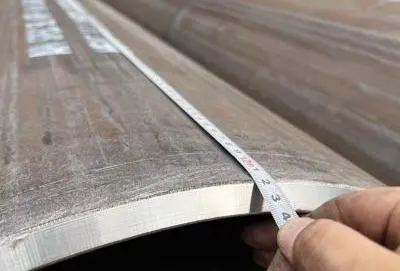
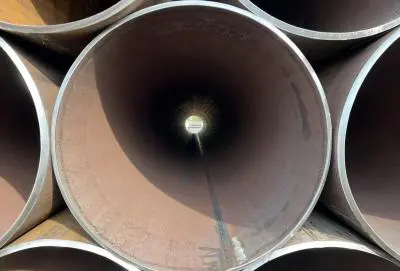
Understanding ISO 3183 L485 and API 5L Pipe Standards
Before you compare the two, it's helpful to know what each standard covers and why there are two of them.
What Is ISO 3183 L485 Pipe?
The International Organization for Standardization (ISO) put out ISO 3183, which is the worldwide standard for steel line pipe for oil and natural gas pipeline systems. The grade number L485 means that the minimum yield strength is 485 MPa. The material is a hybrid Nb-V microalloyed steel that has more manganese. It was rolled carefully and cooled quickly to create an acicular ferrite microstructure. As a result, the tensile strength is between 570 and 760 MPa, and the material can stretch no more than 20.5%. This microstructure gives L485 good resistance to crack spreading and reliable Charpy impact toughness down to -40 °C. This makes it a good choice for cross-border trunk lines in cold climates and shallow subsea pipelines.
What Is API 5L X70?
The American Petroleum Institute puts out API 5L, which is a standard for steel line pipe that is either seamless or welded. Its grade that is equal to L485, is X70, which means that it has a minimum yield strength of 70,000 psi (483 MPa). API 5L sets two levels of product specifications. PSL1 includes basic requirements for chemical composition, mechanical properties, and dimensional tolerances. PSL2 includes more non-destructive examination requirements, stricter chemistry controls (including carbon equivalent limits), and mandatory fracture toughness testing. The level most owners choose for high-pressure, sour-service, or remote uses is PSL2.
Where Each Standard Is Recognized
There is a lot of support for ISO 3183 L485 pipe in European, Middle Eastern, and foreign project specifications, especially when IEC or ISO documentation is desired. API 5L is mostly used for projects in North America, and it is also widely accepted on international EPC contracts in Southeast Asia, Latin America, and the Gulf region. Many owner technical specs make it clear that both L485 PSL2 and X70 PSL2 are allowed, seeing them as the same thing.
Key Technical Differences Between ISO 3183 L485 and API 5L Pipes
When writing a purchase order or looking over a supplier's mill test certificate, it's most important to know where the two standards actually differ.
Chemical Composition and Carbon Equivalent
Limits are set for carbon, manganese, phosphorus, and sulfur by both standards. The carbon equivalent (CE) and Pcm limits in ISO 3183 L485 PSL2 are stricter than those in PSL1. These limits are very similar to those in API 5L X70 PSL2. One real difference is that ISO 3183 has a different maximum CE formula for sour-service variants (L485MS), while API 5L uses NACE MR0175/ISO 15156 to make sure that sour-service compliance is met. For jobs that need resistance to hydrogen-induced cracking (HIC), the purchasing team must check to see if the supplier's procedure qualification meets the requirements of either the NACE TM0284 test or a different standard.
Mechanical Testing Requirements
A minimum yield strength of 485 MPa, a tensile strength of 570–760 MPa, and an elongation of ≥20.5% are all mechanical properties that are practically the same for L485 and X70 PSL2. Two types of testing are different: API 5L PSL2 requires Charpy V-notch (CVN) impact testing as a standard, while ISO 3183 PSL2 requires both CVN and Drop Weight Tear Test (DWTT) for large-diameter pipes. DWTT is very important because it gives a more accurate reading of the change from ductile to brittle at service temperatures in the pipeline. This means that cracks can be stopped at higher temperatures, which is something your pipeline engineer will look at for any high-pressure trunk line design.
Non-Destructive Examination and Certification
Both standards require all weld seams to be checked without damaging them in any way. For longitudinal seam-welded pipes, this includes full-body ultrasonic testing (UT) and radiographic testing (RT). However, ISO 3183 and API 5L have different ways of writing down NDE data. Third-party audits of projects usually need EN 10204 3.1 or 3.2 material test certificates (MTCs). Most foreign EPC owners expect the MTC to list the exact standard that the pipe was made and tested to. Buyers should make sure that their third-party inspection body, such as SGS, Bureau Veritas, or another approved agency, can read the MTC code that the provider provides.
Practical Considerations for B2B Buyers
Differences in technology only matter if they affect how you deliver your project, how your audit turns out, or how much it costs. Here are the things that are most important to think about when buying things for current EPC projects:
Selecting the Right Grade for Your Application
L485/X70 is the most common material for high-pressure natural gas transfer across borders. This is because it has a higher yield strength than L450/X65, which means that the wall thickness can be reduced while keeping the same design pressure. That directly means less steel tonnage, less weight for transport, and less time spent welding in the field, all of which affect the cost of your EPC project. Thick-walled ISO 3183 L485 pipes in the L485 grade with anti-HIC and anti-SSCC treatment work well for shallow underwater pipeline work because they can handle both internal pressure and external hydraulic collapse loads. In your RFQ, you must clearly state that you need the L485MS (or API 5L X70 PSL2 sour service) version for sour-service oilfield gathering systems.
Lead Times, Order Volumes, and Availability
LSAW pipe with a large diameter and a thick wall in L485/X70 PSL2 is not something that most wholesalers keep in stock. For large project orders, lead times from mill production are usually 45 to 90 days. Setting up a framework agreement with a manufacturer that has enough capacity and raw material stock is good for buyers who are working on multiple projects at the same time. When suppliers get plate from big mills like HBIS, Bao Steel, or Shagang, the chemistry is usually easier to track, which speeds up reviews by third parties.
Evaluating Supplier Certifications
Always check these things when evaluating a supplier. It is necessary to have a current API 5L license with a certificate expiration date that fits with the time frame for delivering your project. EN 10204 3.1 MTC issuance capability proves that the supplier can produce paperwork that is ready for an audit. Third-party inspection reports from SGS or Bureau Veritas on past shipments show how well the quality worked in real life. Factory audit accommodation, or whether the mill actively supports owner-driven third-party checks, is one thing that sets good makers apart from those that cause delays.
How to Choose Between ISO 3183 L485 and API 5L Pipes: A Buyer's Guide
Most of the time, choosing between ISO 3183 L485 and API 5L X70 comes down to three things: what the owner's technical standard allows, where the pipe will be made, and what paperwork the third-party inspection needs.
Define Project-Specific Criteria First
Start with the technical requirements given by the owner. If it says that both ISO 3183 L485 PSL2 and API 5L X70 PSL2 are acceptable, you can choose the one that gives you the best lead time and price. The discussion is over if only one measure is given.
Scenario-Based Recommendations
For sending gas across the country in cold places, ISO 3183 L485 PSL2 with required DWTT testing is usually the better technical standard because it gives more accurate data on crack arrest. If the owner of a project in North America or the Gulf Cooperation Council writes API docs by default, API 5L X70 PSL2 projects tend to go through third-party review faster. Choose either L485MS or API 5L X70 PSL2 for sour-service oilfield gathering, and make sure they pass HIC and SSC tests according to NACE TM0284 and TM0177.
Strategic Purchasing Tips
Set the expiration date, delivery date, and MTC format of the certificate in the purchase order, not the inquiry. Talk about review witness points before you sign the contract. Make sure that the supplier has qualified welding procedures that match the thickness of your wall and the carbon equivalent. This is because L485's limited heat-input range during field welding needs qualified operators and qualified procedures.
Conclusion
Both ISO 3183 L485 pipe and API 5L X70 PSL2 are basically the same grade, but they are made and recorded according to two different standards. In real life, the differences show up in testing methods, MTC format, sour-service variant naming, and regional owner support for EPC procurement teams. Whether your shipment breezes through third-party inspection or gets stuck at the audit stage depends on which one you choose and how you define the PSL level, service condition, and NDE standards. The tips above give your team a solid foundation for making that call with ease.
FAQ
1. Are ISO 3183 L485 and API 5L X70 truly interchangeable?
Mechanically, yes. Both share a minimum yield strength of 485 MPa, tensile range of 570–760 MPa, and elongation ≥20.5%. However, they are published by different standards bodies and may differ in documentation format and specific test requirements. Always confirm that the owner's specification accepts both before substituting one for the other.
2. What does the suffix "M" mean in L485M?
The "M" stands for thermo-mechanically rolled. It indicates that the pipe achieved its mechanical properties through controlled rolling temperature and deformation, not through post-rolling heat treatment. This process produces a finer grain size and better low-temperature toughness.
3. When is PSL2 required instead of PSL1?
PSL2 is required for high-pressure, sour-service, offshore, or low-temperature applications. It adds mandatory CVN impact testing, tighter chemistry controls, and stricter NDE requirements. Most owner specifications for gas transmission and subsea pipelines default to PSL2.
4. How do I verify a supplier's API 5L certificate is current?
Check the API monogram license database directly at api.org. Confirm the license number, the specific grade covered, and the expiry date. A certificate that expires mid-project creates audit risk.
5. Can L485 pipe be used for sour gas service?
Only when specifically ordered as a sour-service grade (L485MS under ISO 3183, or equivalent PSL2 sour service under API 5L). This requires HIC testing per NACE TM0284 and SSC testing per NACE TM0177.
Get ISO 3183 L485 Pipe from a Trusted Manufacturer — Contact Longma Group
Since 2003, Longma Group has been making API 5L and ISO 3183 line pipe. Each year, they make more than a million tons of pipe and send it to more than 90 countries. We are a qualified ISO 3183 L485 pipe supplier that issues EN 10204 3.1/3.2 MTCs, supports owner-driven third-party inspections, and gets plate from mills like HBIS, Bao Steel, and Shagang so that all of the materials can be tracked back to their source. Please send your project details to info@longma-group.com to get a quote.