EN10210 pipe follows two parts of one standard. EN 10210-1 sets the delivery and material conditions, and EN 10210-2 sets the dimensional limits. For circular, square, and rectangular hot-finished sections, outside size is typically held to ±1% of the nominal value, with a minimum of ±0.5 mm. Wall thickness, out-of-roundness, straightness, twist, corner geometry, and length each carry their own limits. These limits change with shape and size, so I always tell buyers to check the edition named in their contract. In this guide, I explain each tolerance in plain terms and show how to specify and inspect them.
|
|
|
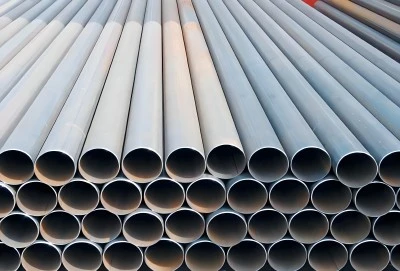
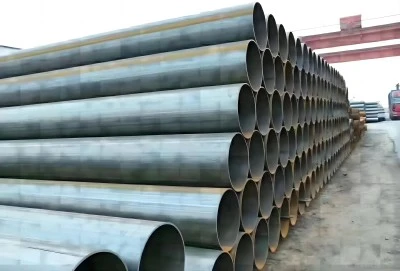
EN 10210 Pipe Dimensional Tolerances at a Glance
What are the standard limits? It's helpful to know how authors and inspectors understand them before you look at specific numbers.
Main Dimensions Covered by EN 10210-2
EN 10210-2 is a rule that talks about more than just width. For circular sections, it includes the diameter around the outside. For square and oblong pieces, it gives the length and width. It also sets limits on the walls' width, how out of round they are, how concave or convex they are, their corner angles, twist, straightness, mass, and length. Every limit keeps a different part of the making process safe. Bearing rings and plates fit or don't fit depending on how wide and large they are. Section qualities and buckling strength in Eurocode are based on how thick the walls are. How straight or curved a column is determines how it lines up with the ones next to it. It's the most important step for the job, so I ask the customer which of these steps will be shown first. That helps me focus on the checks that need it the most for the EN 10210 pipe.
Nominal Dimensions Versus Actual Measured Dimensions
Nominal measurements are used by engineers to make models and figure out how much weight something can hold. The delivered pipe's exact size can be found by using a caliper, a tape measure, or an ultrasonic gauge. The tolerance table tells you how much room there is between the two. It doesn't matter how much or how little a piece that says its outside size is 200 mm is. It is still valid. For mass, too, since the standard lets each length vary by ±6%, the same reasoning works. There are two types of calculations that designers should ask: nominal and minimum. This will tell them how much steel area they can count on.
A Note on Standard Tables and Edition Control
The rules have changed. New contracts may still use the 2006 version of EN 10210-2, even though the 2019 version just came out. EN10210 pipe buyers should pay close attention to this edition issue. There are different kinds of tolerance tables, and they can be different based on the part's shape, size range, and thickness. I believe that the exact edition should be written on the purchase order, and an extra copy of the table should be kept in the file for inspection. At the receiving dock, that little thing keeps people from fighting. If someone wants to buy something with the CE mark, they also need papers whose edition name matches the name on their statement of performance. When they say "EN 10210" without a year, what version do they mean? Before you look at different prices, you should find out this.
EN 10210 Outside, Wall Thickness, and Geometrical Tolerances
Before I get to the more complicated geometry checks, I start with the outside size and work my way up to it.
Outside Dimension Tolerances by Section Shape
The rule says that a round piece can be off by at least 0.5 mm, or ±1% of its width. Square and rectangular pieces are checked for both their width and height. The allowed errors are ±1% for the width and ±0.5 mm for the height on each side. When you measure the EN 10210 pipe, don't measure it at the ends. The ends can change shape, which can make the reading bigger or smaller than it really is. It's better to write down the highest and lowest numbers than to make do with just one reading. After, you can check them against the table. It can be hard for covers, base plates, and tubes to fit together if the outside size is off. Making things that have to fit together the same way every time takes longer as well.
Wall Thickness Tolerance and Load Capacity
The nominal wall thickness isn't always the thinnest part of a wall. It's fine for most sizes to be up to 2 mm or 10% off from the normal thickness. In other words, a wall that should be 10 mm could be 9 mm instead and still be fine. Because of this difference, the steel area and resistance to buckling are less, which is something that structural engineers should know. If a design needs a certain amount, put it in the right order. Use an acoustic gauge, an accurate micrometer, or a ruler to check the size of a piece that has been cut. Separate the tolerance for output from the tolerance for rust. One limits the amount that can be made, and the other adds extra steel to account for the metal that will be lost during use.
Straightness, Roundness, Twist, Corner Radius, and Length
Aside from basic size, there are a few other limits. For round parts, the most that can be out of round is 2% of the outside width. The pipe can be straight for up to 0.20% of its length. This means that a 12 m pipe can bow by up to 24 mm. Round and square pieces can only be bent 2 mm, give or take 0.5 mm per meter. A side can have between 0.8% and 0.5 mm of concavity or convexity at most. The corner radius can also be changed, which is useful when plates need to fit flat against a corner. Length can be close, open, or exact. The range for exact lengths is +10 mm to 0 mm. Before you sign for a delivery, check these numbers against the ones in your package.
How EN 10210 Tolerances Compare With Other Standards
Most of the time, when people buy blank pieces, they only look at how big the outside of each one is. The rule behind the section is more important.
EN 10210 Versus EN 10219
EN 10210 covers hot-finished hollow sections, and EN 10219 covers cold-formed and welded sections. EN10210 pipe is therefore not interchangeable with EN 10219 product. Their own tolerance tables are in the second part of each. The corner shape, residual stress, and mechanical properties are all different because of how the metal was made. If you cold-form and hot-finish two pieces, they may be the same size on the outside, but the corners will not be the same. That's why I don't think they're the same thing. One must be approved by the structural engineer on file, and the standard that was actually given must be named in the documents for CE marking. Longma Group makes both EN 10210 and EN 10219 goods, so customers can get both from the same company and compare them.
EN 10210 Versus ASTM A500
ASTM A500 is an American standard. It has carbon steel structural tubing that is cold-formed and comes in rounds and other shapes. It is bonded and seamless. Its own tolerance tables and tests are used, along with grades A, B, and C. In the US, people often ask if they can use an A500 tube instead of an EN section. We can find out the answer in the design code. The EN product properties are used in Eurocode 3 designs, while the ASTM product properties are used in AISC designs. The AISC design wall thickness is 0.93 times the nominal wall thickness for ERW HSS. This shows that different systems use wall thickness in different ways. Longma Group also makes ASTM A500 types A, B, and C.
EN 10210 Versus S355J2H
Please note that S355J2H is the name of a steel grade and not a product standard. A minimum yield strength of 355 MPa is written as "S." An impact test at -20°C with a minimum energy of 27 J is written as "J2," and an "H" means that the part is hollow. Even if the pipe is strong and chemically the same as S355J2H, it might not be the right size for EN 10210-2. Checking for grade compliance and checking for product compliance are not the same thing. Longma Group sells EN 10210 pipe in three sizes: S235, S275, and S355. Write down how much effect your project needs and ask that the test result be put on the certificate. We make sure that every order can be filled.
How to Specify and Inspect EN 10210 Pipe Tolerances
Clear paperwork and an easy inspection process can help you avoid most delivery disputes.
Writing the Purchase Order
An order should turn engineers' needs into limits that can be measured. Write down both EN 10210-1 and EN 10210-2, along with the year they were released. Then write down the number, the steel grade, the section type, the nominal size, the wall thickness, the length type, the end finish, the surface state, and the length. You can find things like an EN 10204 3.1 certificate, a dimensional report, impact test results, or NDT records more easily if you make a list of the papers you need. If there are any special requirements that need to be met for automated welding, exposed steelwork, or sleeved connections, talk about them before production starts. Stricter rules can change the cost, the time you have to wait, and the smallest order you can make. You can agree on that before the mill sets the order instead of arguing when the pipe gets there.
Inspecting Before Acceptance
For inspection to work best, there should be two steps. EN10210 pipe should be checked this way before and after delivery. Before you send them, please read over the following papers: the grade, the heat numbers, the chemistry and mechanical results, the measures, the amount, and the packing information. Next, measure things in the warehouse or at the project site. The sample should be the right size for the job and the risk of the project. It needs to be checked to see if it is straight, oval, has square corners, ends, and walls that are the right thickness. Keep track of all the numbers and only use tools that have been measured. People often don't meet the requirements when they see wrong marks, missing certificates, too much bending, thin walls, bad cutting, and bundle tags that are mixed up. Everyone knows what the rules are because the sampling plan is written in the contract.
Common Buying Mistakes
Most of the disagreements I see are caused by four mistakes. EN 10210 pipe and EN 10219 are the same thing to people who buy things. They just look at the outside measurements and don't check to see if the walls are thick, straight, or twisted. As long as the proof is in the form of grade compliance, they are happy with it. They don't say where, what, or how to measure either, so the lengths of each side are different. It's simple to fix. Write down the tolerance table, the way you will measure, the sampling rate, and the steps you need to take if you receive a bundle that doesn't meet the requirements on the purchase order. An inspection agreement on one page doesn't cost much and keeps deliveries from being sent back and keeps fabrication shops from being idle.
Choosing an EN 10210 Pipe Supplier for Global B2B Projects
Price is important, but what keeps a project on track are paperwork, consistency, and delivery plans.
Supplier Capabilities to Evaluate
A good company that makes EN 10210 pipes should be able to show stable production, consistent sizes, full documentation, and the ability to trace their products. Hebei Longma Group has been making ERW and LSAW steel pipe on a 230,000-square-meter site since 2003. It would have produced more than 1,000,000 tons of steel every year by the end of 2023. There are FPC, ISO 9001, 14001, and 18001 certifications for the business. Mills in China, such as Shagang, TISCO, HBIS, and Baosteel, make steel. The raw materials are tracked from the time they are bought to the time they are sold. Most people have seen ITP, MPS, and MTC papers. Longma Group has served customers in more than 90 countries.
Questions to Ask Before Requesting a Quotation
Before you ask for a price, the seller should tell you what numbers, grades, sizes, and certificates come with the order. Find out if special tolerances are possible and what the minimum order quantity, lead time, steps for marking, and steps for bundling are. To give you an idea, Longma Group lists EN 10210 pipe in grades S235, S275, and S355, with outside sizes from 3" to 80" and thicknesses from SCH10 to SCH160. We have 50 to 150 tons in stock, and shipping takes 7 days at the very least. You can pack your things in a bag, a wooden box, or a wooden board. As a finishing touch, you can get hot-dip galvanizing.
How to Compare EN 10210 Pipe Quotations
Price per ton doesn't always show what's going on. Find out what each price includes, such as certificates, inspection reports, packing, freight, delivery terms, expert help, and instructions on how to replace pipe that doesn't meet standards. When you add up the cost of repairs or the pipe that you have to throw away, a cheap price that doesn't come with a dimensional report or traceable heat numbers can sometimes cost more. Shipping times can also change the plan, so make sure you get a plan with dates for loading and making the goods. People who want to bring goods into the EU should talk to a customs broker about the current trade measures and import rules before they place an order.
Conclusion
You can find most of the EN10210 pipe tolerances in EN 10210-2. These tolerances cover a lot more than just outside size. The smallest deviation that can happen in diameter, width, and height is ±0.5 mm, and the biggest deviation that can happen in wall thickness is 2 mm. Length, twist, concavity, corner radius, and whether it's straight or not round are all limited in different ways. Being able to measure something is what makes something acceptable or not, so the edition and table should be in the purchase order. For hot-finished EN 10210 parts, the forming method and accuracy tables are different from those for EN 10219 and ASTM A500 goods. This means that replacement needs to be approved by a technical expert. Not even a grade like S355J2H can show that a product is up to par. Order wording that is easy to understand, certificates, and a clear review plan all help keep production on track and lower the number of lost deliveries.
FAQ
Which standard defines EN 10210 pipe tolerances?
This standard, EN 10210-2, talks about tolerances, sizes, and sectional features. EN 10210-1 talks about what needs to be done for transportation and supply.
Are the hole sizes the same for round, square, and rectangular pieces?
You can't be out of round, twisted, or flat in some shapes. Each shape has its own limits. Use the table to find the edges of your shape.
Can a wall's real thickness be less than its stated thickness?
The allowed range is usually ±10% with a cap, so the answer is yes. Set a hard minimum in the order if your plan calls for it.
Can EN 10219 pipe replace EN 10210 pipe?
Not all the time. Any change must be approved by the engineer in charge because the tolerance tables and forming route are not the same.
What documents should accompany EN 10210 pipe?
Ask for a Material Test Certificate such as EN 10204 3.1, a dimensional report, and any NDT or impact records that your project needs. Longma Group gives out ITP, MPS, and MTC.
Request an EN10210 Pipe Quotation From Longma Group
Longma Group needs to know the type of piece, its size, wall thickness, grade, number, length, tolerance needs, and the port where it will arrive. They can be reached at info@longma-group.com. For a long time, we have been an FPC and ISO 9001 company that sells EN 10210 pipes. We make MTC documents, check the technical feasibility, and give you a quote on the time that works best for you. We can ship in 7 days because we have 50–150 tons in stock. Go to longma-group.com to learn more.